Key takeaways
- Dimming range, not just a dimmer: Many clocks advertise brightness control but bottom out at a level that still lights the room. Look for models with multiple discrete steps and a genuinely faint lowest setting — ideally a warm red or amber display, since long-wavelength light is the least disruptive to melatonin production.
- Glanceable numeral height: Aim for digits around one to two inches tall. The goal is reading the time from a pillow, at an angle, without your eyes fully accommodating. If you have to squint or sit up, you’ve just given your brain a small dose of wakefulness.
- Alarm character and volume ceiling: Light sleepers want a gentle, adjustable tone that starts low; heavy sleepers need real acoustic headroom. Adjustable volume is the single most underrated spec here, and multiple sound options help you avoid the tone-fatigue that makes any alarm easier to ignore over time.
- Power and backup strategy: Plug-in clocks give you steady brightness and USB charging for your phone; battery-only clocks survive outages. The best arrangement is mains power with a battery backup that preserves your alarm settings, so a brief blackout doesn’t cost you a morning.
- Materials and visual weight: A nightstand is furniture, not a control panel. Wood-front housings and matte finishes read as decor rather than electronics, and a low-profile footprint leaves room for a book, a glass of water, and a lamp.
What's inside
Most people shop for a bedside clock the way they shop for batteries — grab whatever’s cheap, plug it in, forget about it. Then comes the 2 a.m. problem: a display so bright it turns the ceiling blue, numerals too small to read without reaching for glasses, an alarm that either whispers or detonates, and a phone that has quietly become the thing you check instead of the thing you sleep beside. From a sleep-wellness standpoint, the nightstand clock is one of the few pieces of bedroom hardware that touches your circadian rhythm directly, and the wrong one can quietly cost you twenty minutes of sleep onset every single night.
This guide looks at nightstand clocks through the lens of how they actually behave in a dark room at 3 a.m., not how they photograph in a product listing. We cover the dimming behavior that matters most for melatonin, the numeral size that lets you glance without lifting your head, charging features that keep your phone off the mattress, and alarm profiles suited to both light and heavy sleepers. Below are the models worth your nightstand in 2026, followed by a buyer’s checklist and answers to the questions we get asked most.
As an Amazon Associate we earn from qualifying purchases.


🛒 Best Price Today on Amazon
Prime members get fast, free shipping on everything above, plus member-only deals. New members get a 30-day free trial — cancel anytime.
How to Choose a Nightstand Clock (2026)
- Dimming range, not just a dimmer: Many clocks advertise brightness control but bottom out at a level that still lights the room. Look for models with multiple discrete steps and a genuinely faint lowest setting — ideally a warm red or amber display, since long-wavelength light is the least disruptive to melatonin production.
- Glanceable numeral height: Aim for digits around one to two inches tall. The goal is reading the time from a pillow, at an angle, without your eyes fully accommodating. If you have to squint or sit up, you’ve just given your brain a small dose of wakefulness.
- Alarm character and volume ceiling: Light sleepers want a gentle, adjustable tone that starts low; heavy sleepers need real acoustic headroom. Adjustable volume is the single most underrated spec here, and multiple sound options help you avoid the tone-fatigue that makes any alarm easier to ignore over time.
- Power and backup strategy: Plug-in clocks give you steady brightness and USB charging for your phone; battery-only clocks survive outages. The best arrangement is mains power with a battery backup that preserves your alarm settings, so a brief blackout doesn’t cost you a morning.
- Materials and visual weight: A nightstand is furniture, not a control panel. Wood-front housings and matte finishes read as decor rather than electronics, and a low-profile footprint leaves room for a book, a glass of water, and a lamp.
The Best Nightstand Clocks (2026) Reviewed
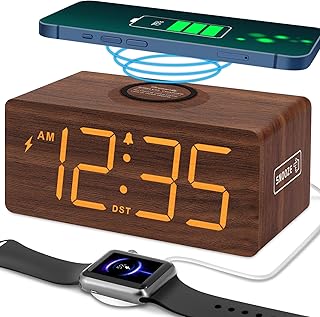
DreamSky Wooden Clock with Wireless Charging
This is the most complete bedside setup on the list: a wood-finish digital clock that doubles as a wireless charging pad and adds a USB port for a second device, which means your phone can live off the mattress and out of arm’s reach. The multi-step dimmer, adjustable alarm volume, and automatic DST handling make it the model we’d recommend to someone furnishing a bedroom once and not thinking about it again.
DreamSky Small Digital Alarm Clock
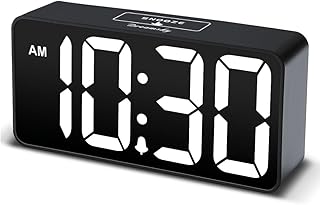
A compact, USB-C-powered clock with numerals disproportionately large for its footprint — ideal for a crowded nightstand, a guest room, or anyone who wants readability without a slab of electronics beside their head. The dimmer and volume control are both properly adjustable, which is rare at this size.
Amazon Basics Small Digital Oval Alarm Clock
The pragmatic pick: a small LED clock with a nightlight, snooze, and battery backup that keeps time through an outage. It won’t charge anything and the display is modest, but for a spare room, a travel bag, or a second nightstand, it does the job without ceremony.
DreamSky Wooden Clock with Loud Alarm (Plug-In)
Built for people who sleep through everything — the alarm has genuine volume, and it’s adjustable rather than one-note, so you can dial it to the threshold that actually wakes you. The wood-front housing keeps it looking like an object rather than an appliance, and the dimmer takes the display down far enough for a dark room.
Odokee Digital Alarm Clock
The most configurable option here: five brightness levels, eight night-light colors, and five alarm sounds let you tune both the visual and acoustic environment to your own sensitivity. Bold, high-contrast numerals make it the easiest to read across a room, which matters if the clock also has to serve a partner on the far side of the bed.
Frequently Asked Questions
Does a lit clock display actually affect sleep?
It can. Even modest ambient light in the bedroom is associated with lighter, more fragmented sleep, and a bright blue-white display pointed at your face is a small but nightly exposure. Use the lowest dimmer setting you can still read, and angle the clock away from the pillow.
Is checking the time at night a bad habit?
Clock-watching during a wakeful stretch tends to increase arousal and anxiety about sleep, which is counterproductive. The fix isn’t a smaller clock — it’s turning the display away from you on nights you’re struggling, so the clock stays useful for waking without becoming a scoreboard.
Should I keep using my phone as an alarm?
A dedicated clock removes the main reason your phone needs to be within reach at night, which is the single most effective change most people can make to their bedside setup. Charge the phone across the room, or on the clock’s charging pad if it has one.
Do I need battery backup if the clock plugs in?
It’s worth having. A plug-in clock loses its alarm during an outage; a backup battery preserves the time and settings so a 3 a.m. power flicker doesn’t turn into a missed morning.
Final Thoughts
For most bedrooms, the DreamSky Wooden Clock with Wireless Charging is the strongest all-round choice — it handles the time, the dimming, and your phone charging in one piece of furniture-friendly hardware. Heavy sleepers should look at the DreamSky Wooden Loud Alarm Clock for its usable volume range, while anyone who wants fine control over brightness, night-light color, and alarm tone will get the most out of the Odokee Digital Alarm Clock.