Key takeaways
- Compare the best nesting pads for laying hens: aspen excelsior and washable silicone options in 12 and 13 inch sizes, with fit and cleaning guidance.
The real decision with a nesting pad is not whether hens need something soft to lay on, but how you want to handle the mess afterwards. A disposable aspen pad lifts out in one piece and takes droppings with it, while a washable pad stays in service for months but needs rinsing and drying before it goes back. Size matters just as much, because a pad that bunches or leaves bare corners invites hens to scratch it aside and lay on the box floor instead.
This guide is for backyard keepers with standard square nest boxes, small flocks that go through pads slowly, and larger coops that need bigger packs to keep up. Every product below was chosen from its name and specifications on its Amazon product page, including stated size, material, pack count and backing, rather than from roundup claims elsewhere.
Quick Picks
As an Amazon Associate we earn from qualifying purchases
| Product | Best for | Key spec from title |
|---|---|---|
| Eaton Pet and Pasture Premium Laying Hen Nesting Pads | Keepers who want USA grown aspen in a standard box | 13 x 13 inches, 10 pack |
| Pecking Order Nest Box Pads | Cleaner eggs in busy laying boxes | 13 x 13 pads, aspen excelsior, 10 pack |
| Trendiees Chicken Nesting Pads | Coops that want two extra pads per pack | 12 pack, USA aspen, 13 x 13 |
| Pawtners Nesting Pads for Chicken Coop | Keepers who prefer to wash and reuse | Silicone, 12 x 12 inches, 4 pack |
How to Choose
Measure the Inside of the Box First
Pad sizes cluster around two footprints, and picking the wrong one causes most fit problems. A 13 by 13 inch pad suits boxes built around that square, while a 12 by 12 inch pad fits smaller commercial boxes and can leave a gap in a larger one. Measure the inside floor, not the outside frame, and check corners for dividers or lips that steal space. For example, a box that measures 12.5 inches inside will crumple a stiff 13 inch pad at the edges, while a loose fiber pad can be fluffed and shaped to fill it.
Decide Between Disposable Fiber and Washable Pads
Aspen excelsior pads are single season workhorses: you set one in, let the fibers cushion the eggs, then lift the whole pad out when it gets soiled and compost or discard it. That suits keepers who value a fast cleanout above all else. Washable silicone or plastic pads flip the routine. They need a rinse, a shake and drying time, but one set rotates through many laying cycles. If your coop sits far from a hose or sink, disposable pads remove a chore; if you dislike repeat buying, washable pads remove a recurring errand instead.
Look at the Backing, Not Just the Fiber
On fiber pads, the backing decides whether the pad leaves the box as one piece or as a scattered handful. Kraft paper backing holds excelsior fibers together, gives droppings a layer to settle against, and makes removal a single lift. Pads without a firm backing can shed fibers into corners that then need sweeping. For example, when you clean six boxes on a wet morning, a paper backed pad comes out whole in seconds, while loose material turns each box into a small excavation. Check the listing for backing material before you compare pack counts.
Match Pack Size to Your Replacement Rhythm
A 10 pack and a 12 pack sound similar, but the right count depends on how many boxes you run and how often hens soil them. A keeper with three boxes who changes pads monthly needs far fewer pads on hand than a keeper with eight boxes in a damp climate where pads get swapped every few weeks. Count your boxes, multiply by your realistic change interval, and keep at least one full change in reserve. Buying a slightly larger pack, such as a 12 pack for a four box coop, prevents the familiar situation of one dirty box waiting while the shelf sits empty.
The 4 Best Options
Eaton Pet and Pasture Premium Laying Hen Nesting Pads
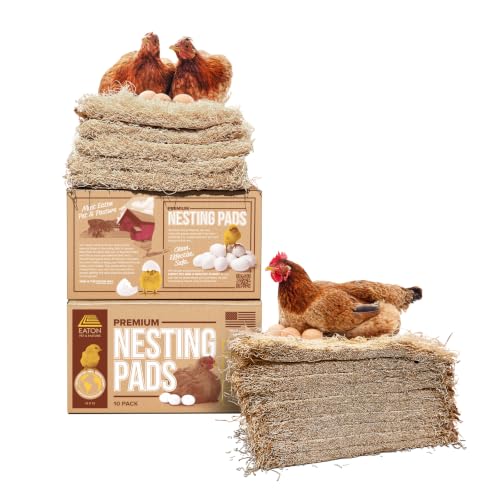
This is the straightforward aspen choice for keepers who want a pad grown and harvested in the USA and sized for the most common square boxes. The excelsior fibers form a springy layer that cradles eggs instead of letting them rest on a hard floor, and the 10 pack format suits a small to mid sized coop where a full change uses only part of the pack. It fits owners who prefer natural fiber they can discard after use, and who want a familiar 13 inch footprint without trimming or folding a pad down to size.
Specs
- Brand: Eaton Pet and Pasture
- Material: Aspen Wood
- Size: 13 x 13 inches
- Unit count: 10 pack
- Color: Light Brown
- Manufacturer: Eaton Pet and Pasture
Best for: Standard 13 inch boxes in small to mid sized backyard coops
Watch out for: Disposable fiber, so heavy soiling means replacing rather than rinsing the pad
ASIN: B0BBNBMCHY
Pecking Order Nest Box Pads

Pecking Order suits keepers whose main frustration is dirty eggs. Its Great Lakes aspen excelsior sits on a kraft paper backing, and the listing explains that the fibers let wet droppings settle down and away from the hen and her eggs, so eggs stay on top where they are easier to gather. That design makes sense in busy boxes shared by several hens, where a flat or compacted surface quickly gets messy. The 13 by 13 inch size targets most standard nest boxes, and the 10 pack keeps the change routine simple: one pad per box, replaced when needed.
Specs
- Brand: Pecking Order
- Material: Great Lakes aspen excelsior with kraft paper backing
- Size: 13 x 13 inches
- Number of items: 10
- Item model number: 9654
- Manufacturer: Red River Commodities
- Included components: 10 Nest Box Pads
Best for: Busy shared boxes where keeping eggs up and cleaner is the priority
Watch out for: The pad is shaped for standard boxes, so unusually narrow boxes may need a different size
ASIN: B09NCHHCQ7
Trendiees Chicken Nesting Pads
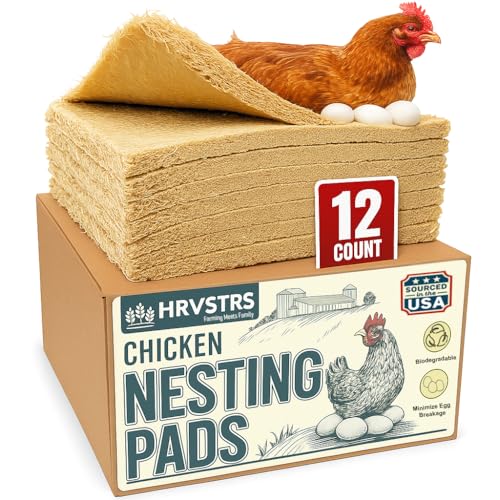
Trendiees makes sense for keepers who like the aspen excelsior format but want a little more stock in each order. The 12 pack gives two extra pads over the common 10 pack, which helps a four or five box coop complete a full change and still hold spares. The listing describes USA sourced aspen on a durable craft paper backing, with pads that separate individually and can be fluffed up to fit the box. It is a practical pick for rabbit hutches as well as chicken boxes, according to the listing, and for owners who keep a rotation going without reordering as often.
Specs
- Brand: Trendiees
- Material: Aspen
- Size: 13 x 13 inches
- Number of items: 12
- Item model number: Nesting1
- Color: Tan
- Included components: USA-sourced biodegradable craft paper
Best for: Four and five box coops that want a full change plus spares in one pack
Watch out for: The listing notes the 13 inch pad is sized to suit a 12 inch box, so check your inside measurement first
ASIN: B0DCCB8ZX7
Pawtners Nesting Pads for Chicken Coop
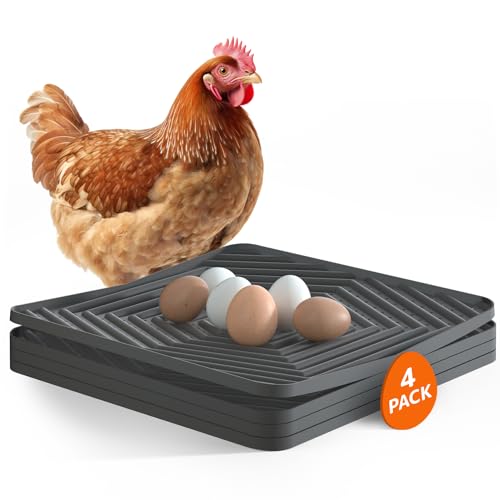
Pawtners is the reusable option in this group, built from silicone rather than fiber. The soft pad is meant to cushion eggs and reduce breakage, and because it washes clean it can return to the box again and again instead of being thrown away after one soiling. At 12 by 12 inches it targets slightly smaller boxes than the 13 inch aspen pads above, and the 4 pack covers a compact coop or a set of favorite boxes. It suits keepers who have an easy place to rinse pads and who would rather maintain a small set than store a stack of spares.
Specs
- Brand: Pawtners
- Material: Silicone
- Size: 12 x 12 inches
- Unit count: 4 count
- Special feature: Breathable, Odor Control, Scratch Resistant, Washable
- Color: Grey
- Item dimensions: 12″L x 12″W x 1″Th
Best for: Smaller 12 inch boxes and keepers who prefer washing over replacing
Watch out for: Hens used to deep loose bedding may need time to accept a flatter silicone surface
ASIN: B0D2LFBHJD
Which One Fits Your Situation
You Have Standard 13 Inch Boxes and Want the Simplest Routine
Choose either the Eaton Pet and Pasture pads or the Pecking Order pads. Both use aspen excelsior at 13 by 13 inches in a 10 pack, so the routine is identical: drop one in, lift it out when soiled, replace it. Pick Pecking Order if cleaner eggs matter most, because its listing centers on droppings settling away from the eggs. Pick Eaton if USA grown aspen, stated in its title, matters most.
You Run Several Boxes and Hate Running Out Mid-Cleanout
Go with the Trendiees 12 pack. Two extra pads over a standard 10 pack sounds minor until a full change of five boxes, done twice, empties a smaller pack when the coop is at its messiest. The craft paper backing keeps each pad together for a quick lift, and spares on the shelf mean one heavily soiled box never waits for a delivery. It suits keepers who clean on a schedule.
You Want to Stop Buying Replacement Pads
Pick the Pawtners silicone pads. A 4 pack of washable 12 by 12 inch pads turns nesting material into equipment rather than a consumable: rinse, dry and reuse the same set. This works best when your boxes match the smaller footprint and your routine already includes a hose or utility sink. Rotate cleaning around laying hours so pads are dry before they go back in.
Your Hens Keep Scratching Loose Bedding Out of the Box
A formed pad solves the scatter problem better than straw or shavings. The paper backed aspen pads from Pecking Order and Trendiees hold their shape as one piece, so hens can rearrange the fibers without kicking the whole nest onto the coop floor. If scratching is extreme, the heavier silicone Pawtners pad is hardest to dislodge, though its flatter profile gives hens less material to shape.
Common Mistakes
- Ordering by the box’s outside dimensions instead of measuring the inside floor, then forcing a pad that bunches at the corners.
- Assuming all pads are the same size, when 12 inch and 13 inch formats fit different boxes and leave different gaps.
- Leaving a soiled disposable pad in place for weeks because the top looks clean, while moisture sits against the backing underneath.
- Washing a reusable pad and returning it to the box still damp, which defeats the point of a clean, dry laying surface.
- Buying the smallest pack for a multi-box coop, then mixing old and new pads across boxes so changes never happen evenly.
Frequently Asked Questions
How often should a nesting pad be replaced or washed?
Replace a disposable aspen pad when it looks matted, smells, or has droppings worked into the fibers rather than sitting on the backing. In a busy box that can be a few weeks; in a lightly used box it can be longer. Wash a reusable silicone pad whenever it gets soiled, and let it dry fully before returning it, so hens always lay on a dry surface.
Can a 13 inch pad work in a 12 inch nesting box?
Sometimes, with fiber pads. Aspen excelsior can be fluffed, shaped and tucked, and at least one listing describes its 13 inch pad as suited to a 12 inch box. A stiff or molded pad has less give, so forcing it can create raised corners hens avoid. When in doubt, match the stated pad size to your measured inside floor instead of relying on squeezing an oversized pad into place.
Do hens actually lay on silicone pads, or do they prefer fiber?
Many hens lay on either once the pad is in the box they already favor, but the transition can take a few days, especially when switching from deep loose bedding to a flatter silicone surface. Keeping the same box and routine helps. If a hen refuses one box, try the new pad in her preferred box rather than moving her, and give the change a week before judging it.
Are aspen excelsior pads safe to compost after use?
Aspen fiber and kraft paper backing are plant based materials, and keepers commonly compost spent pads along with the droppings on them, which add nitrogen to the pile. Break the pad apart so it mixes with other material instead of forming a dense mat. Keep anything other than plain fiber pads out of the compost.
More from Amazon
Programs that pair well with the guide above. Offers and eligibility are set by Amazon and may change.
Collect the home and kitchen items you want in one registry that guests can shop from.
Create a wedding registrySet up recurring deliveries of everyday items on eligible products. Terms and savings are set by Amazon.
Explore Subscribe & SaveFree shipping on eligible items, Prime Video and more. Eligible new members can start with a free trial.
Start a Prime free trialAudiobooks and podcasts to listen to on the go. Eligible new members can start with a free trial.
Try Audible freeAs an Amazon Associate we earn from qualifying purchases.