Key takeaways
- Solid wood: Makers describe woods such as oak, walnut, rubberwood or acacia. Solid wood can usually be refinished and tends to hold fasteners well, but it responds to humidity and can move with seasons.
- Veneer over engineered wood: A thin layer of real wood over MDF or particleboard gives a wood look at a lower cost. It resists warping better than some solid boards but is harder to repair if the veneer chips.
- Laminate or foil finish: Easy to wipe clean and consistent in color. Edges can chip, and the surface cannot be sanded.
- Metal frames: Powder-coated steel gives a slim profile. Check whether the top is wood, glass or stone-look material and whether the feet include floor protectors.
- Glass and stone-look tops: Attractive but show fingerprints and can be unforgiving if a lamp is knocked over.
For most bedrooms, a clean-lined nightstand with one or two drawers and a top surface at or just below mattress height is the best modern choice, while small rooms do better with a wall-mounted or slim open-frame design and storage-heavy sleepers do better with a three-drawer chest. The right pick depends on how much you keep within reach of the bed, how wide the gap beside the bed is, and whether you want solid wood, engineered wood or metal. This guide explains the modern styles on the market, the materials makers describe, and how to match a design to your room.
Our top picks
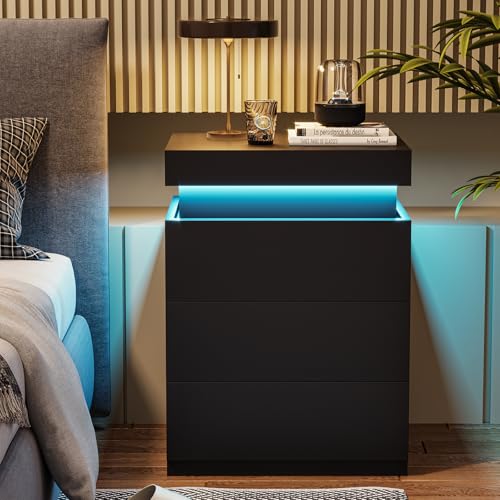


As an Amazon Associate we earn from qualifying purchases at no extra cost to you.
Modern Nightstands at a Glance
| Style / example line | Best for | Typical stated features | Limits |
|---|---|---|---|
| Two-drawer engineered-wood table (IKEA Malm type) | Budget shoppers who want a plain, minimal look | Wood-effect or painted finish over fiberboard, two drawers, narrow footprint | Engineered wood handles moisture and weight less well than solid wood |
| Solid-wood mid-century table (West Elm Mid-Century type) | Buyers who want tapered legs and a warmer look | Solid or veneered wood, one or two drawers, raised legs | Raised legs mean less hidden storage |
| Three-drawer chest (IKEA Hemnes type) | People who store books, chargers, skincare and more | Wider top, three drawers, traditional-meets-modern profile | Takes more floor space beside the bed |
| Metal and wood open frame (Nathan James Harlow type) | Small rooms and light, airy styling | Metal frame, shelf or drawer, visible legs | Open shelves show clutter |
| Floating wall-mounted shelf or drawer | Tight floor plans and easy floor cleaning | Mounts to the wall at a height you choose | Needs correct wall anchors and a weight limit you must respect |
| Round or pedestal side table | Bedrooms with sharp corners to avoid | Single top, sometimes with a lower shelf | Little concealed storage |
Product lines are updated or retired often, so treat the names above as examples of each style and compare the current dimensions and materials on each maker’s own product page before buying.
What Counts as a Modern Nightstand
Modern nightstands share a few traits: flat or lightly sculpted fronts, simple pulls or push-to-open fronts, limited ornament and a neutral or natural-wood finish. Within that, three sub-styles dominate. Scandinavian-inspired designs use pale woods and rounded corners. Mid-century modern designs use tapered legs and warm walnut or oak tones. Contemporary and minimalist designs use matte lacquer, black metal and glass. All three work with most beds, so choose by how the table behaves in your room rather than by label.
Size and Height: The Fit Rules That Matter
Match the top to your mattress
A common design guideline is to choose a top within a few inches of the top of the mattress so you can reach a lamp or glass of water without stretching. Platform beds and low frames pair well with tables around 18 to 22 inches tall, while taller traditional beds suit tables in the mid-20s. Measure from the floor to the top of your mattress, then compare that number to the height each maker lists.
Width and clearance
Measure the space between the bed and the nearest wall or door swing. Many modern nightstands list widths from roughly 15 to 28 inches. Leave enough room to open a drawer fully and to walk past the table without turning sideways. If the table must share space with a radiator, vent or outlet, check the maker’s depth and the position of any cable cut-out.
Pairs and symmetry
Two matching tables give a balanced look, but a mismatched pair is fine if height and visual weight are similar. In narrow rooms, one full-size table on the side you use most and a slim shelf on the other works well.
Materials Explained
- Solid wood: Makers describe woods such as oak, walnut, rubberwood or acacia. Solid wood can usually be refinished and tends to hold fasteners well, but it responds to humidity and can move with seasons.
- Veneer over engineered wood: A thin layer of real wood over MDF or particleboard gives a wood look at a lower cost. It resists warping better than some solid boards but is harder to repair if the veneer chips.
- Laminate or foil finish: Easy to wipe clean and consistent in color. Edges can chip, and the surface cannot be sanded.
- Metal frames: Powder-coated steel gives a slim profile. Check whether the top is wood, glass or stone-look material and whether the feet include floor protectors.
- Glass and stone-look tops: Attractive but show fingerprints and can be unforgiving if a lamp is knocked over.
Drawer Quality and Hardware
Drawer construction is one of the best indicators of long-term satisfaction. Reviewers often point to metal glides, full-extension runners and soft-close mechanisms as signs of a better build, while simple wood-on-wood runners are common at the budget tier. Look at whether the maker lists a drawer weight limit, whether the drawer back is solid or thin hardboard, and whether pulls are screwed through the drawer front. Push-to-open fronts look clean but can be fiddly in the dark, so consider a shallow pull if you reach for the drawer at night.
Charging, Lighting and Cable Management
Many current nightstands add a cable notch in the back panel, and some include built-in USB ports or wireless charging pads. If the maker lists a built-in outlet or charger, follow its instructions, use only the cord provided and do not overload it. For any table with a plug-in feature, make sure the cord reaches your wall outlet without being stretched across a walkway. If you are unsure about outlet capacity or wiring, ask a licensed electrician rather than guessing.
Budget Tiers
Budget
Expect engineered wood with a laminate or foil finish, simple drawers and flat-pack assembly. These work well in guest rooms and rental apartments. Check the weight rating and use the supplied anchor if one is included.
Mid-range
Mid-range tables more often use veneer or solid-wood frames, better finishes and smoother drawer hardware. This tier suits a primary bedroom where the table gets daily use.
Premium
Premium pieces tend to use solid hardwood, dovetail joinery, soft-close glides and sometimes pre-assembled construction. They cost more but can be refinished and often come with longer warranties as stated by the maker.
Pick X If You Want Y
| Pick this | If you… |
|---|---|
| Two-drawer minimal table | want a simple, affordable pair for a standard bed |
| Mid-century solid-wood table | prefer warm wood tones and raised legs that show floor |
| Three-drawer chest | keep many items by the bed and have floor space |
| Open metal-and-wood frame | have a small room and want a lighter look |
| Floating shelf | want to see the floor and mop or vacuum easily |
| Round pedestal table | share a tight corner with children or a walkway |
Assembly, Safety and Care
Most affordable nightstands arrive flat-packed. Allow time for assembly, tighten fasteners again after a few weeks, and use the anti-tip hardware if the maker supplies it, especially when children or pets are in the home. Wall-mounted designs must be fixed into studs or with anchors rated for the load, and you should follow the maker’s weight limit. For care, wipe wood-effect finishes with a slightly damp soft cloth and dry them, use coasters under glasses and lamps, and keep tables away from direct heat sources. Solid wood benefits from occasional cleaning with a product the maker approves.
Alternatives to a Traditional Nightstand
- Narrow console or small bench: Works at the foot of the bed or beside it if you need surface area rather than drawers.
- Stacked books on a wall shelf: A budget option for a studio apartment, provided the shelf is anchored correctly.
- Headboard with built-in shelves: Removes the need for separate tables when floor space is limited.
How to Choose in Five Steps
- Measure mattress height and the gap beside the bed.
- Decide what must be within reach: lamp, phone, glasses, medication, book.
- Choose drawer count based on how much you want hidden.
- Pick a material and finish suited to your budget and humidity level.
- Check weight ratings, anti-tip hardware and the maker’s care guidance before ordering.
Frequently Asked Questions
What height should a modern nightstand be?
Aim for a top within a few inches of your mattress top, which commonly means 18 to 26 inches depending on the bed. Measure your own bed first, because platform frames sit lower than traditional ones. A table slightly lower than the mattress is usually more comfortable than one that is much higher.
Are solid-wood nightstands worth it compared with engineered wood?
Solid wood can be refinished and often lasts longer under heavy daily use, which suits a primary bedroom. Engineered wood with veneer or laminate costs less and works well in guest rooms or rentals. Makers list their materials, so read the product page rather than assuming from the finish name.
Do I need two matching nightstands?
No. Matching pairs look balanced, but you can mix tables if they have similar height and visual weight. In a narrow room, one full table and one slim shelf is a practical combination.
How do I keep cables tidy beside the bed?
Choose a table with a back cable notch or use clips to guide cords along the back edge. Keep chargers away from bedding and follow the maker’s instructions for any built-in power feature. Ask a licensed electrician if you need an outlet moved or added.
Are floating nightstands safe?
They can be when installed with anchors or studs rated for the load and used within the maker’s stated weight limit. Poor anchoring in drywall is the usual risk. If you are unsure about your wall type, ask a professional installer.
How do I clean and protect a nightstand finish?
Wipe it with a soft, slightly damp cloth and dry it straight away, and use coasters under drinks and lamps. Avoid harsh cleaners unless the maker’s care sheet allows them. Keep the table out of direct sun and away from heaters to limit fading and warping.