Key takeaways
- Height you’ll actually need: Measure from the floor to your highest shelf, then subtract your comfortable reach (roughly your height plus 40 cm). Two or three steps handles most wall cabinets; four steps is for tall pantries, extractor hoods, and light fittings.
- Contact points, top and bottom: Look for textured or ribbed pedals plus rubberised feet rated for the floors you own. Tile and sealed hardwood are the two surfaces where cheap plastic feet skate, and a kitchen floor is rarely entirely dry.
- Steel versus aluminium: Steel feels planted and usually carries the higher load rating; aluminium is noticeably easier to carry one-handed and won’t rust near a sink or dishwasher vent. Choose based on who lifts it most often.
- Handrail and pedal width: A handrail lets you keep three points of contact while your other hand holds a dish. Pedals of around 20 cm deep let you stand square rather than perched — the difference between confidence and a heart-rate spike.
- Folded thickness and storage: Anything under about 8 cm folded will slide into the gap beside a fridge or inside a broom cupboard. A ladder stored within arm’s reach of the kitchen is the one that gets used; a ladder in the shed is a dining chair waiting to happen.
What's inside
As a sleep-wellness consultant, I spend most of my working hours talking about mattresses, light exposure, and evening routines — and a surprising amount of time talking about kitchens. The reason is simple: the last hour before bed is usually spent in one, and it is where the day’s small physical stresses tend to pile up. Reaching for the chamomile on the top shelf, balancing on a dining chair to retrieve a stockpot, gripping a countertop edge while stretching for the vitamin bottle — each of these sends a brief spike of vigilance through the nervous system at exactly the moment you want it winding down. A wobble at 10 p.m. is not just a safety issue; it is a physiological interruption to the transition into sleep.
This guide looks at kitchen step ladders through that lens: stability you don’t have to think about, weight light enough that you actually use the thing instead of grabbing a chair, and a folded footprint slim enough to live beside the fridge rather than in the garage. Below, I’ve reviewed the models I consider most worth owning in 2026, covering both two- and three-tier stools for daily cupboard access and taller four-step designs for deep pantries and high cabinetry. Every pick prioritises anti-slip contact points, an honest load rating, and a design that folds without a fight.
As an Amazon Associate we earn from qualifying purchases.




🛒 Best Price Today on Amazon
Prime members get fast, free shipping on everything above, plus member-only deals. New members get a 30-day free trial — cancel anytime.
How to Choose a Kitchen Step Ladder (2026)
- Height you’ll actually need: Measure from the floor to your highest shelf, then subtract your comfortable reach (roughly your height plus 40 cm). Two or three steps handles most wall cabinets; four steps is for tall pantries, extractor hoods, and light fittings.
- Contact points, top and bottom: Look for textured or ribbed pedals plus rubberised feet rated for the floors you own. Tile and sealed hardwood are the two surfaces where cheap plastic feet skate, and a kitchen floor is rarely entirely dry.
- Steel versus aluminium: Steel feels planted and usually carries the higher load rating; aluminium is noticeably easier to carry one-handed and won’t rust near a sink or dishwasher vent. Choose based on who lifts it most often.
- Handrail and pedal width: A handrail lets you keep three points of contact while your other hand holds a dish. Pedals of around 20 cm deep let you stand square rather than perched — the difference between confidence and a heart-rate spike.
- Folded thickness and storage: Anything under about 8 cm folded will slide into the gap beside a fridge or inside a broom cupboard. A ladder stored within arm’s reach of the kitchen is the one that gets used; a ladder in the shed is a dining chair waiting to happen.
The Best Kitchen Step Ladders of 2026, Reviewed
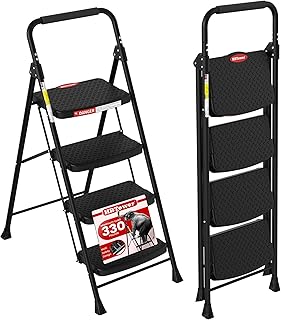
HBTower Folding Steel Step Stool with Handrail
This is the model I recommend most often for everyday cupboard access: wide anti-slip pedals, a proper handrail, and the reassuring solidity that only steel gives you. It is the least fussy option here — unfold, step up, done — which is exactly what you want when you’re tired.
HBTower Aluminium Step Stool (Black Woodgrain)
A genuinely lightweight aluminium build with a 330 lb capacity and a woodgrain finish that doesn’t look like hardware left out on display. Ideal for smaller kitchens and for anyone who finds steel stools awkward to shift between rooms.
KINGRACK Aluminium 4 Step Ladder
The pick for deep pantries and high cabinetry, with non-slip pedals, a full handrail, and a space-saving fold that belies its height. Aluminium keeps it manageable to carry upstairs, which matters if you also want it for changing bulbs or smoke-alarm batteries.
HBTower 4 Step Steel Ladder
If you want four-step reach with maximum planted feel, this steel version is the sturdier sibling of the KINGRACK. Heavier to move, but it barely registers movement underfoot — a good choice for taller adults or anyone nervous at height.
GOLYTON 3 Step Ladder, 500 lb Capacity
The highest load rating in this roundup, and it shows in the frame and pedal construction. A sensible choice for households where the ladder gets shared, or where you’re often carrying a loaded box up rather than a single jar.
Frequently Asked Questions
Is a step stool really safer than a kitchen chair?
Substantially. Dining chairs have narrow, slippery seats, no handrail, and legs designed to slide out from under you. Falls from standing height are a leading cause of household fracture, and most happen on improvised platforms.
How much weight capacity do I need?
Add your body weight plus the heaviest thing you’d carry up, then choose a rating comfortably above that. A 330 lb rating suits most single users; 500 lb gives extra headroom for shared or heavier-duty use.
Steel or aluminium for a kitchen?
Aluminium if you’ll move it daily or store it in a damp spot near plumbing; steel if it mostly stays put and you value the extra rigidity and load rating.
Where should I store it so I’ll actually use it?
Within sight of the cupboards you use most — the fridge gap, the end of a run of units, or the back of a utility door. Convenience determines whether you reach for it or improvise.
Final Thoughts
For most kitchens, the HBTower Folding Steel Step Stool with Handrail is the sensible default: stable, simple, and reassuring under the feet. Choose the HBTower Aluminium Step Stool if portability and looks matter more than raw mass, and step up to the KINGRACK Aluminium 4 Step Ladder if your pantry runs to the ceiling. Any of the three removes one small, avoidable jolt from your evening — which is more than most sleep gadgets can claim.