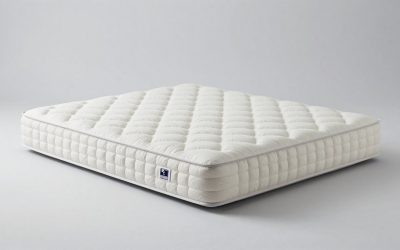
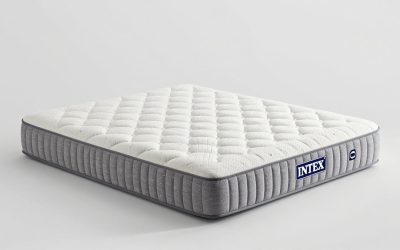
A king mattress buys a couple 76 inches of width — but width was never really the problem. The problem is that two people almost never arrive in bed in the same physiological state. One runs hot at 2 a.m., the other sleeps in socks. One weighs 130 pounds and rides on top of the comfort layer; the other weighs 220 and compresses straight through it. One drops off in four minutes, the other lies awake registering every shift in the sheets. Mattress marketing is still written for a single sleeper, which is why so many couples buy a highly rated bed and still wake three times a night.
This shortlist is built around shared sleep specifically. I weighted motion transfer, perimeter support, surface temperature, and zoned lumbar response well above raw plushness, and I’ve noted which body types and sleep positions each bed genuinely suits. Below the picks you’ll find a compact buying framework and answers to the questions couples ask most before they commit to a 365-night trial.
Our top picks


As an Amazon Associate we earn from qualifying purchases at no extra cost to you.
🛒 Best Price Today on Amazon
Prime members get fast, free shipping on everything above, plus member-only deals. New members get a 30-day free trial — cancel anytime.
How to Choose a King Size Mattress For Couples (2026)
- Motion isolation: This is the single biggest driver of shared-sleep quality. Individually pocketed springs and dense memory foam both absorb movement locally instead of transmitting it across the bed; interconnected innerspring units do the opposite. If either of you is a restless sleeper or gets up for a night shift, treat this as non-negotiable.
- Firmness versus the weight gap: Medium firm is the default couples compromise because it supports a heavier partner without stranding a lighter one on the surface. Once the difference between you exceeds roughly 50 pounds, prioritize a thicker profile (14–16 inches) so the heavier sleeper still has support layers left underneath.
- Heat management: Sleep onset depends on your core temperature falling about one to two degrees, and two bodies generate twice the heat load. Coil layers move air by design; foam beds rely on conductive infusions such as copper, graphene, or gel to pull warmth away from the surface.
- Edge support: A reinforced perimeter is what makes a king actually feel like a king. Without it, both of you migrate inward to avoid the roll-off sensation and lose several inches of usable sleeping surface each.
- Certifications and trial length: Look for CertiPUR-US foams and an explicitly fiberglass-free construction. Then check the trial window — bodies need three to four weeks to recalibrate to new support, so anything shorter than 100 nights doesn’t give you a fair test, and a full year is better.
The Best King Size Mattresses For Couples (2026), Reviewed
BedStory 14 Inch Medium Firm Hybrid King
The most broadly appropriate pick here: a 14-inch hybrid that pairs pocketed coils with a contoured lumbar zone, so a side-sleeping partner gets shoulder give while a back sleeper keeps their pelvis level. Motion isolation is its strongest suit, and the fiberglass-free build plus a 365-night trial removes most of the risk from buying online.
EGOHOME 14 Inch Copper Gel Memory Foam King
If one of you wakes with lower-back stiffness, this is the bed to try — deep memory foam contouring with copper-gel and graphene-cool-tech layers that address foam’s usual heat penalty. Expect a genuine hug rather than a bounce, which suits couples who both sleep on their sides and want near-total stillness underneath them.
16 Inch Luxury 7-Zone Hybrid King
The tallest option on the list, and the one I’d point heavier couples toward: seven support zones firm up under the hips and soften at the shoulders, while the extra profile keeps both sleepers from bottoming out. It also delivers the plush hotel feel some buyers miss in a straight foam bed.
LETMOON 12 Inch Hotel-Level Hybrid King
A well-judged balance of gel memory foam over 7-zone pocket springs, tuned toward back and hip pressure relief without going soft in the middle. At 12 inches it’s the easiest pick for couples with lower bed frames or existing fitted sheets that won’t stretch over a 16-inch profile.
EGOHOME 12 Inch Green Tea Memory Foam King
The value choice, and a sensible one for guest rooms or lighter-framed couples who want quiet, conforming foam without the hybrid price. Green tea and gel infusions keep the surface fresher and cooler than budget foam typically manages.
Frequently Asked Questions
Is a king really wide enough for two adults?
A standard king gives each sleeper 38 inches — the same width as a twin XL. That’s ample unless one of you sprawls, in which case a California king trades four inches of width for four inches of length, or a split king lets you run two different firmness levels side by side.
Hybrid or all-foam for couples?
Hybrids generally win on airflow, edge support, and ease of repositioning; all-foam wins on absolute motion absorption and price. If heat is your recurring complaint, choose the hybrid; if your partner’s movement is what wakes you, foam has the edge.
What if we disagree on firmness?
Start with a medium firm base — it satisfies the widest range of body types — then personalize with toppers on each side rather than compromising on the mattress itself. Two-inch toppers change surface feel substantially without altering the underlying support.
How long before we judge a new mattress?
Give it 30 nights minimum. Musculoskeletal adaptation to a new support surface takes weeks, and early-week aches are common even when the mattress is right for you. Use the remainder of the trial window to confirm.
Final Thoughts
For most couples, the BedStory 14 Inch Hybrid is the safest first choice — balanced firmness, strong motion isolation, and a year to change your mind. Heavier partners or anyone wanting a luxury-hotel surface should size up to the 16 Inch 7-Zone Hybrid, while back-pain sufferers who prefer deep foam contouring will get more relief from the EGOHOME 14 Inch Copper Gel model.