Key takeaways
- Measure clearance before anything else: Note your ceiling height, then subtract any obstruction — crown molding, ductwork, a ceiling fan. Horizontal units typically need 55–65 inches of arc space plus a few inches of tolerance, so confirm the specific model’s spec sheet rather than trusting a category average.
- Insist on a real lift mechanism: Gas pistons or hydraulic struts should let the bed descend under control and rise with light pressure. Spring-only systems age unevenly and can turn a nightly routine into a two-person job, which is exactly how a wall bed stops getting used.
- Check mattress depth and weight limits: Most horizontal cabinets accept 8–12 inch mattresses. A pressure-relieving foam or hybrid in that range is ideal; anything thicker interferes with closing and strains the retention strap. Verify the stated load capacity if two adults will sleep on it regularly.
- Evaluate the sleep deck, not just the cabinet: Closely spaced solid slats or a full support platform prevent the sag that shows up as morning back pain. Wide gaps and thin plywood are the most common weak point in budget wall beds.
- Match the extras to your actual room: An integrated desk converts a spare bedroom into a genuine home office; drawers and shelves replace a separate dresser. Charging stations matter more than they sound if the bed covers your only accessible outlet.
Ceiling height is the quiet dealbreaker in small-space bedrooms. Most people fall for the idea of a wall bed, measure their floor plan, and then discover that a vertical unit needs somewhere between 82 and 90 inches of swing clearance — more than a basement, attic conversion, loft, or older apartment with 7-foot ceilings can offer. The result is a bed that either won’t open or opens into a light fixture. Horizontal Murphy beds solve this by folding along the mattress’s long edge, dropping required clearance to roughly 55 to 65 inches and freeing up the wall above for shelving, art, or a reading sconce.
From a sleep-wellness standpoint, though, clearance is only half the equation. A wall bed you dread deploying is a wall bed you’ll leave folded up, and a guest who sleeps on a flexing slat deck wakes up with lumbar complaints you’ll hear about at breakfast. This guide evaluates horizontal Murphy beds on the factors that actually govern nightly comfort and long-term use: lift mechanism quality, slat and frame rigidity, mattress depth allowance, integrated storage or desk function, and how honest each manufacturer is about assembly. Below are the models worth your attention in 2026, plus two hardware kits for anyone building custom cabinetry.
Our top picks


As an Amazon Associate we earn from qualifying purchases at no extra cost to you.
🛒 Best Price Today on Amazon
Prime members get fast, free shipping on everything above, plus member-only deals. New members get a 30-day free trial — cancel anytime.
How to Choose a Horizontal Murphy Bed (2026)
- Measure clearance before anything else: Note your ceiling height, then subtract any obstruction — crown molding, ductwork, a ceiling fan. Horizontal units typically need 55–65 inches of arc space plus a few inches of tolerance, so confirm the specific model’s spec sheet rather than trusting a category average.
- Insist on a real lift mechanism: Gas pistons or hydraulic struts should let the bed descend under control and rise with light pressure. Spring-only systems age unevenly and can turn a nightly routine into a two-person job, which is exactly how a wall bed stops getting used.
- Check mattress depth and weight limits: Most horizontal cabinets accept 8–12 inch mattresses. A pressure-relieving foam or hybrid in that range is ideal; anything thicker interferes with closing and strains the retention strap. Verify the stated load capacity if two adults will sleep on it regularly.
- Evaluate the sleep deck, not just the cabinet: Closely spaced solid slats or a full support platform prevent the sag that shows up as morning back pain. Wide gaps and thin plywood are the most common weak point in budget wall beds.
- Match the extras to your actual room: An integrated desk converts a spare bedroom into a genuine home office; drawers and shelves replace a separate dresser. Charging stations matter more than they sound if the bed covers your only accessible outlet.
The Best Horizontal Murphy Beds (2026) Reviewed
SOFTSEA Queen Horizontal Murphy Bed with Desk
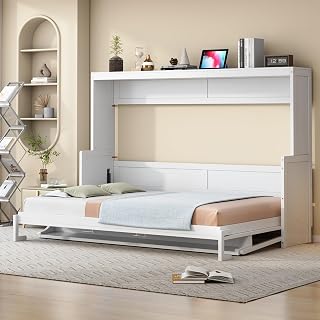
This is the most complete single-wall solution here, pairing a queen platform with a desk, drawers, shelving, and movable cabinets in a warm walnut finish. If you’re converting one room into an office that occasionally sleeps two, it consolidates three pieces of furniture into one footprint — just budget a full weekend and a second set of hands for assembly.
Full Horizontal Murphy Bed with Desk (Grey, Solid Wood)
Solid wood construction gives this full-size unit a reassuring lack of flex, and the muted grey reads as built-in rather than flat-pack in a guest room. It’s the pick for buyers who prioritize frame rigidity and a clean, quiet aesthetic over gadgetry.
Ball & Cast Horizontal Murphy Bed, Queen
The hydraulic lift is the headline: deployment is smooth and one-handed, which is precisely what keeps a wall bed in regular rotation. The cabinet face doubles as a desk when folded, making this a strong queen-size option for a studio or multipurpose den.
Bestar Full Horizontal Murphy Bed (Pur, 80W)
Bestar’s dual-piston mechanism, 1,000-pound support rating, and genuinely low-clearance fold make this the most engineered option on the list, and the built-in charging station is a thoughtful touch for a bed that hides your outlets. The bark grey Pur collection also integrates with matching storage units if you plan to expand the wall later.
Full Size Horizontal Murphy Bed Hardware Kit (Side-Fold)
For anyone with basic woodworking skills, this North American–made kit supplies the gas pistons, frame, and three separate step-by-step guides while you build the cabinetry to suit your ceiling and finish. It’s the most economical route to a truly custom low-clearance bed — and the most forgiving of odd wall dimensions.
Frequently Asked Questions
How much ceiling clearance does a horizontal Murphy bed need?
Plan on 55 to 65 inches of unobstructed swing space in front of the cabinet, versus 82 or more for a vertical unit. That difference is why horizontal beds dominate in basements, lofts, attic rooms, and RVs.
Are horizontal Murphy beds comfortable enough for nightly sleep?
Yes, provided the slat deck is rigid and you pair it with a supportive 8–12 inch mattress. The mechanism doesn’t affect sleep quality; deck sag and an undersized mattress do.
Do I have to anchor the bed to the wall?
Almost always. Anchoring into studs is what keeps the cabinet from tipping during deployment, and skipping it voids most warranties. If you rent, discuss the mounting holes with your landlord in advance.
Is a DIY hardware kit worth it over a complete bed?
If you can build square boxes and read a cut list, kits offer better value and exact fit for awkward walls. If you’d rather not own a table saw, buy the finished cabinet.
Final Thoughts
For most buyers, the Bestar Full Horizontal Murphy Bed is the safest bet — its dual-piston mechanism and 1,000-pound rating reflect real engineering, and the low-clearance fold works where nothing else will. Choose the SOFTSEA queen with desk if you want one wall to handle sleeping, working, and storage at once, or the Side-Fold Hardware Kit if you’d rather build the cabinetry yourself and spend the savings on a better mattress.