Key takeaways
- Small bathrooms: look at tubs near the 55 to 60 inch range, often labelled compact or petite. They suit a single bather who sits upright, and they leave more floor clearance around the tub.
- Standard bathrooms: 60 to 67 inch tubs fit most adults and are the largest group of products.
- Large primary baths: 68 inches and longer give room to recline, but they need space on every side for walking, cleaning and a floor-mounted faucet.
Choose an acrylic freestanding tub if you want the lightest, warmest and most affordable option, a stone resin or solid-surface tub if you want a heavy, premium, matte look that holds heat, and a cast iron or copper tub only if your floor, budget and installer are ready for something very special. Size and floor strength decide more of the outcome than style does, so start with the room and work toward the shape.
Our top picks

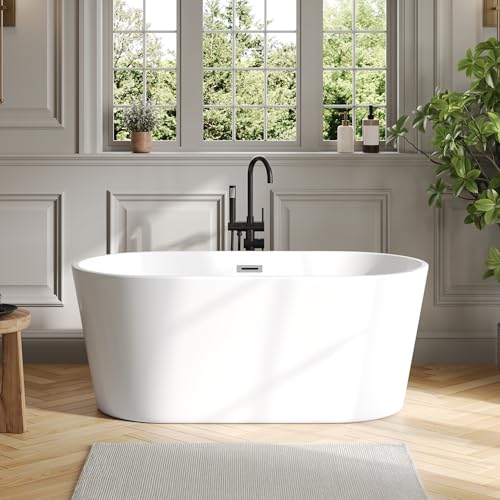


As an Amazon Associate we earn from qualifying purchases at no extra cost to you.
Freestanding Bathtubs at a Glance
| Material | Best for | Typical makers | Limits |
|---|---|---|---|
| Acrylic (often fiberglass reinforced) | Most households, upper floors, budget to mid-range | Kohler, American Standard, Woodbridge, Vanity Art, Signature Hardware | Can scratch; quality varies with sheet thickness and reinforcement |
| Stone resin or cast mineral composite | A premium matte finish and good heat retention | Victoria + Albert (Quarrycast), Native Trails (NativeStone), Signature Hardware | Heavy when filled; mid-range to premium tier |
| Enameled cast iron | Long service life and a classic clawfoot or slipper look | Kohler, Signature Hardware, Barclay | Very heavy; may need floor reinforcement; hard to move |
| Solid surface | Smooth, repairable finish in a modern shape | Various specialty bath brands | Premium tier; follow the maker’s cleaner guidance |
| Copper or metal | A statement piece with a living finish | Native Trails, specialty makers | Finish changes over time; premium tier; specific care rules |
Brand names above describe the kinds of lines each maker is known for. Individual models change, so read the specification sheet for the exact tub you are considering and treat the maker as the source for dimensions, weight and warranty terms.
Start With Size, Not Style
Most freestanding tubs are listed with an overall length between roughly 55 and 72 inches, a width in the high 20s to low 30s of inches, and a rim height that varies by design. The listed length is the outside measurement. The usable bathing space is smaller, and the water depth to the overflow is what determines how much of your body is covered. Makers publish a capacity figure in gallons, and it is worth comparing that number across tubs rather than relying on length alone.
- Small bathrooms: look at tubs near the 55 to 60 inch range, often labelled compact or petite. They suit a single bather who sits upright, and they leave more floor clearance around the tub.
- Standard bathrooms: 60 to 67 inch tubs fit most adults and are the largest group of products.
- Large primary baths: 68 inches and longer give room to recline, but they need space on every side for walking, cleaning and a floor-mounted faucet.
Weight, Floors and Structure
A full tub with a bather is heavy. Acrylic tubs are the lightest, stone resin tubs are noticeably heavier, and enameled cast iron is the heaviest. Makers publish a dry weight, and some list a filled weight. If the bathroom is on an upper floor, in an older house, or over a crawl space with a long joist span, ask a contractor or structural professional to review the floor before you order a heavy tub. This is a safety and building-code question, not a style one, and it is better answered before delivery than after.
Materials in More Detail
Acrylic
Acrylic is a vacuum-formed plastic sheet that is backed with reinforcing material. Makers describe it as warm to the touch and relatively light. Reviewers generally point out that quality depends on sheet thickness and the reinforcement layers, which is why a budget tub and a premium acrylic tub can look similar in photos but feel different in person. Acrylic can be scratched by abrasive cleaners, so most makers advise soft cloths and non-abrasive cleaners.
Stone resin and composite
These tubs are cast from a blend of mineral fillers and resin. Makers market them as dense, matte and good at holding heat, and independent outlets commonly note that the surface is more resistant to marks than basic acrylic while still being repairable in some cases. The trade-off is weight and a higher price tier. Victoria + Albert describes its Quarrycast material as a blend of volcanic limestone and resin, which is a useful example of how a maker states its composition.
Enameled cast iron
Cast iron with a porcelain enamel coating is the traditional clawfoot material. It is durable and holds heat well, but the weight is the main drawback, and a chip in the enamel needs repair rather than ignoring. Many makers advise avoiding abrasive pads and harsh chemical cleaners.
Copper and solid surface
Copper tubs are usually hammered or smooth and develop a patina unless sealed. Solid surface tubs have a uniform finish that can sometimes be sanded or polished by a professional. Both sit in the premium tier and both come with specific care instructions from the maker.
Shape and Comfort
- Oval: the most common shape, with an even rim and a gentle interior. Works in most layouts.
- Slipper: one raised end for back support. Good for bathers who like to recline; check which end the maker places the drain.
- Double slipper: both ends are raised, so two bathers can face each other or one can choose either end.
- Clawfoot: a traditional look on feet; the rim is exposed, so the faucet is typically a freestanding or wall-mounted fixture.
- Rectangular or modern: straight sides fit contemporary rooms but can feel less sloped for the back.
If possible, sit in a showroom tub before buying. Interior slope, rim thickness and depth are felt more than read.
Plumbing and Fit Notes
- Drain location: freestanding tubs usually have a center or end drain. Match the drain to the position of your rough-in.
- Overflow: some tubs include an integrated overflow; others rely on a separate overflow kit. Confirm what is included.
- Faucet: a freestanding tub usually needs a floor-mounted tub filler or a wall-mounted spout. Tubs with a rim drilled for a deck faucet are less common. Check the faucet height against the tub rim so water falls cleanly into the basin.
- Clearance: allow room around the tub for cleaning and for building-code requirements. A licensed plumber can confirm local rules.
- Access: measure doorways, stairs and corners. A tall rigid tub may not turn a tight stair landing.
Safety and Care
Freestanding tubs have high, sloped walls and wet, smooth surfaces. A bath mat designed for tubs, a grab bar installed into structural backing by a qualified person, and a careful approach to getting in and out can reduce slip risk. If anyone using the bath has limited mobility, balance concerns or a medical condition, a walk-in or low-step design and a conversation with a healthcare professional are more sensible than a high-rim freestanding tub. Follow the maker’s cleaning guidance, avoid abrasive products on acrylic and enamel, and rinse well after using bath oils or salts, since many makers warn that these can leave residue on the finish.
Budget Tiers
| Tier | What you usually get | Trade-off |
|---|---|---|
| Budget | Acrylic oval or slipper tubs, often fiberglass reinforced, with a basic drain kit in some cases | Thinner sheets, shorter warranties, fewer size options |
| Mid-range | Better acrylic, entry stone resin, enameled cast iron clawfoot tubs, matched fixtures | Heavier shipping and more careful installation |
| Premium | Quarrycast-style composites, copper, solid surface, designer shapes, long warranties | Weight, lead times and specialist installation |
Pick X If
| Pick this | If you |
|---|---|
| Acrylic oval or slipper | Have an upper floor, a tight budget, or want a warm surface and easier delivery |
| Stone resin or composite | Want a matte premium look and the floor can carry the weight |
| Enameled cast iron clawfoot | Want a traditional look and long-term durability and can plan for the weight |
| Compact 55 to 60 inch tub | Have a small bathroom and a single bather |
| Double slipper | Want to recline at either end or bathe with a partner |
| Copper or solid surface | Want a design statement and accept specific care steps |
Alternatives to Consider
- Alcove or drop-in tub: usually less expensive and easier to tile around, with a shower-over option that a freestanding tub rarely supports.
- Freestanding-style tub with a built-in skirt: gives some of the look while tucking into a corner or wall.
- Walk-in tub: a safer entry for people with mobility needs, with a very different price and installation scope.
- Soaking tub with deeper walls: for those who care most about water depth rather than shape.
Frequently Asked Questions
Can a freestanding tub go on an upper floor?
Often yes, but weight matters. Acrylic tubs are the most common choice for upper floors because they are lighter. Ask a contractor or structural professional to check the joists, since a filled tub plus a bather adds a substantial load.
How long does the water stay warm in different materials?
Makers of stone resin and cast iron tubs state that their materials hold heat well, and reviewers often agree that thicker, denser walls help. Acrylic is warm to touch, and a quality tub with a reinforced shell can perform well. Water temperature also depends on tub volume and room temperature.
Do I need a special faucet?
Usually, yes. A freestanding tub typically uses a floor-mounted filler or a wall-mounted spout, not a standard deck faucet. Check the spout height and reach against the tub rim and have a plumber confirm the rough-in.
How do I clean and protect the finish?
Follow the maker’s care sheet. In general, use a soft cloth and a non-abrasive cleaner, avoid scouring pads on acrylic and enamel, and rinse well after oils or salts. Fix chips promptly using the maker’s repair advice.
What size tub fits two people?
A double slipper or a tub near 67 inches or longer gives more room, but comfort varies by body size and depth. Check the maker’s listed capacity and interior dimensions, not just the outside length.
Is a freestanding tub a good choice for older adults?
The high rim and slippery surfaces can make entry harder. If balance or mobility is a concern, discuss options with a healthcare professional and consider a lower tub, grab bars installed by a qualified person, or a walk-in design instead.