Key takeaways
- Measure the platform, not the old mattress: RV bunks use non-standard cuts — 38×75 twins and 73×52 fulls are common — so tape the actual frame, including any lip or wheel-well intrusion, before you compare listings. A mattress that binds at the corners will hump in the middle and wreck lumbar alignment.
- Thickness follows the sleeper, not the trend: Under 150 lbs, a 4-inch trifold gives adequate support over a solid deck. Side sleepers and anyone over roughly 200 lbs should look at 6 inches minimum, and 10 to 12 inches if the bunk is a permanent bed rather than a convertible.
- Demand a heat-management story: Closed-cell memory foam traps body heat against an already-warm cabin. Look for gel infusion, open-cell structures, or hybrid coil layers that let air move — thermal load is the single most common cause of fragmented sleep in RVs.
- Check what the cover does: A removable, machine-washable cover matters more in a camper than at home, where dust, damp, and pet traffic are constant. A non-slip base is equally important on laminate or gelcoat floors.
- Weigh the fold, literally: Trifolds recover their shape faster than roll-ups but stack taller; roll-ups stow smaller but need a compression bag. Note the shipping weight too — anything over 40 lbs is awkward to reposition solo in a narrow aisle.
RV sleep spaces punish assumptions. The bunk you measured at “queen” is likely three inches narrower than the one in your house, the platform underneath may be plywood over a storage bay, and the foam that felt luxurious in a showroom can turn into a slab of cold rubber at 3 a.m. in a mountain campground. Add the fact that most rigs need the sleeping surface to disappear during the day — folded, stacked, or shoved into a dinette bay — and you have a genuinely difficult sleep-engineering problem disguised as a shopping decision.
This guide approaches folding RV mattresses the way a sleep clinician would: thermal regulation first, spinal support second, packability third. Below you’ll find the models worth your money in 2026, plus the specification checks that separate a mattress you’ll still like on night forty from one you’ll quietly leave at a dump station. Everything here is chosen for real RV dimensions, real weight limits, and the real temperature swings that come with sleeping in a metal box.
Our top picks




As an Amazon Associate we earn from qualifying purchases at no extra cost to you. Ratings are shown as listed on Amazon.
🛒 Best Price Today on Amazon
Prime members get fast, free shipping on everything above, plus member-only deals. New members get a 30-day free trial — cancel anytime.
How to Choose a Folding RV Mattress (2026)
- Measure the platform, not the old mattress: RV bunks use non-standard cuts — 38×75 twins and 73×52 fulls are common — so tape the actual frame, including any lip or wheel-well intrusion, before you compare listings. A mattress that binds at the corners will hump in the middle and wreck lumbar alignment.
- Thickness follows the sleeper, not the trend: Under 150 lbs, a 4-inch trifold gives adequate support over a solid deck. Side sleepers and anyone over roughly 200 lbs should look at 6 inches minimum, and 10 to 12 inches if the bunk is a permanent bed rather than a convertible.
- Demand a heat-management story: Closed-cell memory foam traps body heat against an already-warm cabin. Look for gel infusion, open-cell structures, or hybrid coil layers that let air move — thermal load is the single most common cause of fragmented sleep in RVs.
- Check what the cover does: A removable, machine-washable cover matters more in a camper than at home, where dust, damp, and pet traffic are constant. A non-slip base is equally important on laminate or gelcoat floors.
- Weigh the fold, literally: Trifolds recover their shape faster than roll-ups but stack taller; roll-ups stow smaller but need a compression bag. Note the shipping weight too — anything over 40 lbs is awkward to reposition solo in a narrow aisle.
The Best Folding RV Mattresses Reviewed
WanderRest 12″ Cool Hybrid RV Mattress (Twin 38×75)
This is the choice for a fixed RV bunk where you want household-grade sleep quality rather than a camp compromise: pocketed coils handle motion isolation and edge stability while the gel foam comfort layer keeps surface temperature in check. At 12 inches it doesn’t fold, so treat it as the upgrade path once you’ve decided a bunk is permanent.
MASVIS 6″ Trifold Memory Foam Mattress (Twin)
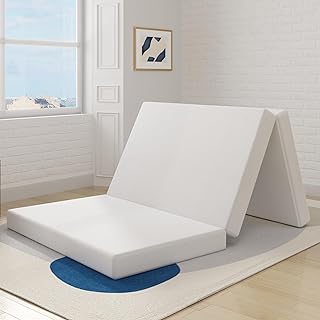
A well-balanced trifold that hits the support threshold most adult sleepers need without overwhelming a narrow bunk. The washable cover and clean fold geometry make it my default recommendation for shoulder-season trips where the mattress doubles as a floor bed.
ROXGOX 6″ Trifold Foldable Mattress (Full, 73×52)
Built for the practical realities of camper life: integrated handle, non-slip underside, and a full-size footprint that matches common RV dinette conversions. The foam runs slightly firmer than the MASVIS, which suits back sleepers and heavier builds.
6″ Full Foldable Mattress with Collapsible Washable Cover
A medium-firm generalist that earns its place through cover design — the collapsible, washable shell is genuinely easy to strip and re-fit in a confined space. Good value if you rotate between guest duty at home and weekend trips.
Avenco 4″ Trifold Mattress Topper
The right answer when you already have an OEM RV mattress that’s simply too thin or too hard, rather than needing a full replacement. Breathable cover, non-slip base, and a fold-down profile that stows in an overhead cabinet.
Frequently Asked Questions
Will a folding mattress develop permanent creases?
Quality trifolds won’t, provided you store them open or lightly folded rather than compressed under weight for weeks. Rotate the fold orientation seasonally and let the foam breathe for an hour after unpacking.
Do I need a mattress protector in an RV?
Yes — condensation is the hidden problem. Foam sitting on a cold platform can wick moisture from beneath, so pair a breathable protector on top with a slatted or ventilated base underneath.
Is 6 inches enough for nightly sleeping?
For most sleepers on a solid deck, yes, for stretches of a few weeks. For full-time living, step up to a 10 to 12 inch hybrid like the WanderRest.
How do I get rid of the new-foam smell?
Unroll it outdoors or with windows open for 24 to 72 hours. CertiPUR-US certified foams, like the memory foam camping pad above, typically off-gas faster and less noticeably.
Final Thoughts
For a permanent RV bunk where sleep quality is the priority, the WanderRest 12″ Cool Hybrid is the clear investment. If you need genuine folding portability, the MASVIS 6″ Trifold and the ROXGOX 6″ Full deliver the support-to-packability ratio that most travelers actually need — and the Avenco 4″ topper is the low-cost fix if your existing mattress just needs rescuing.