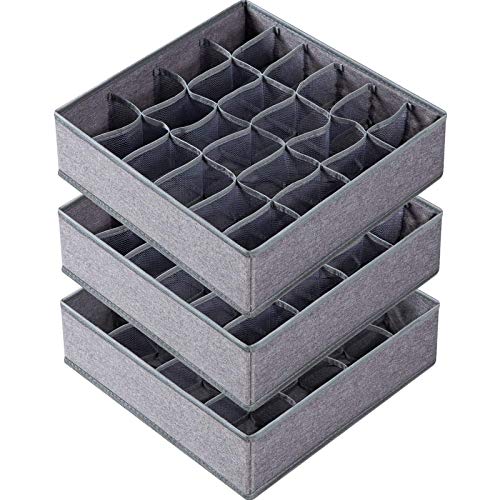
The best overall pick is the joyoldelf 24-Cell Sock Drawer Organizer (2-pack), with the Joyoldelf 16-Cell Fabric Divider as runner-up. Both turn a chaotic dresser drawer into a visual grid you can scan in seconds — the single fastest way to remove friction from your morning and evening routines.
As a sleep-wellness practitioner, I look at bedroom storage differently than most organizers do. A drawer you have to dig through is a small stress event, and small stress events cluster around the two moments that matter most for circadian health: the last ten minutes before bed and the first ten after waking. Rummaging for a matching sock under bright overhead light at 6:45 a.m., or hunting for sleepwear at 10:30 p.m. with your phone flashlight, quietly raises arousal exactly when you want it low.
Our top picks




As an Amazon Associate we earn from qualifying purchases at no extra cost to you.
Quick Comparison
| Product | Best For | Standout Feature | Rating |
|---|---|---|---|
| joyoldelf 24-Cell Sock Drawer Organizer (2 Packs) | Full sock and accessory overhaul | 48 total cells across two grey fabric trays | See current rating |
| Joyoldelf 16-Cell Underwear Organizer (2 Packs) | Budget upgrade for one drawer | Larger cells for briefs and lingerie | See current rating |
| Criusia 3-Pack Drawer Organizer Dividers (64 Cell) | Whole-dresser systems | Mixed 16+24+24 cell sizing, foldable | See current rating |
| acDesign 40-Piece Grid Drawer Dividers | Odd-sized and shallow drawers | Fully adjustable interlocking grid | See current rating |
| ZEXALOR 16-Compartment Divided Bin with Lid | Jewelry and small valuables | Clear lidded bin with removable dividers | See current rating |
How to Choose a Drawer Organizer or Divider for Socks, Underwear and Jewelry
- Measure depth before width: Fabric cell trays typically need 5–6 inches of clearance. Shallow nightstand drawers usually call for adjustable grid dividers instead.
- Match cell size to the item: Rolled socks and thongs suit 24-cell grids; boxer briefs, bralettes, and thicker wool socks need 16-cell trays or they bulge over the rim.
- Choose visibility over capacity: An organizer only helps if every item is visible at a glance. Half-filled cells beat crammed ones, which is why multi-packs often work better than one large tray.
- Add a lid for jewelry: Rings, studs, and thin chains migrate between open compartments. A lidded, divided bin keeps pairs together and prevents tangling.
- Prefer soft, quiet materials in the bedroom: Non-woven fabric trays open silently and won’t rattle a partner awake. Rigid plastic is easier to wipe clean but noisier.
The Best Drawer Organizers and Dividers for Socks, Underwear and Jewelry Reviewed
Best Overall: joyoldelf 24-Cell Sock Drawer Organizer, 2 Packs
Two grey trays give you 48 cells — enough to sort socks by weight, plus ties, belts, and handkerchiefs in one pass. Best for anyone doing a full dresser reset who wants a matched, uniform look rather than a patchwork of mismatched bins.
Best Budget: Joyoldelf 16-Cell Underwear Organizer, 2 Packs
The roomier 16-cell layout handles underwear, lingerie, and bulkier socks that get squeezed in tighter grids. Ideal if you want to fix one problem drawer cheaply before committing to a whole system.
Best Premium: Criusia 3-Pack Drawer Organizer Dividers, 64 Cell
You get three foldable trays in mixed sizes (16+24+24), so one purchase covers socks, underwear, and accessories across multiple drawers. Best for couples sharing a dresser or anyone organizing a wardrobe from scratch.
Best for Custom and Shallow Drawers: acDesign 40-Piece Grid Drawer Dividers
These interlocking white dividers let you build compartments to your exact drawer dimensions, including narrow nightstand and vanity drawers no pre-made tray will fit. Best for irregular spaces and for people who also want makeup or small electronics contained.
Best for Jewelry Storage: ZEXALOR 16-Compartment Divided Bin with Lid
The clear body plus lid keeps earrings, rings, and chains dust-free and visible, and the removable dividers let you create larger bays for watches or cuffs. Best for anyone who currently keeps jewelry in a dish or pouch and loses time untangling it.
Measure First: A Worked Example
Most returns in this category come from a grid that is a half inch too wide for the drawer. Measure the interior of the drawer, not the outside of the cabinet, and record three numbers: width, depth and the clear height from the drawer floor to the underside of the piece above. Then compare them to the dimensions printed on the listing for each set.
Here is a simple example with invented numbers. Say the drawer interior is 17 inches wide, 22 inches deep and 4.5 inches tall. If a 24-cell sock grid measures about 16.5 inches by 11 inches (confirm the real figure on the listing), two grids set end to end fill 16.5 by 22 inches, leaving half an inch of slack across the width. That is enough to slide in and out without wedging. A divider taller than 4.5 inches would block the drawer from closing, so a height of about 3 to 4 inches is the safer range in a drawer of that depth.
- Measure width, depth and clear height at the narrowest point; older dressers often taper.
- Subtract roughly a quarter inch from width and depth for friction-free movement.
- Divide the remaining space by the listed grid size to see how many modules fit.
- Plan the leftover strip for an adjustable divider rather than leaving a gap.
Which Organizer Should You Buy?
| If you… | Choose… |
|---|---|
| Want one set that covers socks in most drawers | joyoldelf 24-Cell Sock Drawer Organizer, 2 Packs |
| Need a lower-cost way to sort underwear and briefs | Joyoldelf 16-Cell Underwear Organizer, 2 Packs |
| Have many small items, such as rolled socks, ties or lingerie, and want maximum slots | Criusia 3-Pack Drawer Organizer Dividers, 64 Cell |
| Own a shallow or oddly sized drawer | acDesign 40-Piece Grid Drawer Dividers, which can be rearranged to fit custom widths |
| Store earrings, rings and small accessories | ZEXALOR 16-Compartment Divided Bin with Lid, where the lid keeps dust off |
Layout Plan by Item Type
| Item | Typical cell size | Best folding method |
|---|---|---|
| Ankle and crew socks | Roughly 2 to 3 inches wide | Pair, fold in half, then stand on edge |
| Briefs and boxer briefs | Roughly 3 to 4 inches wide | Fold in thirds, then roll or fold again |
| Thicker athletic socks | Wider cells, near 3 inches | Pair and fold once only |
| Rings, studs, charms | Small compartments, 1 to 2 inches | Sort by type, never stacked |
| Chains and bracelets | Long compartments | Lay flat, one per slot, to prevent tangles |
These sizes are rules of thumb that vary by brand and fabric thickness, so use them as a starting point and adjust once the first drawer is loaded.
Common Mistakes When Buying Drawer Organizers
- Buying for the biggest drawer and forcing it elsewhere. Every drawer in a dresser can have a different interior, so measure each one.
- Choosing cells that are too tight. Packed cells make a drawer harder to use than a pile; leave room for a pair to slide out.
- Ignoring the sides of the drawer. A set that touches the walls can scrape and jam the slides, so keep a few millimeters of clearance.
- Mixing soft and hard items. Jewelry with sharp edges can snag fabric dividers, so keep it in a separate lidded bin.
- Not planning for growth. Wardrobes expand, and a modular set that can add or remove sections handles that better than a fixed tray.
- Skipping a hold-down plan. Lightweight grids slide when the drawer opens; a strip of non-slip liner underneath keeps them in place.
Keeping the System Working
An organizer only helps if the layout stays readable. A quick routine keeps it that way: when laundry comes in, return each item to its assigned cell, and remove one old pair for every new one added. Pull each grid out twice a year to shake out lint, since fabric dividers collect fibers. For jewelry, wipe the bin and inspect for tarnish; anti-tarnish strips designed for silver are a small addition that slows discoloration inside a closed compartment.
Zoning the Drawer
A drawer works best when its contents follow how often each item is used. Put daily socks and underwear in the front rows, where the hand lands first, and keep seasonal or occasional items at the back. Separate by category rather than by color alone, since color sorting breaks down as soon as a new pair arrives. In a wider drawer, give each household member a column so nobody rummages through another person’s section. Reserve one cell for items waiting to be repaired or donated, which keeps clutter from creeping back into the grid.
Materials and Care
Fabric dividers are lighter, fold flat when not in use and are gentle on delicate items, but they collect lint and can sag along the walls if the fabric is thin. Rigid plastic holds a crisp shape and wipes clean, though it can crack if a drawer is forced shut. Fabric grids usually need a gentle hand-wash or spot clean, and plastic bins can simply be rinsed and dried. Whichever material you pick, let a freshly washed organizer dry completely before refilling it, because trapped moisture leaves a musty smell in a closed drawer.
Frequently Asked Questions
How does drawer organization affect sleep?
Indirectly but meaningfully. Predictable storage lets you complete your wind-down routine without bright light or searching, keeping pre-sleep arousal low and reinforcing a consistent bedtime cue.
Should I roll or fold socks in a cell organizer?
Roll them. Rolling fits one pair per cell, keeps elastic from stretching over time, and makes the entire drawer readable at a glance.
Are fabric or plastic dividers better?
Fabric trays are quieter and gentler on delicates, making them the better bedroom choice. Plastic is preferable for jewelry, cosmetics, or anything that may spill.
How many organizers do I actually need?
Plan for one tray per category, not per drawer. Most people need two to three trays to cover socks, underwear, and accessories comfortably.
Final Thoughts
For most bedrooms, the joyoldelf 24-Cell 2-Pack is the strongest all-round choice, with the Criusia 3-Pack worth the upgrade if you’re organizing an entire dresser at once. Pair either with the ZEXALOR lidded bin for jewelry, and your first and last ten minutes of the day get noticeably calmer.