Key takeaways
- 2D rollers move up and down and adjust width. Pressure comes mainly from your body weight against the rollers. Typical intensity: moderate.
- 3D rollers also push forward toward the body. Chairs commonly advertise several depth levels, often 5 or more. This is the key feature for a deep tissue feel because you can increase pressure in specific areas.
- 4D rollers add variable speed within each stroke, slowing down at the end of a movement the way a human hand might. Depth is similar to 3D. The difference is in rhythm and how “worked” a muscle feels.
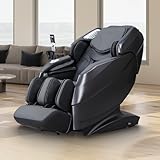
The best deep tissue massage chair for most people is a 3D or 4D roller chair on an SL- or L-track, with adjustable roller depth and a user range that fits your height and weight. Roller depth, more than airbag count or program lists, determines how firm and focused the massage feels. A 2D chair can feel firm, but it cannot push further into the muscle when you ask it to. This guide breaks down what creates deep pressure, how chairs differ by price tier, and which type fits which user. It’s general product information, not medical advice.
Our top picks


As an Amazon Associate we earn from qualifying purchases at no extra cost to you. Ratings are shown as listed on Amazon.
What makes a massage chair feel “deep”
Roller dimension: 2D vs 3D vs 4D
- 2D rollers move up and down and adjust width. Pressure comes mainly from your body weight against the rollers. Typical intensity: moderate.
- 3D rollers also push forward toward the body. Chairs commonly advertise several depth levels, often 5 or more. This is the key feature for a deep tissue feel because you can increase pressure in specific areas.
- 4D rollers add variable speed within each stroke, slowing down at the end of a movement the way a human hand might. Depth is similar to 3D. The difference is in rhythm and how “worked” a muscle feels.
Track shape: where the depth reaches
- S-track: follows the curve of the spine from neck to lower back.
- L-track: continues under the seat to the glutes and hamstrings, so depth reaches the hips and upper legs.
- SL-track: a combination that follows the spine and dips under the seat. Many mid-range and premium chairs use it.
- Dual-track: separate roller sets for back and seat, found on some premium chairs. Both areas can be worked at once.
Other factors that change intensity
- Recline angle: zero gravity puts more body weight onto the rollers, increasing pressure without changing settings.
- Roller material and count: four rollers spread pressure more than two, while firmer roller covers feel more pointed. Some chairs include a removable back pad. Taking it off makes the massage firmer.
- Airbag pressure: airbags compress rather than knead, so they add a squeeze, not depth. Several intensity levels help with calves and arms.
- Foot rollers: fixed or rotating rollers in the footwell can feel very firm. Look for chairs with adjustable or removable foot covers.
Features compared by price tier
| Tier | Typical price range | Rollers and track | Depth control | Who it suits |
|---|---|---|---|---|
| Entry | $800 – $1,800 | 2D, S- or SL-track | None, only speed and width | Moderate pressure; budget priority |
| Mid-range | $1,800 – $4,000 | 3D, SL-track | Several depth levels | Most people who want firmer, focused pressure |
| Upper mid | $4,000 – $7,000 | 3D or 4D, SL- or long L-track | Depth plus variable stroke speed | Frequent use; heavier or taller users |
| Premium | $7,000 – $15,000+ | 4D, dual-track or long L-track | Fine-grain depth, independent back and seat | Daily long sessions; buyers who want maximum control |
Prices vary with sales and model years. These ranges are a guide to what features to expect at each level, not exact prices.
Picks by type and situation
| Your situation | Type to look for | Key spec to check |
|---|---|---|
| Want firm back and shoulder work | 3D SL-track chair | At least 5 depth levels and manual spot mode |
| Want glutes and hamstrings worked too | 3D or 4D long L-track | Track length of about 48 in or more |
| Tall (over 6 ft 2 in) | Chair rated for tall users | Maximum height rating and extendable leg rest |
| Heavier user (over 260 lb) | Chair rated to 300 lb or more | Weight rating and seat width of at least 20 in |
| Prefer firm at times, gentle at others | 3D or 4D with removable back pad | Depth levels plus pad option |
| Shared household | Chair with body scan and saved user profiles | Number of user memory slots |
Brands with deep-pressure models
Several established brands sell 3D and 4D chairs in the US, including Osaki, Luraco, Bodyfriend, Panasonic, Human Touch, Infinity and Kahuna. Model lineups change frequently, so compare a specific model’s depth levels, track length, user height and weight rating rather than buying on brand reputation alone.
Space and delivery considerations
Chairs capable of deep pressure tend to be large and heavy because of their motors and frames.
| Measurement | Typical range |
|---|---|
| Width | 29 – 34 in |
| Upright length | 52 – 64 in |
| Reclined length | 65 – 80 in |
| Chair weight | 180 – 330 lb |
| Rear wall clearance (space-saving models) | 2 – 6 in |
| Rear wall clearance (standard recline) | 12 – 24 in |
Measure every doorway and hallway on the delivery path. A 30-inch door is a common minimum. Some heavier chairs ship in multiple pieces for in-home assembly, which helps with stairs. Many retailers offer white-glove delivery for an extra fee.
Using a deep tissue chair sensibly
- Start with a lower depth setting and increase it over a few sessions.
- Most chairs default to 15 to 20 minute sessions. Longer is not necessarily better.
- Manufacturers typically advise people who are pregnant, have implanted medical devices, or have specific health conditions to check with a doctor before use.
- Keep the chair out of direct sunlight to protect synthetic leather, and run it regularly so mechanical parts don’t sit unused for long periods.
Warranty: worth reading closely
Deep tissue chairs work their rollers and motors harder, so warranty terms matter. Look at how long the frame, parts and labor are each covered, and whether service is in-home. A short labor period with longer parts-only coverage is common and can mean paying for a technician later.
Bottom line
For a genuinely deep massage, prioritize a 3D or 4D chair with adjustable roller depth, then choose the track length that covers the areas you care about. Make sure the height and weight ratings match everyone who will use it. That combination matters far more than airbag counts or program lists, and it determines whether a chair feels firm and focused or merely busy.