Day beds for adults are most practical when you choose a full-size frame with at least a 400 lb weight capacity if it will be used nightly, or a twin-size frame if you need to save 15+ inches of floor space and want it to function primarily as a sofa. The right choice comes down to room size, frame material, mattress support, and how you plan to style it for dual use.
Our top picks
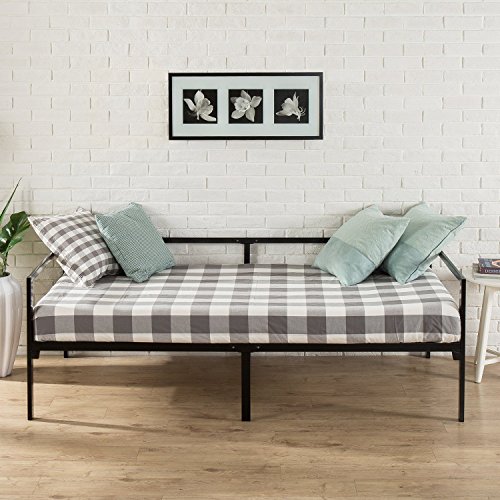 ZINUS Brandi Quick Lock Twin Day Bed
- Universal design to fit one standard twin mattress…
- Product Dimensions :76.5 x 39.7 x 25.5 inches
- Steel Frame Dimensions: 39" W x 75"L x…
 ZINUS Suzanne Bamboo and Metal Daybed with
- MULTIFUNCTIONAL COMFORT THAT’S STYLISH TOO
- Sturdy steel framework, naturally durable bamboo, and metal…
- Thick and durable steel frame is built to…
 VEVOR Full Size Daybed with Pop Up
- 2-in-1 Daybed with Trundle: This twin daybed features…
- Heavy-Duty Metal Frame: Built with a reinforced metal…
- Smooth Rolling Mobility: Equipped with 4 smooth-gliding casters,…
| Product | Key specs | |
|---|---|---|
| ZINUS Brandi Quick Lock Twin Day Bed | Universal design to fit one standard twin mattress… Product Dimensions :76.5 x 39.7 x 25.5 inches Steel Frame Dimensions: 39" W x 75"L x… | Check price |
| ZINUS Suzanne Bamboo and Metal Daybed with | MULTIFUNCTIONAL COMFORT THAT’S STYLISH TOO Sturdy steel framework, naturally durable bamboo, and metal… Thick and durable steel frame is built to… | Check price |
| VEVOR Full Size Daybed with Pop Up | 2-in-1 Daybed with Trundle: This twin daybed features… Heavy-Duty Metal Frame: Built with a reinforced metal… Smooth Rolling Mobility: Equipped with 4 smooth-gliding casters,… | Check price |
 VECELO Twin Size Daybed Frame Metal Steel VECELO Twin Size Daybed Frame Metal Steel | 🎃Multi-functional Daybed Frame: This metal daybed frame is… 🎃Come with premium metal daybed slats: This metal… 🎃Simple and Elegant Design: This twin size daybed… | Check price |
As an Amazon Associate we earn from qualifying purchases at no extra cost to you.
Twin vs. Full Daybeds: Which Size Makes Sense for Adults?
The biggest decision is not style, it’s footprint and sleep comfort. Both sizes use standard mattress lengths (75 inches), but width and clearance requirements are very different.
| Feature | Twin Daybed (38″ x 75″) | Full Daybed (54″ x 75″) |
|---|---|---|
| Overall frame size (with arms/back) | ~41″ W x 79″ L x 33″ H | ~57″ W x 79″ L x 33″ H |
| Floor space needed (with 30″ walkway on 3 sides) | ~6.8 x 9 feet | ~8.1 x 9 feet |
| Best for room size | Fits well in 8×10 ft or 10×10 ft rooms/offices | Needs 10×12 ft or larger to avoid crowding |
| Sleep experience for adults | Comfortable for one adult, tight for two | Comfortable for one adult to spread out, workable for two guests |
| As a sofa | Feels like a standard loveseat (ideal depth 38″) | Feels deep and lounge-like (requires large bolsters to sit upright) |
| Typical weight limit (frame + slats) | 400 – 600 lbs total | 500 – 800 lbs total |
| Bedding cost | Usually $300–$500 for mattress + daybed cover set | Usually $400–$700 for mattress + daybed cover set |
When to choose twin
Choose a twin daybed if the room is also your living room, home office, or studio apartment. At 38 inches wide, it leaves enough clearance for a coffee table (14-18 inches in front) and a side table without blocking doorways. It also makes a better daily sofa because the seat depth matches a standard sofa (20-22 inches to the back cushion), so adults can sit with feet on the floor (seat height 17-19 inches) without feeling like they are sinking into a bed.
When to choose full
Choose a full daybed if it will be used for nightly sleeping by an adult over 5’8″ or 180+ lbs, or if two people will occasionally share it. The extra 16 inches of width prevents shoulder hang-off and lets you use a standard full mattress, which is significantly more comfortable for side sleepers. Just measure carefully: in a 10×12 ft guest room, a full daybed with a 30-inch clearance on the open side and 24 inches at the foot will leave only about 28 inches for a dresser or desk on the opposite wall.
Frame Material and Durability: Upholstered vs. Wood vs. Metal
Weight limits and longevity depend more on construction than style. For adult daily use, look at the support system, not just the listed weight capacity.
| Material | Pros for Adults | Cons / What Wears First | Typical Weight Limit | Price Range (frame only) |
|---|---|---|---|---|
| Solid Wood (e.g., rubberwood, pine, acacia) | Sturdy, quiet, high weight capacity; can be refinished | Heavy (90-130 lbs boxed); can scratch floors; joints loosen if using only dowels/screws | 500 – 800 lbs | Usually $400–$900 |
| Engineered Wood (MDF / particleboard with veneer) | Lower cost, clean modern look | Lowest durability; sags under 200+ lbs over time; veneer chips; not ideal for daily adult sleeping | 250 – 400 lbs | Usually $250–$500 |
| Metal (steel tube + slats) | Highest weight capacity, lightest to move, best for trundles | Can squeak if bolts loosen; feels cold/hard without upholstery; weld points are failure point | 500 – 800+ lbs | Usually $300–$700 |
| Upholstered (wood/metal frame + foam + fabric) | Most comfortable as a sofa; no hard arms; linen or velvet looks high-end | Fabric stains and pilling; foam compresses in 2-3 years if low density; harder to clean | 400 – 600 lbs | Usually $500–$1,200 |
What to check before buying
- Support system: Look for at least 10-12 solid wood slats or a metal grid with center support legs. For adults, avoid frames with widely spaced slats (more than 3 inches apart) or thin wire mesh without reinforcement – the mattress will sag and the slats will bow.
- Foam and fabric specs: For upholstered daybeds, ask for foam density of 1.8 lbs/cu ft or higher and fabric with at least 30,000 double rubs (performance linen, microfiber, or velvet). Anything lower will show butt impressions and arm wear within a year of daily sitting.
- Joint construction: Solid wood frames with corner blocks and metal brackets outlast frames held only with wood screws. On metal frames, look for 1.5-inch diameter tubing and welded center rail.
- Mattress thickness: Use an 8-10 inch medium-firm mattress (innerspring or hybrid). Anything over 12 inches will sit too high over the side rails and look like a bed, not a sofa. Anything under 6 inches will bottom out for adults over 160 lbs.
Best Day Beds for Adults by Situation
Instead of a single “best” pick, match the frame to how you actually live.
1. For small apartments and studios: Twin metal frame with trundle
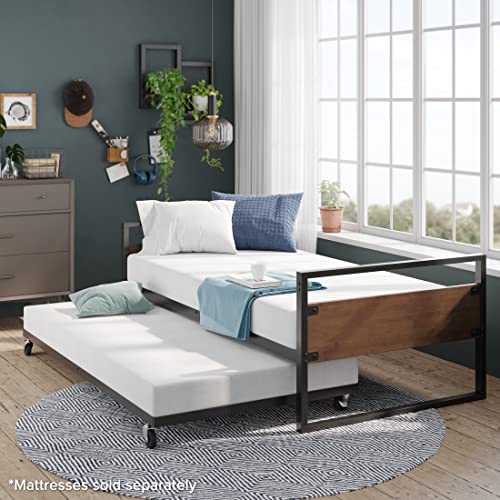
A twin-size steel daybed with a pull-out trundle is the most space-efficient option for adults who need seating for 2-3 people by day and sleeping for one or two by night. During the day it reads as a loveseat, and the trundle (usually holding a 6-8 inch mattress) can be stored with just 4 inches of clearance underneath. Keep the palette light – light gray or cream upholstery and thin arms – to avoid visually shrinking the room.
2. For dedicated guest rooms: Full solid-wood platform daybed
If you have a 10×12 ft guest room and want a true bed feel, a full-size solid wood daybed with a low back and two side arms works best. It supports higher weight limits, sleeps couples comfortably for a weekend, and pairs well with standard full bedding. Choose a frame with slats included and no box spring needed. This type often comes in walnut or white finishes that match dressers and nightstands.
3. For home office that doubles as guest room: Upholstered twin daybed with storage drawers
An upholstered twin daybed with two or three under-bed drawers (each ~36″ W x 20″ D) replaces a filing cabinet and sofa at once. The upholstered back (28-33 inches high) acts as a sofa back during calls, and the drawers hide linens. Opt for a performance fabric like tightly woven linen-polyester or microfiber if you have pets – it resists claws and cleans better than velvet or bouclé.
4. For daily adult sleeper with back pain: Wood or metal platform with hybrid mattress
If you will sleep on it nightly, prioritize support over style. A solid wood or heavy-gauge metal platform with a center leg and a medium-firm hybrid mattress (coils + 2-3 inches of memory foam) prevents sagging and keeps hips aligned. Avoid plush daybed-specific Link spring mattresses that dip in the middle after 6 months of adult weight.
How to Style a Daybed as a Sofa by Day and Bed by Night
The trick is to make the back functional for both uses without remaking the bed every morning.
- Create a sofa back: Place three 20×20 inch Euro pillows or a single long bolster (36-38 inches for twin, 52-54 inches for full) against the wall-side rail. This brings the effective seat depth from 38-54 inches down to a comfortable 22-24 inches for sitting upright.
- Layer, don’t pile: Use a fitted daybed cover (tailored to wrap the mattress on three sides) plus a thin quilt folded at the foot. It looks like upholstery by day and is ready to sleep without extra layers to remove.
- Set the height right: Aim for a finished seat height of 18-20 inches (frame + mattress). Coffee tables should be 1-2 inches lower than the seat (16-18 inches high). If your daybed sits at 22+ inches with a thick mattress, add a low 14-inch table or a footstool instead.
- Anchor the arrangement: In a living room, place a 5×7 ft rug so the front legs of the daybed sit on it and the coffee table is fully on it. Add one arm-side floor lamp (58-62 inches tall) rather than a table lamp, which would be too high next to the 33-inch back.
Assembly, Moving, and What Actually Wears Out
Daybeds are deceptively heavy and awkward to move. Before ordering, check these realities:
- Box size and weight: A twin metal frame ships in one box at 60-85 lbs; a solid wood or upholstered full often ships in two boxes totaling 110-150 lbs. Doorway width needed is at least 29 inches (standard interior door is 30 inches) – upholstered arms do not compress.
- Assembly time: Expect 45-90 minutes with two people. Metal frames require tightening 20-30 bolts (retighten after 2 weeks of use to prevent squeaks). Wood frames need careful alignment of slat rolls – missing one center support leg cuts weight capacity by nearly half.
- What fails first: On budget engineered-wood frames, the slat supports strip out. On upholstered frames, the arm foam compresses and fabric pills where people sit. On metal frames, noise develops at the joint between headboard and side rail. Using felt pads, checking bolts quarterly, and rotating the mattress every 3 months extends life by years.
- Mattress support fix: If your frame has fewer than 10 slats, add a 0.75-inch bunkie board on top of the slats. It distributes adult weight evenly and prevents the “hammock” feel.
Decision Matrix: Quick Match for Your Situation
| If you are… | Choose… | Why |
|---|---|---|
| In a studio or 10×10 ft room, need daily seating | Twin metal or upholstered, 400+ lb limit | Saves 16″ width, leaves room for table and walkway |
| Hosting couples or adults over 200 lbs | Full solid wood or heavy steel, 600+ lb limit | Prevents bottoming out and gives shoulder room |
| Renter who moves often | Twin metal with bolt assembly | Lightest, breaks down flat, no wall damage |
| Have kids and pets | Metal or solid wood with performance fabric cushions | Wipes clean, resists scratching and staining |
| Will sleep on it every night | Full platform + 8-10″ hybrid mattress + bunkie board | Best spinal support and durability |
FAQ: Real Follow-Up Questions
Can adults sleep on a daybed every night comfortably?
Yes, if the frame is rated for at least 400 lbs, has center support, and you use a full-size 8-10 inch hybrid mattress rather than a thin daybed mattress. Twin is fine for one adult nightly; couples should go full. Add a bunkie board if slats are spaced more than 3 inches apart to avoid sagging.
What weight limit do day beds for adults actually need?
For one adult sitting and sleeping, 400 lbs is the practical minimum. For two adults, look for 600 lbs or more. Remember the limit includes mattress (30-60 lbs), bedding, and dynamic load when sitting down hard. Solid wood and steel frames typically list higher and more honest capacities than engineered wood.
Do I need a special mattress for a daybed?
No. A standard twin or full mattress fits, but choose 8-10 inches thick and medium-firm. Daybed-specific mattresses are often only 6 inches and too soft for adult nightly use. Avoid pillow-tops over 12 inches – they make the daybed too tall to use as a sofa and may not be contained by the side rails.