Key takeaways
- Measure the platform, not the old mattress: Old RV foam compresses and shrinks at the edges. Measure the frame itself at three points per side, note any corner radius or wheel-well cutout, and send a diagram rather than a single width-by-length figure.
- Match foam density to body weight: High-density polyurethane (1.8 lb/ft³ and up) resists the sagging that ruins spinal alignment. Lighter sleepers can go softer; anyone over roughly 200 pounds should insist on high-density support, regardless of the surface feel they prefer.
- Budget your vertical clearance: A 10-inch mattress feels wonderful until it blocks the overhead cabinet or the bunk above. Measure headroom while seated upright on the platform, then subtract two inches for bedding and settling.
- Plan for heat and humidity: RVs trap moisture. Gel-infused memory foam moderates surface temperature, but the cover matters just as much — look for water-resistant or breathable knit options and a removable, washable zipper.
- Choose feel by sleep position: Side sleepers need enough surface give to let the shoulder and hip sink; back and stomach sleepers do better on medium-firm to firm, which keeps the lumbar curve supported instead of collapsing.
RV bed platforms are rarely rectangles. They’re trapezoids with a wheel-well bite taken out of one corner, or a 74-inch “queen” that’s actually 72 inches once you account for the trim. So travelers buy a standard mattress, wedge it in, and spend the season sleeping on something that bows in the middle, slides at every turn, and leaves a cold gap along one edge. Poor sleep on the road isn’t a comfort issue — it compounds. Fragmented sleep in a cramped berth means slower reaction time behind the wheel the next morning, and that’s a safety problem, not just a grumpy one.
Custom-cut foam solves the fit problem, but it introduces new decisions: what density, what feel, which cover, and how much loft your ceiling clearance actually allows. Below I’ve assessed the leading made-to-order RV mattresses for 2026 through a sleep-quality lens — pressure relief, thermal regulation in a poorly insulated box, and whether the construction will hold its shape after two thousand miles of vibration.
Our top picks


As an Amazon Associate we earn from qualifying purchases at no extra cost to you.
🛒 Best Price Today on Amazon
Prime members get fast, free shipping on everything above, plus member-only deals. New members get a 30-day free trial — cancel anytime.
How to Choose a Custom Rv Mattress (2026)
- Measure the platform, not the old mattress: Old RV foam compresses and shrinks at the edges. Measure the frame itself at three points per side, note any corner radius or wheel-well cutout, and send a diagram rather than a single width-by-length figure.
- Match foam density to body weight: High-density polyurethane (1.8 lb/ft³ and up) resists the sagging that ruins spinal alignment. Lighter sleepers can go softer; anyone over roughly 200 pounds should insist on high-density support, regardless of the surface feel they prefer.
- Budget your vertical clearance: A 10-inch mattress feels wonderful until it blocks the overhead cabinet or the bunk above. Measure headroom while seated upright on the platform, then subtract two inches for bedding and settling.
- Plan for heat and humidity: RVs trap moisture. Gel-infused memory foam moderates surface temperature, but the cover matters just as much — look for water-resistant or breathable knit options and a removable, washable zipper.
- Choose feel by sleep position: Side sleepers need enough surface give to let the shoulder and hip sink; back and stomach sleepers do better on medium-firm to firm, which keeps the lumbar curve supported instead of collapsing.
The Best Custom Rv Mattress (2026)s Reviewed
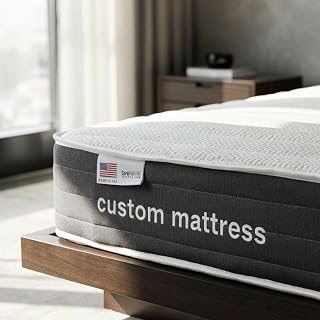
Sydney Custom RV and Van Mattress
Built to order in the USA for DIY van and truck conversions, this one shines when your build has genuinely odd geometry — angled walls, notches, or a narrow galley berth. The construction favors durable support over plushness, making it a sensible pick for weekend rigs that sit unused for stretches without developing body impressions.
Roam-M2 RV 10″ Gel Memory Foam
At ten inches with a luxury medium feel, this is the closest thing on the list to a home mattress, and the gel memory foam layer does real work managing the heat buildup that plagues rear bedrooms in summer. Confirm your clearance first — ten inches is generous for an RV, which is exactly why it sleeps so well for couples and side sleepers.
Matini Home Custom Foam Mattress & Topper
The most configurable option here: firm, medium, or plush, with a choice between a 100% organic cover and a water-resistant one, plus an optional gel memory foam layer. The organic cover is the standout for anyone sensitive to off-gassing in a small, sealed cabin, and the topper format lets you upgrade an existing berth cheaply.
High Density Foam Custom Mattress
A no-nonsense high-density build in medium-firm or firm, with a machine-washable zipper cover that earns its keep in bunks and daybeds where spills and pets are inevitable. This is my default recommendation for kids’ bunks and secondary sleeping areas where longevity outweighs luxury.
Kogler 7″ Gel-Infused Memory Foam RV Mattress
Seven inches of firm gel-infused foam is the right formula for tight bunk clearances, and it arrives compressed in a box, which makes installation through a narrow RV door far less of a wrestling match. The included pillow and cloth cover round out a genuinely practical bunk solution.
Frequently Asked Questions
How do I measure a mattress with a wheel-well cutout?
Treat the shape as a rectangle first, then measure the cutout separately: distance from the nearest corner along both edges, plus the depth and width of the notch. Sketch it, label every dimension in inches, and note which corner it is when you’re facing the bed.
Will a custom foam mattress hold up to constant travel vibration?
High-density polyurethane and quality memory foam tolerate road vibration well — better, in many cases, than innerspring units, which can develop noise and uneven wear. The failure point is usually low-density filler foam, so density specs matter more than thickness.
Should I choose firmer than I would at home?
Often, yes. RV platforms are solid wood or metal with no flex, so a mattress that feels medium on a home foundation will feel softer over a rigid base. Sizing up one firmness step is a reasonable hedge if you’re between options.
How do I stop moisture buildup underneath?
Air can’t circulate under a solid platform. Add a ventilated underlay mat or drill a few discreet vent holes in the platform, lift the mattress periodically to air it out, and choose a water-resistant cover if you camp in humid climates.
Final Thoughts
For a primary RV bedroom where clearance allows, the Roam-M2 10″ delivers the closest approximation of proper home sleep, with gel foam that handles cabin heat. If your build has unusual angles or you want cover material choices, the Matini Home custom mattress offers the most flexibility, while the Kogler 7″ remains the smartest pick for bunks and low-clearance berths.