Key takeaways
- Quiet operation: Thin steel doors ring like a drum and unlubricated hinges squeak. If the cabinet will sit within earshot of a sleeping person, look for magnetic or ball-catch closures rather than spring latches, and plan on a drop of white lithium grease at assembly.
- Material and air quality: Powder-coated steel and polypropylene are inert once unpacked. Particleboard and MDF units can release volatile compounds for several weeks, so air new wood-composite furniture in a garage or spare room before moving it into a bedroom.
- Shelf adjustability and load rating: Adjustable shelves let you build tall bays for bedding and bulk paper goods instead of wasting vertical space. Check the per-shelf weight rating, not just the cabinet total — canned goods and tools sag thin shelving fast.
- Anchoring and tip resistance: Any cabinet over roughly four feet tall needs a wall strap into a stud, full stop. This is non-negotiable in children’s rooms and worth doing everywhere else.
- Lock versus no lock: A keyed cabinet is genuinely useful for medications, sleep aids, tools, and chemicals. It’s also one more thing to lose the key to, so skip it if you’re only storing linens.
What's inside
Ask any sleep clinician what sabotages a good night’s rest and you’ll hear the usual suspects: caffeine, screens, an inconsistent bedtime. What rarely makes the list — and probably should — is the pile of half-sorted junk on the floor of the room where you sleep. Visual clutter keeps the brain in a low-grade scanning mode, quietly signalling that something remains unfinished. For light sleepers, that residual alertness is often the difference between drifting off in ten minutes and lying awake for forty. Enclosed storage solves the problem in the bluntest way possible: it puts a door between you and your unfinished business.
This guide looks at cabinet storage through that lens. I’ve weighed the usual practical concerns — build quality, shelf adjustability, whether the doors actually stay shut after a year — alongside factors that matter more once a cabinet lives near a bedroom or nursery: hinge noise, off-gassing from cheap composites, and how securely a unit anchors to a wall. Below you’ll find current picks across metal, plastic, and finished wood, followed by a buying framework and answers to the questions readers send most often.
As an Amazon Associate we earn from qualifying purchases.


🛒 Best Price Today on Amazon
Prime members get fast, free shipping on everything above, plus member-only deals. New members get a 30-day free trial — cancel anytime.
How to Choose a/an Cabinet Storage (2026)
- Quiet operation: Thin steel doors ring like a drum and unlubricated hinges squeak. If the cabinet will sit within earshot of a sleeping person, look for magnetic or ball-catch closures rather than spring latches, and plan on a drop of white lithium grease at assembly.
- Material and air quality: Powder-coated steel and polypropylene are inert once unpacked. Particleboard and MDF units can release volatile compounds for several weeks, so air new wood-composite furniture in a garage or spare room before moving it into a bedroom.
- Shelf adjustability and load rating: Adjustable shelves let you build tall bays for bedding and bulk paper goods instead of wasting vertical space. Check the per-shelf weight rating, not just the cabinet total — canned goods and tools sag thin shelving fast.
- Anchoring and tip resistance: Any cabinet over roughly four feet tall needs a wall strap into a stud, full stop. This is non-negotiable in children’s rooms and worth doing everywhere else.
- Lock versus no lock: A keyed cabinet is genuinely useful for medications, sleep aids, tools, and chemicals. It’s also one more thing to lose the key to, so skip it if you’re only storing linens.
The Best Cabinet Storage (2026)s Reviewed
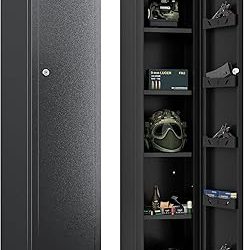
71″ Metal Garage Storage Cabinet with 5 Adjustable Shelves
At six feet tall with five repositionable shelves and a keyed lock, this is the most storage per square foot of floor on the list, and the locking doors make it the sensible choice for anything you’d rather children didn’t reach. Assembly is a genuine two-person job, and the panels benefit from a shim if your floor is uneven — otherwise the doors won’t sit flush.
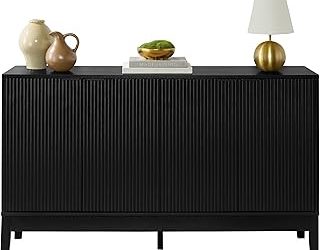
Sauder Select Storage Cabinet / Pantry
The only pick here that reads as furniture rather than equipment, which matters if the cabinet has to live in a bedroom or hallway rather than a utility space. It’s engineered wood, so give it two or three weeks of ventilation before it moves into a sleeping area, and keep it out of damp basements.
Sterilite 4 Shelf Cabinet
Plastic sounds like a compromise until you put it somewhere humid, at which point it quietly outlasts everything with a steel or wood body. It’s the quietest cabinet of the group — no metallic resonance when the doors close — and the obvious answer for laundry rooms, mudrooms, and anywhere condensation is a fact of life.
47″ White Metal Storage Cabinet with 3 Adjustable Shelves
The half-height format is the underrated pick: it fits under windows and sloped ceilings, and the top doubles as a surface for a lamp or a basket. Three adjustable shelves handle small appliances and pantry goods comfortably, though the shallower depth limits what you can stack front to back.
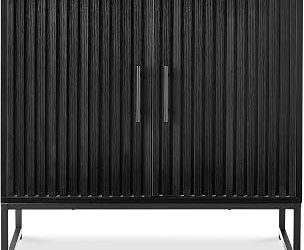
GAIOUS Metal Storage Cabinet, 2 Doors and 3 Adjustable Shelves
A close cousin of the white 47″ unit in a matte black finish that hides fingerprints and scuffs better, with the same three-shelf flexibility. Solid value for a kitchen overflow or utility cabinet; the doors are light enough that a magnetic catch is worth adding if you have curious pets.
Frequently Asked Questions
Does bedroom clutter really affect sleep?
The evidence points that way. Cluttered environments correlate with longer time to fall asleep and more reported difficulty switching off mentally. The mechanism is straightforward: unresolved visual tasks compete for attention at exactly the moment you’re trying to release it.
Metal, plastic, or wood?
Metal for capacity and security, plastic for humidity, wood-composite for rooms where appearance matters. Match the material to the environment rather than looking for one cabinet that does everything.
How do I stop a metal cabinet from rattling or squeaking?
Grease the hinge pins at assembly, add adhesive felt bumpers where the doors meet the frame, and make sure the unit is level. Most noise complaints trace back to a racked frame on an uneven floor.
Where should medications and sleep aids be stored?
In a locking cabinet, away from the bathroom. Bathroom humidity degrades many tablets faster than people expect, and a keyed door removes the biggest risk in homes with children or teenagers.
Final Thoughts
If you want the most capacity and a lock, the 71″ Metal Garage Storage Cabinet is the straightforward pick. For anything that has to look like furniture in a bedroom or living space, choose the Sauder Select — just air it out first. And in a damp laundry room or basement, the Sterilite 4 Shelf Cabinet will quietly outlive the alternatives.