Key takeaways
- Handing a child their first alarm clock is a small milestone with a surprisingly long list of decisions attached.
Handing a child their first alarm clock is a small milestone with a surprisingly long list of decisions attached. Should it be loud enough for a weekday school morning or gentle enough for a toddler’s room? Does a night light belong on the same device? Can a seven-year-old actually set it without a parent hovering? Kids’ clocks run from simple bedside digital models with big numbers to color-changing lamps and character designs, and the wrong pick ends up unplugged in a drawer within a month.
This guide is for parents, grandparents, and gift buyers choosing a clock for a child’s room in 2026. It covers seven listings and judges them only from what the titles say: display type, night light, alarm count, volume control, and the kid-focused features each seller names. It does not make claims about how any clock affects sleep. Where a title is silent on power source, backup, or volume level, the guide tells you to check the full listing before ordering.
Quick Picks
Our top picks


As an Amazon Associate we earn from qualifying purchases at no extra cost to you.
| Product | Best for | Key spec from the title |
|---|---|---|
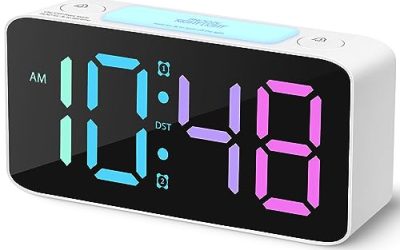
| DreamSky Small Digital Alarm Clock (RGB) | School-age kids who want a color-changing look | RGB, large numbers, dimmer |
| Axolotl Kids Alarm Clock (Pink) | Toddlers and young children | Cute design, dual alarm, multicolor night light |
| Cadmos Cute Pink Alarm Clock | Decor-minded gift buyers | RGB night light, small size for bedside or desk |
| DreamSky Space Alarm Clock | Kids and teens who like display pieces | RGB night light, crystal ball decor |
| Cadmos Modern Curved Alarm Clock | Families who want simple controls | Adjustable volume, weekday/weekend mode, OK to Wake wording |
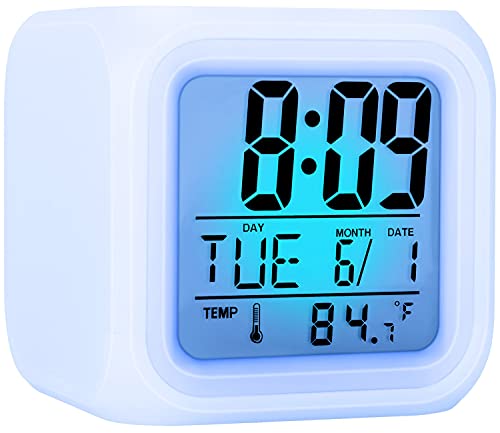
| Kids Alarm Clock, 7 Color Night Light | A clock that also shows temperature | 7 color night light, 12/24 hours, temperature, LED screen |
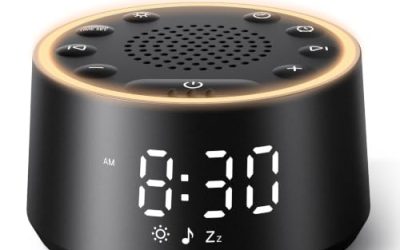
| LittleHippo Mella | Toddlers learning a morning routine | Night light, sound machine, OK to Wake |
How to Choose
Match the features to the child’s age
For toddlers and preschoolers, look for a clock that uses color, not numbers, to say whether it is time to get up. Titles that mention “OK to Wake” describe that kind of feature. For school-age kids, a clean digital display with large numbers and an obvious snooze or off button matters more. Teens usually care about looks and volume. A clock that frustrates a child on the first night rarely gets a second chance. Involving the child in the choice helps too: let them pick between two or three finalists, and they are far more likely to see the clock as theirs and take responsibility for setting it each evening.
Volume, alarms, and weekday modes
Look for adjustable volume, because the loudest setting may be too much for a bedroom and the quietest may not wake a deep sleeper. Dual alarms help when school days and weekends need different times. A weekday and weekend mode, which appears in some titles, saves a parent from resetting the clock every Friday evening. Try the sound as soon as it arrives, ideally in the room where it will live, because a hard bedroom floor and thin walls change how loud it feels. Keep the clock out of arm’s reach if a child tends to switch it off and doze.
Night light and display brightness
Many kids’ clocks double as night lights, with multicolor or RGB lamps. Look for a dimmer or adjustable brightness so the display does not light up the whole room. Choose a color setting that is soft rather than harsh, and ask whether the child wants the light on all night or only briefly. Some children like a constant glow, others find it distracting, and a model with an off option for the light is the safer choice. Rotating through every color can also be a nightly distraction, so a setting that holds one soft color is worth looking for in the listing details.
Power, build, and what to ignore
Check whether the clock plugs in, uses batteries, or offers backup, since titles often leave this out. A sturdy base and a cord long enough for the outlet matter in a child’s room. Cords should be kept out of reach of little ones. Ignore marketing phrases about gifts and room decor; they say nothing about reliability. Budget clocks may cut corners on speaker quality and button feel, so read the full listing for those details. If the child will carry the clock from room to room or to a grandparent’s house, a lightweight body and a simple plug are practical advantages over a heavy decorative design.
The 7 Best Options
DreamSky Small Digital Alarm Clock (RGB)
This DreamSky model is built around a small desk clock with large numbers, an RGB color feature, and a dimmer, and the title calls it a kids’ clock for bedside or nightstand use. It suits school-age children who like changing colors and parents who want readable numbers without a bright glare overnight.
- Strength: large numbers make the time easy to read at a glance.
- Strength: dimmer helps keep the display from being too bright.
- Trade-off: the title does not describe alarm tone choices or volume steps.
Skip it if you want a character-style clock that looks like a toy for a toddler.
Axolotl Kids Alarm Clock, Pink
The Axolotl listing is styled for younger children, with a cute design, toddler wording, dual alarms, and a multicolor night light. It fits a preschooler’s room where the clock doubles as a bedside companion and a parent wants two alarm times for weekdays and weekends.
- Strength: dual alarm covers different schedules.
- Strength: multicolor night light adds a playful touch.
- Trade-off: the pink character styling may not suit every child as they grow older.
Skip it if you want a neutral design that a teenager would also accept.
Cadmos Cute Pink Alarm Clock with RGB Night Light
This small pink clock leans into room decor, with an RGB night light and a size meant for a bedside table or desk. The seller describes it as loud and a good fit for girls’ rooms and kawaii-style gifts, so it works best as a present for a child who likes cute accessories.
- Strength: compact footprint fits crowded nightstands.
- Strength: RGB night light gives it dual use as a lamp.
- Trade-off: loud wording means checking volume control before the first night.
Skip it if the child is sensitive to noise or you want gentle wake-up cues.
DreamSky Space Alarm Clock with RGB Night Light
Aimed at kids and teens, this space-themed model includes an RGB night light, a small digital clock, and a colorful crystal ball decor element for bedrooms, living rooms, or offices. It appeals to older children who want something that doubles as a decorative piece on a shelf.
- Strength: crystal ball decor gives it a display-piece look.
- Strength: suitable beyond early childhood, with kid and teen wording.
- Trade-off: decorative shapes can take more shelf room than a plain clock.
Skip it if you want a minimal, no-frills bedside clock.
Cadmos Modern Curved Digital Alarm Clock
The Cadmos curved model puts function in the title: a colorful LED display, adjustable volume, weekday and weekend mode, and OK to Wake wording. It suits parents who want straightforward controls and a clock that grows with the child.
- Strength: adjustable volume lets you tune the alarm for the room.
- Strength: weekday and weekend mode simplifies the routine.
- Trade-off: the title does not name a night light, so check the listing.
Skip it if a night light is a requirement.
Kids Alarm Clock with 7 Color Night Light
This listing packs a seven-color night light, a 12 and 24 hour option, temperature display, and an LED screen into one wake-up clock, described with kid-friendly material. It suits families who like a single device that shows time and room temperature without extra gadgets.
- Strength: seven color options give the child choice.
- Strength: temperature display adds everyday information.
- Trade-off: no brand name appears in the title, so research the seller.
Skip it if you prefer an established brand name.
LittleHippo Mella Kids Alarm Clock
The Mella is named in its title as a ready-to-rise clock for toddlers and kids, with a night light, a sound machine, and OK to Wake color cues. It is for parents building a morning routine around visual signals instead of numbers.
- Strength: combines night light and sound machine in one unit.
- Strength: OK to Wake cues let non-readers know when it is time to get up.
- Trade-off: more features can mean more setup for a parent.
Skip it if you only want a basic alarm with large digits.
Which One Fits Your Situation
A toddler learning when to stay in bed
The LittleHippo Mella is the clearest match, because it was named for toddlers and kids and has an OK to Wake feature. The Axolotl is a gentler, simpler alternative with a multicolor night light and two alarm times. Whichever you pick, set up the routine together during the day so the first morning is not a surprise.
A grade-schooler who needs a weekday routine
The Cadmos Modern Curved clock lists weekday and weekend mode with adjustable volume, which fits a school-week schedule without nightly resetting. The DreamSky RGB model is a close alternative if large numbers and a dimmer matter more than the weekday setting.
A tween or teen who wants it to look good
The DreamSky Space clock with its crystal ball decor is the one aimed at kids and teens and works as a shelf piece.
A gift for a child who loves cute things
The Cadmos Cute Pink or the Axolotl are the obvious gift choices. Confirm volume control on the Cadmos before it goes into a quiet bedroom.
Common Mistakes
- Choosing the loudest clock without confirming a volume control.
- Skipping a brightness check and leaving a bright display facing the bed.
- Assuming every night light has an off switch; verify on the listing.
- Letting cords dangle within a young child’s reach.
- Buying a toddler-themed clock for a child who will outgrow it within a year.
Related guides
- Memory Foam Pillows For Side Sleepers
- Pillows For Sleeping On Back And Side
- Recliner Chairs With Massage And Heat
Frequently Asked Questions
At what age can a child use an alarm clock?
Many families start around preschool age with color-based clocks, then move to digital displays once the child reads numbers. Every child is different, so go by their comfort.
Does a child need a clock with a night light?
It is a preference. Some children like a glow, others prefer a dark room. A model with a night light you can turn off covers both. If a clock offers only a fixed glow, think about where it will face, and consider placing it on a dresser rather than right beside the pillow.
What does OK to Wake mean?
It refers to a visual cue, often a color change, that tells a child when it is time to get up. Check the listing for how each clock signals it, and explain the colors to the child in daylight so the cue means something on the first morning. Parents generally find it works best when the rule is simple and the same every day.
Is volume something to worry about?
Choose a clock with adjustable volume and set it before the first night. Start low and raise it until the alarm is clear without being startling.