Key takeaways
- Find the best hitch mounted kayak racks for SUVs and trucks: vertical carriers for two kayaks, 2-inch receivers, and height-adjustable frames compared.
A roof rack is not the only way to get a kayak to the water. The best hitch mounted kayak racks for SUVs and trucks carry one or two kayaks upright behind the vehicle, using the trailer hitch receiver you probably already have. That frees the roof for a cargo box or a second boat, keeps heavy lifting at waist height instead of overhead, and works on SUVs and trucks that have no roof rails at all.

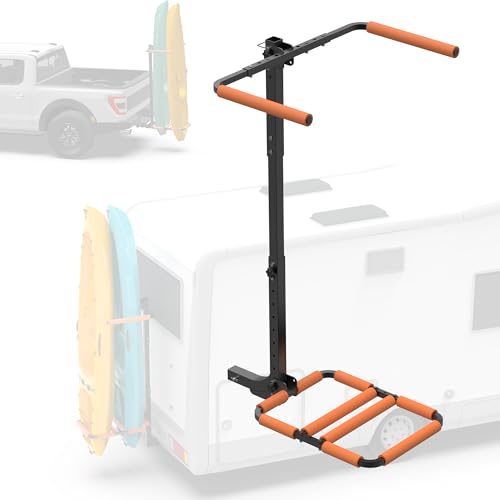
The quick answer: for most owners of an SUV or truck with a 2-inch receiver, a vertical hitch-mounted kayak rack that holds two kayaks up to 12 feet long is the most practical choice. Look for a total load rating that covers both kayaks with room to spare, height adjustment so the hulls clear the ground, a wobble-control device at the receiver, and padding where the rack touches the hull. The three racks below all fit that pattern, and they differ mainly in load capacity, included hardware, and how much protection they give the hull.
Quick Picks
Our Short List of 3
All 3 Picks at a Glance
| Product | Specs | Action |
|---|---|---|
| KUAFU RV Hitch Mount Kayak Rack (B0D1XZ7DN8) | Check price on Amazon | |
| ACCPOLS 300LBS RV Kayak Rack (B0FP5N6HW1) | Check price on Amazon | |
 Autoholic Upgraded RV Hitch Mount Kayak Rack (B0CXDNXFWV) | Check price on Amazon |
How to Choose
Receiver Size and Hitch Class
Almost every vertical hitch kayak rack in this category is built for a 2-inch square receiver. That is the standard receiver on most full-size SUVs and pickup trucks, and on many midsize SUVs with a factory tow package. Before ordering, measure the inside of your receiver or check the label on the hitch itself. A 1.25-inch receiver, common on smaller crossovers and cars, will not accept a 2-inch shank without an adapter, and adapters change the geometry and the load rating of the setup. Your hitch also has a tongue weight rating, usually printed on a label near the receiver. The rack plus both kayaks counts against that rating, so confirm the number before you load up. A Class III or IV hitch is the usual match for a loaded two-kayak rack.
Weight Capacity and Kayak Count
Load ratings on these racks are given as a total for the whole rack, not per kayak. A 150-pound rating covers two typical recreational kayaks in the 40 to 60 pound range with room to spare. It does not cover two heavy fishing kayaks with pedal drives, batteries, and rigged accessories, which can push past 70 pounds each before gear is added. Weigh each kayak as you would actually carry it, accessories included, add the two numbers together, and compare the sum with the rack rating. If the total is close to the limit, move up to a 300-pound rack. Carrying one kayak on a two-kayak rack is fine and leaves the second cradle free for a paddleboard or a second boat later, but the rack still has to be rated for the single kayak you put on it.
Kayak Length and Width Limits
Vertical racks hold kayaks on end, bow up or stern up, so length becomes a height question. Most models in this guide are built for kayaks up to 12 feet long. A 10-foot recreational kayak sits comfortably inside that envelope. A 12-foot touring kayak fits at the top of the range, and anything longer needs careful measuring, because the top of the kayak rises well above the roofline and the bottom must still clear the ground. Width matters just as much. Several racks in this category are built around hulls up to 12 inches wide at the point where the cradle grips them, which suits narrow recreational and touring hulls. Wide fishing kayaks, sit-on-top models with broad beams, and tandem kayaks can exceed that width, so measure the hull at its widest point and compare it with the cradle opening before you buy.
Height Adjustability and Ground Clearance
A vertical rack that cannot adjust its height is a gamble. Driveways, speed bumps, steep boat ramps, and uneven gravel all change the distance between the bottom of the kayak and the ground. Adjustable racks let you raise the lower cradle so the hull clears the pavement with margin, then lower it again for easier loading. Look for several pre-drilled height positions rather than a single fixed setting, and check that the adjustment is easy to reach with the rack installed. Remember that raising the kayak also raises its center of gravity and puts the top of the boat higher above the vehicle, which matters for low branches, parking structures, and garage doors. Measure your total height with the kayak loaded before driving into any covered space.
Wobble Control and Stability
A hitch rack is a long lever arm hanging off the back of the vehicle, so any play at the receiver turns into sway at the top of the kayak. The better racks in this category address that directly with a hitch tightener, a threaded pin, or an anti-rattle clamp that takes the slack out of the receiver. Reinforced welding at the base and a stiff upright also help, especially on long highway drives and rough roads. When you install the rack, tighten the anti-wobble hardware before loading the kayaks, then check it again after the first few miles. Straps matter too: the rack should include tie-down straps, and the kayaks should be secured at the cradle and at the top so they cannot shift fore and aft or twist in crosswinds. Bow and stern lines to the vehicle add a second layer of security on long trips.
Hull Protection and Padding
Steel cradles and hulls do not mix without something soft between them. Foam padding, rubber sleeves, or a protective layer on the cradle arms keeps the rack from scuffing gelcoat and plastic, and it also adds grip so the kayak does not slide in the cradle. Check what padding is included in the box and whether it covers every contact point, including the lower support hoop and the upright. If a rack ships with thin padding or none at all, plan to add your own: split pool noodles, pipe insulation, or adhesive foam all work, and they are inexpensive. This is especially important for composite hulls and for kayaks with a glossy finish, where a single long drive on bare steel can leave marks that are hard to remove.
SUV vs Truck Fit
SUVs and trucks use the same 2-inch receiver, but the body behind it is different, and that changes the fit. On an SUV, a tall vertical rack can block the rear window, the rear camera, and the liftgate, so check whether you can still open the tailgate with the rack installed and whether the rack interferes with parking sensors. On a pickup, the rack sits behind the tailgate and the bed stays free, which is convenient, but a tall kayak can block the view through the rear window and catch wind over the cab. Trucks with a spare tire mounted on the tailgate or a rear bumper step need extra clearance checks. In both cases, confirm that the rack does not cover the license plate or the tail lights from the angles other drivers see. If it does, a separate light board or a relocated plate bracket may be needed, and local rules on visible lights and plates should be checked before the first trip.
The Best Best Hitch Mounted Kayak Racks for SUVs and Trucks Reviewed
KUAFU RV Hitch Mount Kayak Rack (B0D1XZ7DN8)
The KUAFU rack is a vertical, height-adjustable carrier that holds two kayaks in a 2-inch hitch receiver. It is built from alloy steel with a black powder coating, folds for storage, and is rated for 150 pounds total. Each kayak can be up to 12 inches wide at the cradle, and the lower cradle hoop has holes for three different mounting heights, so the rack can be set to keep hulls clear of the ground on different vehicles. Ratchet straps, mounting accessories, and assembly instructions are included in the box, and a protective layer on the stand is intended to keep steel away from the hull.
Who it suits: owners of SUVs and trucks who want a straightforward two-kayak carrier for recreational kayaks up to 12 feet long, and who value a foldable frame that stores flat in the garage between trips. It is a good match for weekend paddlers with standard-width recreational or touring hulls.
Who should skip it: anyone carrying wide fishing kayaks, sit-on-top models with beams over 12 inches at the cradle, or two heavy rigged kayaks whose combined weight approaches or passes 150 pounds. Those owners should look at a higher-capacity rack instead.
ACCPOLS 300LBS RV Kayak Rack (B0FP5N6HW1)
The ACCPOLS rack is the heavy-duty option in this group, with a 300-pound total rating for two kayaks up to 12 feet long. It fits a standard 2-inch receiver and uses a reinforced base designed to resist bending under continuous highway loads. Height is adjustable, so the rack can be set to keep long kayaks clear of the ground on SUVs and trucks with different hitch heights. The vertical design carries both kayaks upright behind the vehicle, leaving the roof free and keeping loading at a comfortable height.
Who it suits: paddlers with heavy kayaks, including fishing kayaks with pedal drives and accessories, and anyone planning long highway trips where a higher load rating and a reinforced base provide extra margin. It is also the right pick when two larger kayaks together weigh more than a 150-pound rack can carry.
Who should skip it: owners who only ever carry one light recreational kayak, or who have a 1.25-inch receiver, since the rack is built around a 2-inch shank and its extra capacity is unnecessary weight and bulk for a single light boat. Drivers of small crossovers should measure the receiver first.
Autoholic Upgraded RV Hitch Mount Kayak Rack (B0CXDNXFWV)
The Autoholic rack is a vertical, height-adjustable carrier for two kayaks up to 12 feet long, rated at 150 pounds total, for 2-inch hitch receivers on SUVs, trucks, and trailers. It is built from carbon steel with a protective layer and a black powder-coated finish, and it folds for storage. What sets it apart in this group is the included hardware: a hitch tightener and two tie-down straps come in the box, and the wobble-proof design with reinforced welding is aimed at reducing shake and noise on the road. Upgraded foam padding and protective layers are intended to keep hulls scratch-free during transport.
Who it suits: owners who drive rough roads or long distances and want the quietest, most stable ride in this capacity class, and paddlers with composite or glossy hulls who care about scratch protection. The included hitch tightener is a genuine advantage for anyone who has been annoyed by a rattling rack.
Who should skip it: anyone whose two kayaks together weigh more than 150 pounds, and owners of very wide hulls that will not sit properly in the cradles. If your kayaks need extra cushioning beyond the included foam, plan to add pool noodles or pipe insulation before the first long trip.
What to Check Before You Buy
Work through this checklist before ordering, and again on delivery day before the first trip.
- Measure the receiver. Confirm a 2-inch square receiver and check the hitch tongue weight rating on the label near the receiver.
- Weigh both kayaks as carried, accessories included, and compare the total with the rack rating.
- Measure hull width at the widest point and kayak length, and compare both with the rack limits.
- Check rear clearance. With the rack installed, confirm the liftgate or tailgate opens, the rear camera and sensors are not fully blocked, and the license plate and tail lights stay visible.
- Measure total height with a kayak loaded. Compare it with garage doors, parking structures, and low branches on your usual route.
- Confirm the hardware in the box. Straps, a hitch tightener, mounting accessories, and padding should all be present before you load a kayak.
- Plan the straps. Each kayak needs to be secured at the cradle and at the top, with bow and stern lines for long trips.
- Check ground clearance. Load the kayaks, then look at the distance between the lowest point of the hull and the ground, and consider steep ramps and speed bumps on your route.
- Think about storage. A folding rack stores flat against a garage wall, while a fixed rack needs floor space.
- Read the assembly instructions fully before the first install, and re-check every bolt and the hitch pin after the first few miles of driving.
FAQ
Will a hitch kayak rack block my tailgate or rear door?
It can, depending on the vehicle and the rack height. On many SUVs the rack stands in front of the liftgate, so the door cannot open fully with the rack installed, and on some trucks the tailgate will hit the upright if it is lowered. Check the fit with the rack installed but unloaded: open the liftgate or tailgate slowly and look for contact. If access matters on the water, look for a rack that folds or tilts, or plan to unload the kayaks before opening the rear door.
Can I carry two kayaks and a bike at the same time?
Most vertical hitch kayak racks are built for two kayaks only, and their cradles are shaped for hulls rather than bike frames. A small number of combination carriers exist that hold kayaks and bikes together, but they are a different product type with their own load ratings and fit requirements. If you need both on the same trip, either use a roof rack for the bikes, carry the bikes in the truck bed, or choose a combination carrier that is explicitly rated for both.
Do I need a 2-inch receiver?
For the racks in this guide, yes. All three are built for a 2-inch square receiver, which is standard on most full-size SUVs and pickup trucks and on many midsize SUVs with a tow package. A 1.25-inch receiver will not accept the shank directly. Adapters exist, but they extend the rack further from the vehicle and reduce the effective load rating, so they are not a good substitute for a proper 2-inch hitch.
Will a vertical rack fit kayaks longer than 12 feet?
Most racks in this category are rated for kayaks up to 12 feet long, and longer boats need a different approach. A 13- or 14-foot kayak can sometimes be carried if the rack height is adjusted and the hull clears the ground, but the top of the boat will sit very high, and wind load increases with length. For longer touring or sea kayaks, a roof rack or a truck bed extender paired with a bed-mounted support is usually a better fit than a vertical hitch rack.
Does a hitch rack affect lights, plates, or reversing sensors?
It can cover all three. A tall kayak behind the vehicle can block the tail lights and the license plate from following traffic, and the rack itself can trigger rear parking sensors or block the reversing camera. Before driving, check the lights and plate from behind the vehicle with the kayaks loaded, and confirm what your local rules require for visibility. If the lights or plate are hidden, a light board or a relocated plate bracket solves the problem.
Bottom Line
For most SUV and truck owners, the best hitch mounted kayak racks for SUVs and trucks are vertical two-kayak carriers built for a 2-inch receiver, with height adjustment, a wobble-control device, and padding at every hull contact point. The KUAFU rack covers straightforward two-kayak trips at 150 pounds, the Autoholic adds a hitch tightener and upgraded padding for quieter, better-protected transport at the same capacity, and the ACCPOLS steps up to 300 pounds for heavier kayaks and long highway trips. Whichever you choose, measure the receiver, weigh both kayaks as carried, and check tailgate, light, and plate clearance before the first drive to the water.
Disclosure: As an Amazon Associate, we may earn from qualifying purchases.
More from Amazon
Programs that pair well with the guide above. Offers and eligibility are set by Amazon and may change.
Collect the home and kitchen items you want in one registry that guests can shop from.
Create a wedding registrySet up recurring deliveries of everyday items on eligible products. Terms and savings are set by Amazon.
Explore Subscribe & SaveFree shipping on eligible items, Prime Video and more. Eligible new members can start with a free trial.
Start a Prime free trialAudiobooks and podcasts to listen to on the go. Eligible new members can start with a free trial.
Try Audible freeAs an Amazon Associate we earn from qualifying purchases.