Key takeaways
- Compare 4 garden transplanters for seedlings and small plants, from serrated digging blades with depth marks to narrow stainless widgers and lifting tongs.
Choosing a garden transplanter comes down to three calls you make before the first seedling leaves its tray: how narrow the blade must be to slip beside a small root ball, whether the depth marks are clear enough to set every plant at the same level, and whether the blade and handle will stay rigid in the clay or stony patch where you actually garden. A wide trowel tears neighbouring roots, while a flimsy narrow blade folds the moment it meets compacted ground.
This shortlist is for vegetable growers moving tray-raised starts outdoors, flower gardeners spacing bedding plants, and container gardeners repotting into larger pots. Each tool below was picked from its name and specifications on its Amazon product page, favouring listings that call themselves a transplanter, transplant trowel, widger or seedling lifter rather than general-purpose trowels.
Quick Picks
As an Amazon Associate we earn from qualifying purchases
| Product | Best for | Key spec from title |
|---|---|---|
| Garden Weasel Multi-Use Transplanter | Digging planting holes in firm beds | 6 inch serrated blade, model 91360 in title |
| Haliaeetus Seeding Widger | Lifting seedlings from tight, crowded trays | 13.8 inches, stainless steel, wood handle |
| Berry&Bird Seeding Widger | Seed work where a measuring scale guides depth | Stainless steel dibber tool with measuring scale |
| Uyeesi Seedling Transplant Tongs | Gripping plugs out of cells without finger digging | Stainless steel tongs with anti-slip grasp tips |
How to Choose
Start With Blade Width Against Your Spacing
A transplanter earns its keep by entering soil that is already occupied. If your seedlings sit four to six inches apart in a raised bed, a blade around two inches wide can open a hole without slicing the roots of the plant next door, whereas a standard trowel blade forces you to work at an angle and lever soil sideways. Check the listed item width before ordering: the widgers in this guide sit near one and a half to just over two inches across, while broader digging transplanters trade that delicacy for faster hole-making in open, empty ground.
Read the Depth Marks, Not Just Their Presence
Nearly every transplant tool claims depth guidance, yet the format changes how useful it is at the bench. Engraved or stamped marks survive mud and washing, printed marks can fade, and a smooth widger blade may carry a separate measuring scale along its length instead. Match the scale to your plants: tomato and pepper starts want a deeper hole than lettuce plugs, and bulbs follow their own depth rules. If a listing only says the blade is a certain length, treat that length as your ceiling and measure the first few holes with a ruler until the motion becomes familiar.
Match Blade Material and Build to Your Soil
Polished stainless steel slides out of sticky soil cleanly and shrugs off the damp corner of a potting shed, which suits coastal and humid gardens. Cast or alloy blades in one piece with the tang remove the loose-handle failure that ends many cheap tools, and they tolerate prising against small stones better than thin stamped metal. Wood handles, common on widgers, feel warm and grippy but want drying after use. In heavy clay, favour the stiffest construction you can find; in loose, sandy or mix-filled containers, almost any of these builds will feel adequate.
Decide How the Seedling Leaves Its Tray
Half of transplanting happens before any soil is dug. Fingers squeezed down a cell wall crush stems and tear the plug apart, so some gardeners lift with a narrow widger slid behind the root ball, while others prefer tongs that clamp the plug and pull it free in one piece. Think about your tray size: deep cells reward a long, slim blade, shallow trays suit short tongs, and brittle plugs that crumble on contact need support from below rather than a grip from above. The right removal method matters as much as the hole you drop the plant into.
The 4 Best Options
Garden Weasel Multi-Use Transplanter

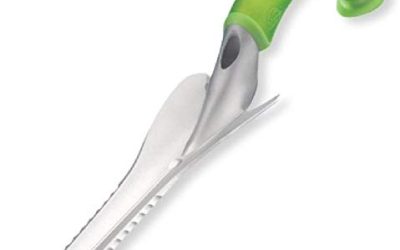
Pick this one when the bed itself is the obstacle. Its triangular six-inch blade is built to cut a planting hole, open a short furrow and slice through stray roots on the way down, so a single tool handles a firm, previously worked border without swapping implements. The depth gauge printed in inches and centimetres helps repeat the same planting depth along a row of starts, and the one-piece alloy construction runs through the handle, which should limit flex when you lever against compacted soil at the edge of a path.
Specs
- Brand: Garden Weasel
- Model number: 91360
- Item dimensions: 3 x 3 x 13 inches
- Item weight: 0.32 kilograms
- Blade length: 6 inches, serrated, with large depth markings
- Blade material: AluminIron alloy
- Handle material: Thermoplastic rubber, ergonomic 6 inch grip
- Included: 1 transplanter with hang hole
Best for: Gardeners digging repeated planting holes in firm beds who also cut roots and weed with the same tool.
Watch out for: The blade is wider than a widger, so work slowly in tightly spaced trays or crowded perennial clumps.
ASIN: B08C24PNN1
Haliaeetus Seeding Widger

This long, slim widger suits the fiddly end of the job: easing individual seedlings out of packed trays, teasing apart a clump of starts, and opening a narrow slot in a pot without disturbing everything around it. The polished stainless blade is described as heat treated, and the smooth edge should rinse clean after work in wet mix. A solid wood handle gives it a traditional feel, and the overall length reaches the bottom of deeper cells that defeat shorter dibbers. Gardeners who repot often, especially herbs and flowers in small containers, will use this shape daily.
Specs
- Brand: Haliaeetus
- Manufacturer: Haliaeetus Technology Co., Ltd.
- Item dimensions: 14.45 x 2.2 x 2.05 inches
- Item weight: 6.4 ounces
- Listing size: 13.8 inches stainless steel widger
- Blade material: Stainless steel, polished
- Handle material: Wood, ergonomic grip type
- Construction: Seamless welding between blade and handle, per the listing
Best for: Repotting and pricking out seedlings in tight trays, pots and crowded corners.
Watch out for: A widger lifts and slots rather than excavates, so pair it with a digging tool for holes in hard open ground.
ASIN: B0CG5YP651
Berry&Bird Seeding Widger

Choose the Berry&Bird widger when depth consistency is the point of the session, such as sowing and setting out rows of small bulbs or onion starts where uneven planting shows up weeks later as uneven growth. Its title pairs the widger shape with a measuring scale, giving you a reference along the tool instead of a guess at the hole. The stainless blade and wooden handle follow the same classic pattern as the other widger here, while the leather loop at the handle end makes it easy to hang in the shed rather than lose under foliage.
Specs
- Brand: Berry&Bird
- Material: Stainless steel and wood
- Blade material: Stainless steel
- Handle material: Wood
- Package dimensions: 14.54 x 1.89 x 1.73 inches
- Item weight: 7.5 ounces
- Product length: 13.7 inches, width 1.5 inches, per the listing comparison table
- Feature: Measuring scale, leather carrying loop, per the listing
Best for: Seed and small bulb work where a scale on the tool keeps planting depth even along a row.
Watch out for: Confirm the scale units on the delivered tool before a big planting session, and dry the wooden handle after wet work.
ASIN: B0DQPF7YFC
Uyeesi Seedling Transplant Tongs

These tongs solve a different problem from everything above: the plug that will not leave its cell. Instead of digging, you slide the tips down beside the root ball, clamp, and lift the whole plug out, which keeps fragile stems away from squeezing fingers and leaves the root ball intact for dropping into a prepared hole. Stainless construction keeps the slim tips rigid and easy to wash between trays, a sensible hygiene point when moving between batches of seedlings. They complement a digging transplanter rather than replace one, and seed starters running many trays will feel the difference first.
Specs
- Brand: Uyeesi
- Item model number: 9298T
- Product dimensions: 8.27 x 1.07 x 1.97 inches
- Item weight: 3.52 ounces
- Material: Stainless steel
- Colour: Silver
- Quantity: 1 piece
- Tips: Anti-slip grasp tips, per the title
Best for: Lifting plugs cleanly out of seed trays and starter cells without crushing stems or roots.
Watch out for: Tongs cannot dig the receiving hole, so keep a widger or transplanter beside the tray for the planting side of the job.
ASIN: B0CT4ZP5FC
Which One Fits Your Situation
A Raised Bed of Vegetable Starts Going Out in Spring
Start with the Garden Weasel Multi-Use Transplanter. You are opening dozens of similar holes in soil that may still be firm from winter, and its serrated blade, depth gauge and root-cutting edges cover the whole sequence without a tool change. Work down the row at one marked depth, drop each start in, and firm the soil back with the flat of the blade before moving to the next spacing mark.
Pricking Out a Crowded Tray of Flower Seedlings
Reach for the Haliaeetus Seeding Widger. Seedlings sown thickly need separating more than they need deep holes, and the long narrow blade slides behind a plug, loosens it, and lifts it with most roots attached. Its reach also suits deeper cells. Move slowly, support each plug from beneath, and set the lifted seedlings straight into moist mix so the fine roots never dry in open air.
Setting Out Small Bulbs and Onion Starts in Rows
The Berry&Bird Seeding Widger fits this session best because the measuring scale turns depth into a repeatable action rather than an estimate repeated forty times. Push, check the scale, drop the bulb or start, and move on at the same spacing. Even depth at planting is what later gives you even emergence, so a tool that keeps every hole honest is worth more here than raw digging speed.
Plugs That Crumble or Stems That Snap in Your Fingers
Add the Uyeesi Seedling Transplant Tongs to whichever digging tool you already own. Some trays, especially dry or root-bound ones, punish fingertip removal, and clamping the plug itself avoids both the crushed stem and the torn root ball. Lift with the tongs, lower the plug into a hole opened by your widger or transplanter, release, and firm gently. The pairing covers removal and planting as two separate, calmer steps.
Common Mistakes
- Reaching for a wide garden trowel in a crowded bed and slicing the roots of plants you meant to keep.
- Planting every start at one guessed depth instead of reading the marks or scale on the tool in your hand.
- Prying sideways against stones with a thin widger blade until it bends, instead of switching to a sturdier digging transplanter.
- Pulling seedlings out of trays by the stem, which crushes the tissue the plant needs to take up water after the move.
- Leaving wooden-handled tools sitting in wet soil or a damp bucket overnight, which shortens the life of the handle and its joint.
Frequently Asked Questions
What is the difference between a transplanter and a widger?
A transplanter is a narrow trowel built to dig the receiving hole and move soil, often with depth marks and enough stiffness for firm ground. A widger is slimmer still, shaped to slide into trays and pots, loosen a plug and lift it with minimal root damage. Many gardeners own one of each, because removal and hole-making reward different blade shapes.
How deep should a transplant hole be?
As a working rule, the hole should match the depth the seedling grew at in its tray, so the top of the root ball finishes level with the surrounding soil. Burying a stem deeper than it grew invites rot on most starts. Use the depth marks or scale on your tool, check the first holes against the actual plug, and repeat that depth down the row.
Can one of these tools replace a regular trowel?
For planting work, often yes: a digging transplanter opens holes, cuts small roots and firms soil back around a start. Where it falls short is bulk soil moving, such as filling a large pot or mixing compost in a bin, where a wide trowel blade carries far more per scoop. Keep the wide trowel for volume jobs and the transplanter for anything involving roots you care about.
How should I clean and store these tools after planting?
Knock off loose soil at the bed, wash the blade, and dry the tool before it goes back on its hook, especially where a wooden handle meets the metal. A light wipe of oil on a steel blade helps if the shed is damp. Storing tools dry and hung, rather than loose in a wet trug, prevents most rust and handle damage gardeners blame on the tool itself.
More from Amazon
Programs that pair well with the guide above. Offers and eligibility are set by Amazon and may change.
Collect the home and kitchen items you want in one registry that guests can shop from.
Create a wedding registrySet up recurring deliveries of everyday items on eligible products. Terms and savings are set by Amazon.
Explore Subscribe & SaveFree shipping on eligible items, Prime Video and more. Eligible new members can start with a free trial.
Start a Prime free trialAudiobooks and podcasts to listen to on the go. Eligible new members can start with a free trial.
Try Audible freeAs an Amazon Associate we earn from qualifying purchases.