Key takeaways
- Find the best bee feeders for honey bee hives with entrance, frame and hive-top picks compared by capacity, hive fit, refill ease and drowning protection.
Disclosure: As an Amazon Associate, I earn from qualifying purchases.
Feeding honey bees is about timing. A colony needs supplemental sugar syrup when a new package is installing, when a nuc is building comb, during a nectar dearth, and in fall when winter stores are still light. The feeder you choose decides how safely and calmly that syrup reaches the bees. The wrong feeder can drown bees, chill brood when you open the hive to refill it, leak syrup that triggers robbing, or hold so little that you refill every day.
This guide compares five feeder designs for Langstroth hives: two Boardman entrance feeders, two in-hive frame feeders, and one rapid round hive-top feeder. Every pick is a feeder made specifically for honey bee hives and for syrup or water feeding, not a bird feeder and not a complete hive kit. Feeder type matters more than brand, and the safest choice for a strong colony in spring can be the riskiest for a weak colony during a dearth.
How to Choose the Best Bee Feeders
Start with feeder type. Entrance feeders, often called Boardman feeders, slide into the hive entrance and hold an inverted jar outside the hive. They are the easiest to monitor and refill because you never open the hive. Their weakness is exposure: syrup at the front door can attract robber bees and wasps, especially in late summer, so many beekeepers reserve them for spring, for water, or for short feeding periods.
Frame feeders, also called division board feeders, replace one frame inside the brood box. Because the syrup sits inside the hive, robbers cannot reach it, and bees can feed without leaving the warmth of the cluster, which helps in cool weather and with small colonies. The trade-offs are that you must open the hive to refill, you give up a frame of comb space, and you need ladders, floats, or grooved walls so bees can climb out if they fall in.
Hive-top and rapid round feeders sit above the brood box, usually over the hole in the inner cover and inside an empty super. Bees come up through a central cone, drink from a contained reservoir, and return below. Refilling is fast and does not disturb the brood nest.
Capacity is next. A quart jar suits a small nuc, but a colony building up in fall can take down far more. Larger frame feeders, half-gallon entrance jars, and multi-liter top feeders reduce refill trips. Syrup can ferment in warm weather, so do not install more than the colony will use promptly, and clean feeders between uses.
For drowning protection, look for textured or grooved walls, ladders that reach the syrup surface, feeding cages, cones with grip, and perforated lids that meter syrup by vacuum rather than flooding a tray. Smooth, deep, open reservoirs are the most hazardous, and most leaks come from a poor seal or overfilling.
Finally, match the feeder to your boxes. Frame feeders are made for deep or medium boxes and are not interchangeable, entrance feeders should fit your bottom board, and top feeders must align with your inner cover. Confirm whether a jar is included, since some Boardman bases are sold without one.
VIVO Beekeeping Light Wood Boardman Entrance Feeder
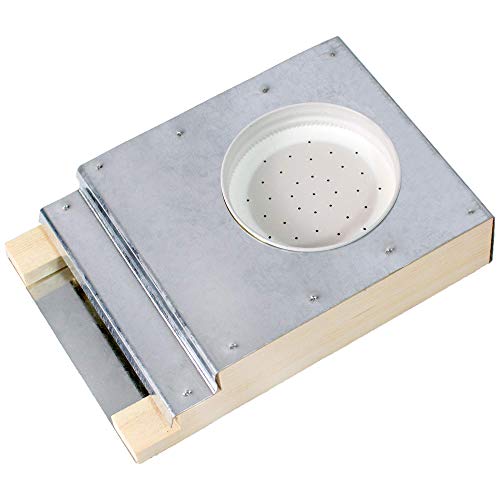
The VIVO Boardman entrance feeder is the classic starter design in a solid wood base. It slides into the front entrance of the hive and holds an inverted glass jar, so bees walk into the entrance tunnel and drink from the jar lid while you watch the level fall from outside. There is no assembly, no opening the hive to check, and no disturbance to the brood nest when you swap in a full jar.
Construction is light unfinished wood with stainless steel elements. At just over six inches long, the base is compact and easy to store. Because the jar is not included, you supply a standard glass jar, so test the fit and seal before leaving syrup on a hive.
This is a sensible first feeder for a new beekeeper who wants visible, low-effort feeding in spring. Use it thoughtfully during a dearth, reduce the entrance if robbing starts, and consider an internal feeder for a weak colony.
Specs
- Type: Boardman entrance feeder
- Material: Light wood and stainless steel
- Dimensions: 6.6 x 4.5 x 1.4 inches
- Jar: Inverted glass jar, not included
- Item Weight: 6.3 ounces
- Model: Bee-V110
- ASIN: B07K925XYL
Foxhound Bee Co Honey Bee Feeder with Half Gallon Bottle, 2 Pack

Foxhound Bee Co solves the biggest frustration with Boardman feeding, which is the tiny jar, by pairing its plastic entrance feeder with an extra-large half-gallon bottle. Each jar holds about eight and three-quarter cups of syrup, more than twice a typical entrance jar, so a two-pack lets you feed two hives or keep a rotation going with far fewer refill trips. The clear bottle makes level checks instant from a few steps away.
The step-style feeder guides bees in to drink from the perforated lid holes, and the maker notes it can also sit inside an empty box as an internal feeder. Vacuum pressure in the inverted jar helps prevent dripping, and the perforated lid lets bees feed without falling into open syrup. The plastic includes a UV protectant additive and thicker walls than a basic jar.
For beekeepers who like entrance feeding but manage several colonies, this is the convenience pick, with capacity that matches how fast a hungry colony can drink. Keep an eye out for robbing pressure and clean the jars well so old syrup does not ferment.
Specs
- Type: Entrance feeder with inverted bottle
- Capacity: Half gallon per jar, about 8.75 cups
- Pack Contents: 2 feeders and 2 jars
- Material: Plastic with UV protectant additive
- Lid: Perforated, 70G size
- Color: Foxhound Green and Transparent
- ASIN: B0CFGBWRY9
Little Giant Beehive Feeder Frame
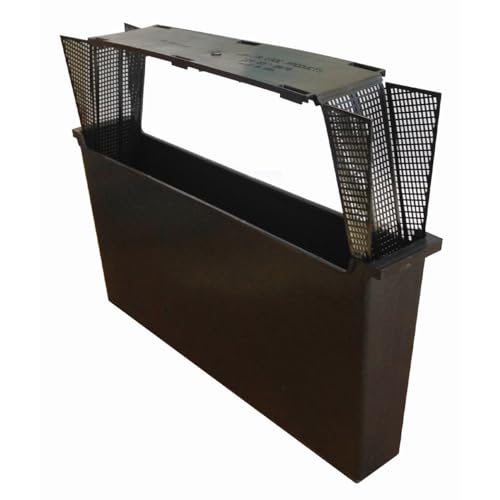
The Little Giant feeder frame takes the opposite approach to entrance feeding: it puts the syrup inside the hive, in the place of one frame in the brood box. Holding three quarts, it delivers a substantial feed right beside the bees, where robbers and wasps cannot reach it and where a small or cool-weather colony does not have to travel to the entrance to eat. That placement is why frame feeders are a staple for nucs, splits, and early spring build-up.
Inner ladders and grooved sides give bees a textured route down to the syrup and a way to climb back out. The black plastic body is made in the United States by Miller Manufacturing, and the feeder sits in a standard deep frame slot at nineteen inches long and nine inches high.
Refilling requires opening the hive and pouring carefully, so avoid spilling syrup and check the ladders are seated before you fill. If you want secure, in-hive feeding and are comfortable giving up one frame position while feeding, this is a dependable choice.
Specs
- Type: Frame feeder, division board style
- Capacity: 3 quarts
- Dimensions: 19 x 9 x 2 inches
- Material: Plastic
- Color: Black
- Features: Inner ladders and grooved sides
- Manufacturer: Miller Manufacturing Company
- Model: Framefdr
- ASIN: B00PX94GDK
BeeCastle Beehive Frame Feeder 3.5L, 2 Pack

BeeCastle offers the same in-hive frame feeder idea at larger scale, with two deep-box feeders in the pack, each holding three and a half liters. That makes the set practical for a small apiary: install one feeder in each of two colonies, or keep the second as a clean spare so you can swap rather than wash and wait during a busy feeding period. The feeders arrive assembled and ready to drop into a deep box.
Each feeder combines a plastic reservoir with a beeswax-coated cedar wood lid, and the pack includes covers, white feeding cages, and rubbers. The cages give bees a structured place to drink and climb, addressing the main risk of open frame reservoirs. These feeders suit deep bee boxes only, so medium-box users should choose a different model.
This is the pick for beekeepers feeding more than one deep hive who want internal, robber-resistant feeding with generous capacity. Fill slowly to avoid overflow inside the hive, and scrub the feeders once the feeding round is finished.
Specs
- Type: Frame feeder for deep boxes
- Capacity: 3.5 liters per feeder
- Pack Contents: 2 feeders, 2 covers, 4 feeding cages
- Dimensions: 19.29 x 3.72 x 9.43 inches
- Material: Plastic with beeswax-coated cedar wood lid
- Item Weight: 3.39 pounds for the pack
- Model: 2Pcs
- ASIN: B0CKYZTKG3
Beextm Rapid Round Bee Feeder, 4 Pcs
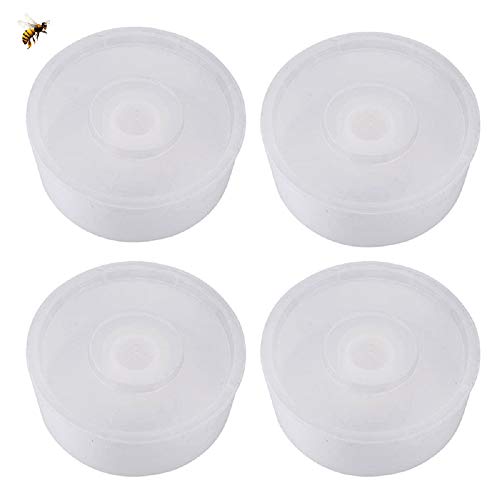
The Beextm rapid round feeder is a hive-top design that sits over the hole in the inner cover, protected under the outer cover or an empty super. Bees rise through the central cone, feed from the contained channel around it, and go back down, while you refill by lifting the clear cover and pouring, without pulling frames or exposing the brood nest. It is one of the fastest refill routines of any feeder type.
Textured inner walls give bees grip on both the cup and the cone so they are less likely to slip into syrup. The white plastic feeders are compact at about eight and a half inches across, and the four-piece pack suits beekeepers running several hives who want the same routine everywhere, or spares ready during spring feeding.
Capacity per unit is modest compared with a large frame feeder, so this design favors frequent, controlled feeding over bulk fall feeding. Check that the feeder sits flat over your inner cover hole, keep the clear cup seated, and wash the parts by hand as directed.
Specs
- Type: Rapid round hive-top feeder
- Capacity: 2.1 liters
- Pack Contents: 4 feeders
- Dimensions: 8.58 x 8.58 x 3.35 inches
- Material: Plastic
- Color: White
- Features: Textured inner wall
- Model: Bf-7
- ASIN: B08T6GQGV9
Conclusion
Choose by situation, not by habit. Pick an entrance feeder such as the VIVO or the larger Foxhound when you want to see syrup levels and refill without opening the hive, and watch carefully for robbing. Pick a frame feeder such as the Little Giant or the BeeCastle two-pack when security, cold weather, or a weak colony argues for feeding inside the box. Pick the Beextm rapid round feeders when fast, low-disturbance refills from the top are your priority across several hives.
Whichever design you install, mix syrup correctly for the season, feed only as much as the colony will take promptly, keep every part clean, and remove the feeder once natural forage makes it unnecessary.
More from Amazon
Programs that pair well with the guide above. Offers and eligibility are set by Amazon and may change.
Collect the home and kitchen items you want in one registry that guests can shop from.
Create a wedding registrySet up recurring deliveries of everyday items on eligible products. Terms and savings are set by Amazon.
Explore Subscribe & SaveFree shipping on eligible items, Prime Video and more. Eligible new members can start with a free trial.
Start a Prime free trialAudiobooks and podcasts to listen to on the go. Eligible new members can start with a free trial.
Try Audible freeAs an Amazon Associate we earn from qualifying purchases.