Key takeaways
- Tooth count: Think of it as a trade between speed and surface. 32–40 teeth eat through framing lumber and long rips quickly; 60 teeth is the sweet spot for general furniture crosscuts; 80 to 120 teeth deliver glue-ready faces on hardwood, veneered ply, and trim, but demand a slow, patient feed.
- Arbor and fit: Nearly every 10-inch miter saw uses a 5/8-inch (16mm) arbor. Confirm yours before ordering, and check that the blade seats flat against the washer with no rock — a poorly bored blade will telegraph runout into every cut.
- Plate and tooth material: Carbide-tipped teeth on a laser-cut, tensioned steel plate hold geometry far longer than pressed steel. Expansion slots and anti-vibration cuts are not marketing; they keep the plate from drifting as it heats up mid-cut.
- Kerf width: Thin-kerf blades reduce the load on smaller 15-amp saws and waste less stock, which matters when you’re cutting matched parts from one board. Full kerf is stiffer and tracks better in thick hardwood.
- Noise and vibration: Higher tooth counts, negative hooks, and vibration-damping plates all cut the shriek meaningfully. If you build in the evenings near bedrooms, this single factor can decide whether a project moves forward or waits for the weekend.
What's inside
Most bedroom furniture projects fail at the same place: the joint you can see from the pillow. A headboard rail that reads slightly out of square, a nightstand mitre with a hairline gap, tear-out along the top edge of a bed frame cleat — these aren’t cabinetry problems, they’re blade problems. A 10-inch miter saw is only as accurate as the disc spinning in it, and the stock blade that shipped in the box was almost certainly chosen to be cheap, not clean.
This guide looks at 10-inch blades through the lens of the work most home furniture builders actually do: poplar and pine bed rails, hardwood face frames, painted MDF panels, and the occasional 45-degree return on a floating shelf. We cover tooth counts and what they mean in practice, arbor fit, plate quality, and how much noise and vibration you should tolerate — a real consideration when the shop shares a wall with someone sleeping. Below are the blades worth your money in 2026, plus a short buying framework so you can pick without guessing.
As an Amazon Associate we earn from qualifying purchases.



How to Choose a Miter Saw Blade 10 Inch (2026)
- Tooth count: Think of it as a trade between speed and surface. 32–40 teeth eat through framing lumber and long rips quickly; 60 teeth is the sweet spot for general furniture crosscuts; 80 to 120 teeth deliver glue-ready faces on hardwood, veneered ply, and trim, but demand a slow, patient feed.
- Arbor and fit: Nearly every 10-inch miter saw uses a 5/8-inch (16mm) arbor. Confirm yours before ordering, and check that the blade seats flat against the washer with no rock — a poorly bored blade will telegraph runout into every cut.
- Plate and tooth material: Carbide-tipped teeth on a laser-cut, tensioned steel plate hold geometry far longer than pressed steel. Expansion slots and anti-vibration cuts are not marketing; they keep the plate from drifting as it heats up mid-cut.
- Kerf width: Thin-kerf blades reduce the load on smaller 15-amp saws and waste less stock, which matters when you’re cutting matched parts from one board. Full kerf is stiffer and tracks better in thick hardwood.
- Noise and vibration: Higher tooth counts, negative hooks, and vibration-damping plates all cut the shriek meaningfully. If you build in the evenings near bedrooms, this single factor can decide whether a project moves forward or waits for the weekend.
The Best Miter Saw Blade 10 Inch (2026)s Reviewed
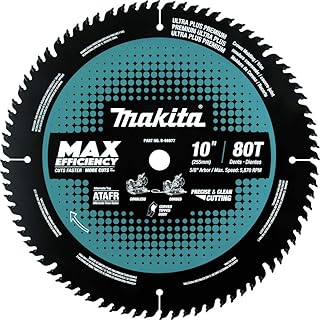
Makita B-66977 10″ 80T Max Efficiency
The most refined blade here: a thin, ultra-stable plate that leaves a face so clean on maple and oak you can go straight to finish sanding. It’s the one to reach for on visible furniture joinery, and it runs noticeably smoother and quieter than typical 80-tooth blades.
WEN BL1080 10-Inch 80-Tooth
A carbide-tipped ultra-fine finish blade at a price that makes it easy to keep a spare on the wall. Excellent on painted MDF, poplar trim, and edge-banded ply, though it appreciates a deliberate feed rate in dense hardwood.
WEN BL1060 10-Inch 60-Tooth
If you buy one blade and leave it mounted, make it this one. Sixty teeth handles nightstand stock, bed rails, and 2x framing with a genuinely tidy edge, splitting the difference between finish quality and cutting speed better than any single-purpose blade.
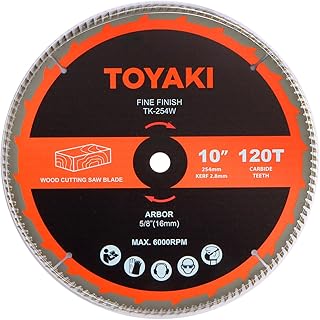
120-Tooth Fine-Finish Blade, 5/8″ Arbor
A specialist. On thin veneers, laminates, and delicate moldings the 120-tooth grind almost eliminates chip-out, but the narrow gullets clog in thick material, so treat it as a dedicated trim blade rather than a daily driver.
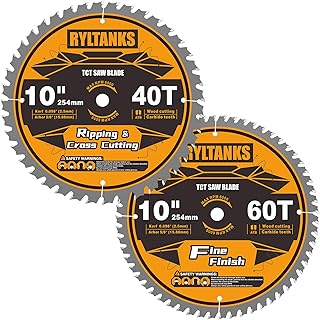
40T + 60T Blade 2-Pack
The most practical value buy for a home shop: one blade for ripping and rough crosscuts, one for finish work, so you stop compromising with a single tired disc. Swap-out takes ninety seconds and the improvement in cut quality is immediate.
Frequently Asked Questions
Does a higher tooth count always mean a better cut?
Only in appropriate material. In thick hardwood, an 80- or 120-tooth blade removes chips slowly, builds heat, and can burn the cut. Match tooth count to stock thickness first, then to the finish you need.
Can I use a miter saw blade in a table saw?
Often yes, if the arbor and kerf match and the blade isn’t specifically ground with a strongly negative hook. Most of the blades above are marketed for both, but never use a miter-specific negative-hook blade for ripping.
How do I know when a blade is done?
Watch for rising feed pressure, burn marks on offcuts, fuzzy fibers on the cut face, and a change in pitch. Carbide can be resharpened two or three times before the teeth grow too thin to be safe.
What’s the quietest option for evening work?
A high-tooth-count, vibration-damped blade like the Makita, paired with a light feed and good workpiece clamping. Most of the noise people blame on the motor is actually plate resonance and chatter.
Final Thoughts
For furniture-grade results with the least fuss, the Makita B-66977 is the blade to buy once and keep sharp. The WEN BL1060 is the smarter everyday choice if you want one disc that handles both structure and show surfaces, and the 40T/60T two-pack is the most sensible starting point for anyone still cutting everything with the blade that came in the box.