Key takeaways
- Measure the swing, not just the slot: A unit can fit the closet cavity and still be unusable if the drawers can’t clear the door track or a hanging rod. Add 14–18 inches of pull-out room in front, and confirm your shortest hanging garments won’t brush the top surface.
- Go vertical before you go wide: Closets almost always have unused headroom. A tall four- or five-drawer tower on a narrow footprint stores more per square foot than a wide chest and leaves floor space for shoes or a laundry hamper.
- Match drawer count to how you actually sort: Ten small drawers are excellent for socks, underwear, and workout layers; six deep drawers suit jeans, sweaters, and bedding. More drawers isn’t better — mismatched drawers are what create the overflow pile.
- Prioritize quiet operation: Fabric drawers on metal runners are near-silent, which matters if you’re dressing before dawn beside a sleeping partner. Wood-on-wood drawers and metal hardware make noticeably more noise in a dark room.
- Check the top surface and stability: A solid wood-look tabletop turns the unit into a landing zone for a lamp, a book, or a diffuser. If it’s going near a bed or in a child’s room, use the included anti-tip strap — tall, lightweight frames are easy to pull over.
What's inside
A closet that fights back at the end of the day is more than an inconvenience — it’s a sleep problem. In my work with clients on sleep environments, the bedroom’s visual clutter score turns out to be one of the quietest predictors of how long it takes someone to wind down. Folded laundry stacked on a chair, sweaters crammed onto a shelf just out of reach, a floor you have to step around at 11pm: each of these is a small unfinished task your brain logs before lights-out. The fix is rarely more willpower. It’s usually vertical storage that fits inside the closet, where the mess belongs.
The trouble is that most dressers were designed for open bedroom walls, not for the narrow, deep, oddly proportioned cavity behind a closet door. Standard hardwood chests are too wide, too heavy to reposition, and force you to swing drawers into a doorway that won’t accommodate them. This guide looks at closet-friendly dressers — tall, slim, fabric-drawer designs on steel frames — and explains how to match drawer count, footprint, and depth to the closet you actually have, so your clothes disappear from view and your room reads as a place for rest.
As an Amazon Associate we earn from qualifying purchases.


How to Choose a Dresser For Closet (2026)
- Measure the swing, not just the slot: A unit can fit the closet cavity and still be unusable if the drawers can’t clear the door track or a hanging rod. Add 14–18 inches of pull-out room in front, and confirm your shortest hanging garments won’t brush the top surface.
- Go vertical before you go wide: Closets almost always have unused headroom. A tall four- or five-drawer tower on a narrow footprint stores more per square foot than a wide chest and leaves floor space for shoes or a laundry hamper.
- Match drawer count to how you actually sort: Ten small drawers are excellent for socks, underwear, and workout layers; six deep drawers suit jeans, sweaters, and bedding. More drawers isn’t better — mismatched drawers are what create the overflow pile.
- Prioritize quiet operation: Fabric drawers on metal runners are near-silent, which matters if you’re dressing before dawn beside a sleeping partner. Wood-on-wood drawers and metal hardware make noticeably more noise in a dark room.
- Check the top surface and stability: A solid wood-look tabletop turns the unit into a landing zone for a lamp, a book, or a diffuser. If it’s going near a bed or in a child’s room, use the included anti-tip strap — tall, lightweight frames are easy to pull over.
The Best Dressers For Closets (2026), Reviewed
Sweetcrispy Tall 5-Drawer Storage Dresser
A genuinely narrow tower that slips into a reach-in closet or doubles as a nightstand, with five fabric bins that handle a full week of folded basics. It’s the pick I’d suggest for anyone whose closet has depth but almost no width.
WLIVE 9-Drawer Tall Chest
Nine roomy drawers on a sturdy steel frame make this the strongest option for couples sharing one closet, since you can assign entire columns rather than negotiating over shelves. The smooth wood tabletop is high enough to be useful without crowding a hanging rod.
WLIVE 10-Drawer Storage Tower with Cabinet
The ten smaller drawers plus enclosed cabinet section create a place for everything that usually ends up loose — belts, sleepwear, chargers, seasonal accessories. Best in closets with real ceiling height, and worth anchoring to the wall.
WLIVE 6-Drawer Fabric Dresser
My default recommendation for most closets: six deep drawers swallow jeans, hoodies, and spare bedding without the cramped feel of micro-drawers. The metal frame and wooden top also let it work in a hallway or living room if you rearrange later.
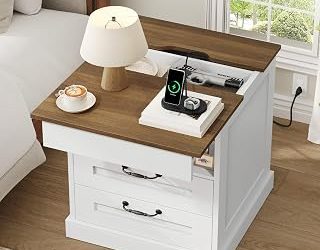
WLIVE Small 4-Drawer Nightstand Dresser
A compact four-drawer tower for studios, dorms, and closets already half-claimed by hanging clothes. It’s the least intrusive way to add real drawer storage to a small sleep space.
Frequently Asked Questions
Will a fabric dresser hold up long-term?
The frame does the work, so look for welded or bolted steel rather than plastic connectors. Drawers stay in better shape if you avoid overstuffing them and lift by the base when the unit is loaded.
How deep should a closet dresser be?
Most reach-in closets are 24 inches deep, which suits units in the 12–16 inch range once you allow clearance for the door and hanging clothes. Measure to the inside of the door frame, not the wall.
Do these need anti-tip anchoring?
Yes, for any tall unit — especially in a nursery or shared kids’ room. Lightweight frames tip more easily than heavy wood chests, and open drawers shift the center of gravity forward fast.
Can a dresser really affect sleep quality?
Indirectly, and meaningfully. Reducing visible clutter shortens the mental “closing down” ritual before bed and removes the low-grade decision fatigue of a room full of half-finished tasks.
Final Thoughts
For most closets, the WLIVE 6-Drawer Fabric Dresser hits the right balance of drawer depth and footprint, while the WLIVE 9-Drawer Tall Chest is the better call for shared closets that need clear division of space. If width is your real constraint, the Sweetcrispy 5-Drawer tower solves the problem no wide chest can — and gets your clothes out of sight before bedtime.