Key takeaways
- Tooth count and grind: 24–30 teeth rip fastest in thick stock, 40–50 tooth combination (ATB with flat raker) grinds cover both rips and crosscuts, and 60–80 tooth ATB blades deliver glass-smooth end grain. Match the grind to the cut, not to the price tag.
- Kerf and saw power: Thin-kerf blades (roughly 0.090″–0.100″) reduce load on contractor and jobsite saws and waste less expensive lumber. If you run a 3 HP cabinet saw, a full-kerf plate offers extra stiffness in 8/4 stock.
- Carbide grade: Hardwood dulls cheap carbide quickly. Look for high-density, fine-grain carbide with generous tooth bodies — more material means more sharpenings and better edge retention in abrasive species like hickory or wenge.
- Plate quality and vibration control: Laser-cut expansion slots, copper plugs, and a tensioned, precision-ground plate keep the blade running true as it heats up. Runout and flutter are what create those faint ripples in an otherwise perfect edge.
- Hook angle and coatings: A moderate positive hook (10°–20°) feeds smoothly in dense wood without grabbing; anti-friction or non-stick coatings reduce pitch buildup, which is the fastest route to burning.
What's inside
Hardwood punishes shortcuts. Push a length of hard maple or white oak through a blade that’s slightly dull, slightly thin, or ground for the wrong job, and the wood tells on you immediately: burnished burn lines along the rip face, fuzzy tearout on crosscut ends, a faint saw-tooth ripple that only appears after the finish goes on. Dense, resinous, figured stock generates far more heat and far more feed resistance than construction lumber, and it magnifies every weakness in a blade’s geometry, plate flatness, and carbide quality.
This guide focuses on 10-inch, 5/8-inch arbor blades that hold up in genuine hardwood work — furniture parts, case sides, drawer fronts, and glue-ready edges. We look at combination grinds that handle mixed operations without a blade swap, dedicated crosscut blades for flawless end grain, and budget multi-packs worth owning as backups. Each pick is assessed on tooth geometry, kerf, vibration control, and how much sanding it saves you downstream.
As an Amazon Associate we earn from qualifying purchases.




How to Choose a Table Saw Blade For Hardwood (2026)
- Tooth count and grind: 24–30 teeth rip fastest in thick stock, 40–50 tooth combination (ATB with flat raker) grinds cover both rips and crosscuts, and 60–80 tooth ATB blades deliver glass-smooth end grain. Match the grind to the cut, not to the price tag.
- Kerf and saw power: Thin-kerf blades (roughly 0.090″–0.100″) reduce load on contractor and jobsite saws and waste less expensive lumber. If you run a 3 HP cabinet saw, a full-kerf plate offers extra stiffness in 8/4 stock.
- Carbide grade: Hardwood dulls cheap carbide quickly. Look for high-density, fine-grain carbide with generous tooth bodies — more material means more sharpenings and better edge retention in abrasive species like hickory or wenge.
- Plate quality and vibration control: Laser-cut expansion slots, copper plugs, and a tensioned, precision-ground plate keep the blade running true as it heats up. Runout and flutter are what create those faint ripples in an otherwise perfect edge.
- Hook angle and coatings: A moderate positive hook (10°–20°) feeds smoothly in dense wood without grabbing; anti-friction or non-stick coatings reduce pitch buildup, which is the fastest route to burning.
The Best Table Saw Blade For Hardwood (2026)s Reviewed
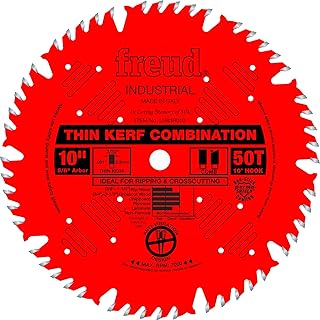
Freud LU83R010 Thin Kerf Combination
Freud’s TiCo hi-density carbide and laser-cut anti-vibration slots make this the most versatile hardwood blade here — it rips 4/4 cherry without bogging a 1.75 HP saw and still crosscuts cleanly enough for visible joinery. The thin kerf is the real advantage on underpowered saws, cutting feed resistance noticeably in oak and maple.
CMT 256.050.10 Combination Blade
A 50-tooth 15+1 ATB-and-raker grind on a well-tensioned plate, CMT’s combination blade produces rip edges that go straight to glue-up and crosscuts with minimal fuzz. The 15° hook feeds confidently in dense stock, making it an excellent one-blade solution for small furniture shops.
Freud LU85R010 Crosscut Blade
When end grain has to look polished — mitered frames, exposed tenon shoulders, breadboard ends — this is the blade to reach for. It removes material slowly and deliberately, so keep feed rates patient in thick hardwood and let the tooth geometry do the finishing work.
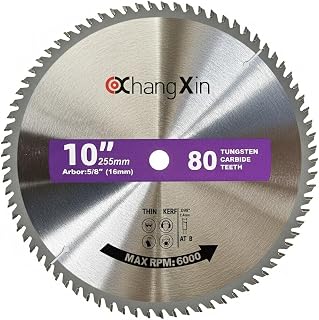
10-Inch 80T Premium Carbide Crosscut Blade
A strong value pick for shops that want a dedicated fine-finish blade without premium spend. It performs best in stock up to about 1″, where its high tooth count shines; in thicker hardwood, ease off the feed to keep heat and burning under control.
WEN BL1080 80-Tooth Ultra-Fine Finish
The BL1080 is a sensible crossover blade for anyone running both a miter saw and a table saw, delivering tidy crosscuts in poplar, maple, and hardwood plywood. It’s not built for heavy ripping, but as a trim-and-finish blade it punches well above its price.
Frequently Asked Questions
How many teeth do I need for hardwood?
For general furniture work, a 40–50 tooth combination blade is the best default. Add a 24-tooth rip blade if you regularly break down 8/4 stock, and an 80-tooth blade for show-surface crosscuts.
Why is my hardwood burning?
Usually one of four things: a dull or pitch-caked blade, a fence out of parallel with the blade, too slow a feed rate, or too many teeth for the thickness. Clean the blade first — it’s the cheapest fix and often the culprit.
Is thin kerf worth it?
On saws under 3 HP, yes. Thin kerf blades draw less power, reduce burning, and save lumber. On high-powered cabinet saws with a good splitter setup, full kerf offers slightly better stability in deep cuts.
Should I sharpen or replace?
Quality carbide blades with substantial tooth bodies are worth professional sharpening two to four times, which typically costs a fraction of replacement. Thin-carbide budget blades are generally disposable.
Final Thoughts
For most hardwood furniture makers, the Freud LU83R010 thin kerf combination blade is the smartest single purchase — it balances rip capability, crosscut quality, and vibration control on nearly any saw. Pair it with the Freud LU85R010 for flawless end grain, or choose the CMT 256.050.10 if you’d rather run one premium combination blade for everything.