Key takeaways
- Every pantry has the same silent problem: cans stacked three deep, the one needed always at the back.
Every pantry has the same silent problem: cans stacked three deep, the one needed always at the back, and a second can of beans bought because the first could not be found. A canned food organizer fixes that by turning a pile into a lane, so the oldest can rolls forward and the newest slides in behind. The question for buyers is not whether to organize but how: a wire rack that holds a fixed number of cans, a stackable set that grows with the pantry, or a rolling dispenser that feeds cans forward by gravity.
This guide is for anyone staring at a deep cabinet, a narrow pantry shelf, or a cluttered corner that eats can space. Each pick is judged only on listing-title facts: tier count, stated can capacity, stacking ability, and material. Shelf clearance, exact can diameter limits, and weight ratings are rarely printed, so they are marked as details to confirm on the listing in 2026 before the order goes in. Measuring the shelf height and depth is the single most useful step before any purchase.
Quick Picks
Our top picks


As an Amazon Associate we earn from qualifying purchases at no extra cost to you.
| Product | Best for | Key spec from the title |
|---|---|---|
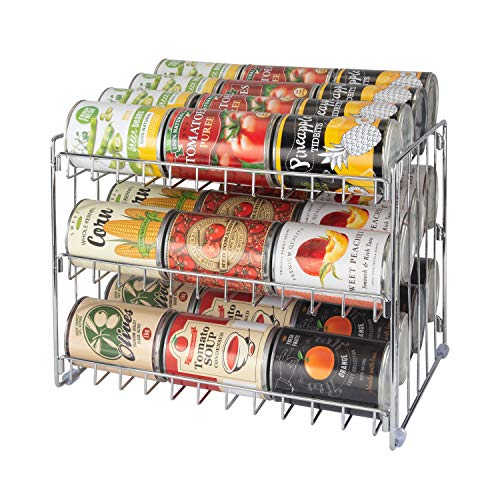
| Kitchen Details 3 Tier Can Organizer | Deep cabinets with a fixed footprint | Chrome steel, holds 36 cans |
| AIYAKA 3 Tier Can Rack | Stackable black pantry rack | Holds 36 cans, stackable, black |
| Sonyabecca 8 Pack Can Organizer | Large pantries | 8 pack, stackable wire, holds up to 72 cans |
| JKsmart 2-Tier Stackable Rack | Flexible shelf heights | 2-tier, adjustable, stackable dispenser |
| 3-Pack Rolling Can Rack | Maximum capacity per shelf | 2-tier rolling dispenser, holds up to 90 cans |
| Jsyrjing 2 Pack 3-Tier Rack | Modular multi-shelf layouts | 2 pack, 3-tier, stackable, modular |
How to Choose
Measure shelf height, depth, and width first
A 3-tier rack is taller than a 2-tier one, and a stackable set rises even higher once two units are piled together. Measure the clear height between shelves, then compare it with the listing height, which is often shown in the photos even if not in the title. Depth matters as well: a deep rack suits a pantry shelf with plenty of room, while a shallow cabinet may only accept a single lane. Leave a little clearance at the top so cans can be lifted in and out without scraping.
Think about the door as well. A rack that fits the shelf but sits too close to the front can stop a cabinet door from closing, and a deep pantry may need a rack that pulls forward rather than one that requires reaching to the back. Placing heavier or more frequently used cans at waist height makes daily cooking easier, with lighter items higher up and rarely used items low or in the back.
Choose between fixed racks, stackable units, and rolling dispensers
Fixed racks, like the chrome 3-tier model, are simple and stable but cannot change shape. Stackable racks, such as the AIYAKA and Sonyabecca sets, let the user build up in height or spread across a shelf. Rolling dispensers use a slight slope so cans roll forward when the front can is removed; the 3-pack listing and a clear 3-tier rolling model use this idea. Rolling designs can be noisier and may need cans of a similar size to keep the lane moving smoothly.
Which style works best usually comes down to habit. Households that shop weekly and keep a modest pantry are happy with a fixed rack that shows everything at a glance. Households that buy cases at a time benefit from rolling or modular systems that handle volume. A mix is possible too: a rolling rack for the most-used staples such as beans and tomatoes, and a fixed rack for occasional items.
Look at stated capacity with realistic expectations
Titles quote figures like 36, 72, and 90 cans, and these are usually based on a standard can size. Tall or wide cans, such as large tomato or soup cans, may not fit the same number, and the adjustable designs address this better than fixed ones. Capacity also depends on whether shelves hold one row or two. When a listing says holds up to a number, treat it as a ceiling rather than a promise, and read the listing for the can sizes it expects. Counting the cans currently on hand, then adding room for growth, gives a more realistic target than guessing. A cupboard holding twenty cans does not need a ninety can system, while a stockpile for a large family might.
Check build, finish, and where budget racks cut corners
Chrome-finished steel and black-coated wire are common. The coating guards against scratches and rust, but thin coatings chip along the edges where cans slide. Wire spacing matters as well: gaps that are too wide let small cans tilt. Budget racks often use thin wire and plastic connectors that flex under a full load, so fill the lower tiers first and avoid overloading the top. What to ignore: vague promises of unlimited capacity without a stated number. Premium racks tend to use heavier gauge steel and more careful finishing, while mid-range sets are adequate for ordinary pantry loads. Whichever tier is chosen, assembling the rack on a flat surface and checking that every joint is square makes a visible difference to how smoothly cans move.
The 6 Best Options
Kitchen Details 3 Tier Can Organizer
A chrome steel rack described as holding 36 cans, built as a space-saving solution for pantries and cabinets with easy assembly.
- Strength: three tiers give a clear first-in, first-out layout.
- Strength: chrome steel build, per the title.
- Trade-off: a fixed shape, so it is less flexible than stackable sets.
Skip it if shelf height varies from cabinet to cabinet. It suits one deep pantry shelf where a single dependable rack is enough, and the open wire design lets the user see labels at a glance. A chrome finish is also easy to wipe clean, which matters when a leaking can or a drip of sauce reaches the rack. Anyone planning to use it in a damp spot, such as a basement shelf, should check the listing for notes on coating and rust care.
AIYAKA 3 Tier Stackable Can Rack
This black rack is stackable, holds 36 cans, and is intended for pantries and cabinets, with a dispenser design for easy access.
- Strength: stackable design lets it adapt to a taller shelf.
- Strength: black finish blends with dark wire shelving.
- Trade-off: the visible title does not specify material thickness.
Skip it if a chrome look is preferred. It suits households that buy cans in bulk and want a tiered display that can grow as the pantry fills. Putting the racks on a shelf liner prevents sliding and reduces noise when cans are removed, and the black coating pairs nicely with other dark kitchen organizers so the pantry looks coordinated rather than patched together.
Sonyabecca 8 Pack Stackable Can Organizer
An 8 pack of small metal wire racks that stack, holding up to 72 cans, beverages, and food in total across the set.
- Strength: a large set lets the pantry be configured in many ways.
- Strength: the stated 72 can total comes from many small modules.
- Trade-off: more pieces means a longer setup and more to store when not in use.
Skip it if a single compact rack is enough. It is a good fit for a big pantry where several shelves need the same layout, and the small modules also work for sodas and jars. Because the set is made of many small pieces, it adapts to awkward shelf sizes better than one large rack, though the buyer should expect a longer first-day setup and a need to keep spare pieces together.
JKsmart 2-Tier Stackable Can Rack
A 2-tier stackable dispenser with adjustable design and a large capacity, intended for canned food and sodas of various sizes. A second 2-tier JKsmart listing uses similar wording.
- Strength: adjustable design copes with different can sizes.
- Strength: two tiers fit shelves with limited height.
- Trade-off: the title gives no exact capacity figure.
Skip it if a clear stated capacity is required. It works for low shelves and cabinet spaces where tall racks will not clear the shelf above. Because the design is stackable, a second unit can be added later if the first one proves useful, which suits shoppers who prefer to try a small setup before reorganizing a whole pantry. The adjustable feature is worth confirming on the listing photos, since it determines how well the lanes handle slightly wider soup cans.
3-Pack Stackable Rolling Can Rack
This set of three 2-tier racks has an adjustable can holder with a rolling dispenser design, listed as holding up to 90 cans for pantry canned food storage.
- Strength: the highest stated capacity in this group.
- Strength: rolling design brings the next can forward automatically.
- Trade-off: rolling racks need level shelves and similar can sizes.
Skip it if the shelf is uneven or slanted. It suits heavy canned-goods households, emergency stockpiles, and shelves that must be restocked often. Loading is simple: place new cans at the back so the lane advances, and keep the slope clear of labels or loose packaging that could snag. A level shelf is essential, so a small bubble level is a worthwhile check before the first load.
Jsyrjing 2 Pack 3-Tier Can Organizer
A 2 pack of 3-tier stackable racks described as modular, serving as a can holder and soda can organizer for pantry shelves.
- Strength: two racks side by side fill a wide shelf.
- Strength: modular design allows re-arranging as needs change.
- Trade-off: the title does not state capacity per rack.
Skip it if only one narrow spot needs organizing. It is a flexible choice for a family pantry where cans, drinks, and jars share a shelf. The modular approach also helps when moving: the racks come apart and travel flat, so the same pantry system can follow a household to a new kitchen with a different shelf layout.
Which One Fits Your Situation
A deep cabinet where cans disappear
Kitchen Details gives a fixed three-tier layout that makes the back rows visible.
A big pantry with several matching shelves
Sonyabecca's 8 pack lets each shelf get the same module, with the stackable option for taller gaps.
A shelf with low clearance
JKsmart 2-tier racks fit where a 3-tier unit would hit the shelf above.
A household that stocks up in bulk
The 3-pack rolling set offers the largest stated capacity and a first-in, first-out flow.
Common Mistakes
- Buying without measuring shelf height and depth.
- Assuming every can type fits the stated capacity.
- Placing a rolling rack on an uneven shelf so cans jam.
- Stacking too high and making the top tier unstable.
- Putting heavy cans on the top tier and light cans below.
Related guides
- Blood Pressure Monitor For Beginners Under $150
- Infrared Thermometer For Beginners Under $100
- Digital Thermometer For Beginners Under $100
Frequently Asked Questions
Do can racks help with expiration dates?
They help rotate stock by keeping the oldest can at the front, but dates still need a glance when restocking.
Are rolling dispensers noisy?
Cans make some noise as they roll. A level shelf and consistent can sizes keep movement smooth.
Can racks hold soda or other drinks?
Several listings mention sodas and beverages. Confirm the can size on the listing.
How should racks be cleaned?
Wipe wire with a damp cloth and dry it fully so the coating lasts. Avoid abrasive scouring pads.
More from Amazon
Programs that pair well with the guide above. Offers and eligibility are set by Amazon and may change.
Collect the home and kitchen items you want in one registry that guests can shop from.
Create a wedding registrySet up recurring deliveries of everyday items on eligible products. Terms and savings are set by Amazon.
Explore Subscribe & SaveFree shipping on eligible items, Prime Video and more. Eligible new members can start with a free trial.
Start a Prime free trialAudiobooks and podcasts to listen to on the go. Eligible new members can start with a free trial.
Try Audible freeAs an Amazon Associate we earn from qualifying purchases.