Key takeaways
- Fingertip pulse oximeters look nearly identical on a shelf: a small clip, a tiny screen, and a lanyard.
Fingertip pulse oximeters look nearly identical on a shelf: a small clip, a tiny screen, and a lanyard. That sameness is what makes the best pulse oximeter under 100 dollars a hard search, because the useful differences hide in the screen type, the readout extras, the power setup, and what the maker actually claims. This guide treats the category as a consumer gadget to compare on features, nothing more.
It is written for buyers in 2026 who want a clip-on meter for a home kit, for sport or travel, or for general curiosity, and it is not medical advice. The titles here do not support any promise about accuracy or what a number means, and neither does this article. For any health concern, or for questions about which reading to act on, ask a clinician. The reviews below stay on buyer-side details: display, speed, power, extras, and what to confirm on each listing. Several Zacurate listings in the original group were color variants of one model, so only one is reviewed.
Quick Picks
Our top picks


As an Amazon Associate we earn from qualifying purchases at no extra cost to you.
| Product | Best for | Key spec from the title |
|---|---|---|
| Zacurate 500BL | A simple, no-extras meter | Fingertip, batteries included |
| OLED fingertip oximeter with lanyard | Bright, readable screens | OLED screen, heart rate, lanyard |
| HOLFENRY large display | Easy reading at a glance | 5 to 8 second reading, SpO2, heart rate, PI |
| Vibeat portable oximeter | Travel and carry bags | SpO2 and pulse rate, batteries and lanyard |
| Innovo Deluxe iP900AP | Extra readouts and alarm | Alarm, plethysmograph, perfusion index |
| Healthtree JKS50B | Hobby and sports use | Large OLED display, 5 to 8 second reading |
How to Choose
Start with what the device displays
Every model here shows blood oxygen saturation (SpO2) and pulse rate, which are the two numbers most buyers actually look at. Some add a perfusion index (PI), which is a number related to signal strength at the fingertip, and some add a plethysmograph, a small pulse waveform on screen. These extras can help you judge whether a reading looks steady, but they are not a diagnosis tool. If you do not understand a readout, a simpler screen is better than a busy one.
Screen type, size, and orientation
OLED screens are bright and readable in dim rooms, while basic LED displays can wash out in sunlight. A larger display helps older eyes and anyone checking a reading from an angle. Look for a screen that rotates or flips so you can read it from either side, since a clip is awkward to hold at the same angle as a phone. Check whether the display turns off on its own to save the battery, because a clip that stays lit in a drawer will drain its cells quickly.
Power, speed, and what is in the box
Most meters run on small AAA cells, and listings that include batteries and a lanyard spare you a trip to the store. Reading times of roughly five to eight seconds are common in the titles here, but treat that as the time to a first number. Hold still and keep your hand at rest, because motion, cold fingers, and dark nail polish can all confuse a fingertip sensor. Look for a case or pouch in the contents list if you plan to travel, and carry spare batteries in the same bag.
What the titles cannot tell you
No title can prove a device is accurate, and phrases like “accurate” or “reliable” are the maker’s words. Some listings mention approvals, and that is worth reading closely on the page, but it still does not make a clip a medical decision-maker. Treat any meter in this tier as a general wellness gadget, compare it with your clinician’s guidance, and never delay care because of a number.
The 6 Best Options
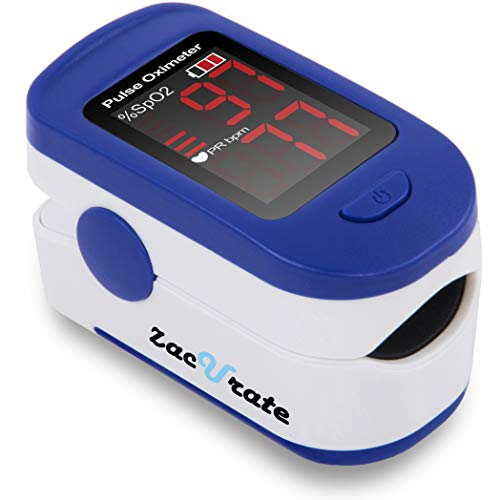
Zacurate 500BL fingertip pulse oximeter
The 500BL in navy blue is the plain, no-extras option, with the title stressing fingertip use, blood oxygen saturation monitoring, and batteries included. It suits a buyer who wants a basic clip without a long feature list to learn. Having the batteries in the box means it is ready the day it arrives, and the simple design leaves little to confuse a first-time user.
- Strength: batteries included, so it works out of the box.
- Strength: simple fingertip design with a short learning curve.
- Trade-off: the title lists no extras such as a waveform or alarm.
Skip it if you want a bigger display or a perfusion index, or if you want a lanyard confirmed in the title. Because there is so little to read, it also gives you less to compare with other meters if you later add a second one to the kit.
Fingertip pulse oximeter with OLED screen and lanyard
This unbranded listing combines SpO2 and heart rate with an OLED screen, and it comes with a lanyard. OLED means high contrast, which helps in a dim bedroom or on a flight. The title is cut off after the lanyard mention, so confirm the batteries, case, and any other contents on the listing before ordering.
- Strength: OLED screen for good readability.
- Strength: lanyard included for carrying or hanging.
- Trade-off: no brand name and a cut-off title mean more to verify.
Skip it if you want a recognized name with support behind it, or if the missing details on the listing make you uneasy. A clip with an unknown maker can also be harder to get support for if the display fails after a few months.
HOLFENRY large-display fingertip oximeter
HOLFENRY highlights a large display and a 5 to 8 second reading for SpO2, heart rate, and PI. The big screen is the main draw, since it is easier to glance at than the tiny digits on cheaper clips. Perfusion index adds a bit more information for anyone curious about signal quality, though it should not be read as a health measure.
- Strength: large display makes the numbers easy to see.
- Strength: PI reading included alongside SpO2 and heart rate.
- Trade-off: the title is cut off, so confirm included batteries and accessories.
Skip it if you prefer the smallest possible clip, or if you do not want extra numbers on the screen. A busy readout can raise questions that a simple two-number display would never prompt, and only a clinician can answer those.
Vibeat fingertip pulse oximeter
Vibeat is billed as portable, showing SpO2 and pulse rate, with batteries and a lanyard included. The portable wording makes it a good fit for a go-bag, a gym bag, or a travel kit. The title stays modest, with no claims beyond the basics, which is a point in its favor when the category is full of exaggerated language.
- Strength: batteries and lanyard both included.
- Strength: portable and focused on the essential readouts.
- Trade-off: no waveform, alarm, or PI is named in the title.
Skip it if you want extra readouts or an alarm, or if you plan to keep it on one shelf. Without a stated case in the title, a small pouch of your own is a good idea to protect the sensor window from scratches.
Innovo Deluxe iP900AP pulse oximeter
Innovo’s model adds an alarm, a plethysmograph, and a perfusion index to the usual SpO2 readout. The waveform shows the pulse signal, which helps you see whether the sensor has a steady reading. The alarm is the feature that sets it apart in this group, though how it is set and what it triggers are details to confirm in the manual.
- Strength: alarm, waveform, and PI all named in the title.
- Strength: the richest feature list of the six.
- Trade-off: more features mean more to learn and more to misread.
Skip it if you want a simple glance-and-go meter, and never rely on an alarm as a substitute for medical advice. Some buyers will find the waveform and alarm more than they need for occasional use.
Healthtree JKS50B fingertip oximeter
Healthtree pairs a large OLED display with a 5 to 8 second reading, showing SpO2 and heart rate, and its title mentions sports and aviation among uses. It suits hobbyists who want a readable clip for hikes or flights. As with the others, the reading is a general-purpose number, not a diagnosis, and context matters.
- Strength: large OLED display for clear viewing.
- Strength: aimed at active and travel use.
- Trade-off: no waveform, alarm, or PI is listed in the title.
Skip it if you want an alarm, or if you plan to rely on it for anything beyond casual use. Its sports and aviation wording describes where people carry it, not a promise about what the numbers mean on a hike or a flight.
Which One Fits Your Situation
A simple home kit
The Zacurate 500BL or the Vibeat covers the basics with batteries in the box and little to learn. Keep it with a spare set of batteries in the same drawer, and write down the date you opened them so you remember to swap them.
Someone who struggles to read small screens
The HOLFENRY or the Healthtree JKS50B offers a larger display, and the OLED screen on the Healthtree helps in low light. Check the listing photos with that person in mind, since digit size is easy to judge from a picture.
A person who likes extra data
The Innovo iP900AP adds a waveform, perfusion index, and an alarm. Read the manual closely, and ask a clinician if you are unsure about any number. Extra readouts only help if you know what they stand for, so learn the labels before you rely on them.
Travel and outdoor use
The Vibeat and Healthtree both lean portable, and a lanyard keeps either one from getting lost in a bag. Keep the sensor window clean and dry, and store the clip with its cover or pouch.
Common Mistakes
- Treating a consumer clip as a diagnostic instrument instead of a general-purpose gadget.
- Measuring with cold fingers, motion, or dark nail polish and trusting the first number.
- Choosing the busiest screen when a simple readout would be easier to understand, then ignoring half the numbers.
- Forgetting spare batteries and discovering the clip is dead when it matters.
- Delaying a call to a clinician because a number looked acceptable.
Related guides
- Wrist Blood Pressure Monitor Under $150
- Pillows For Sleeping On Back And Side
- Memory Foam Pillows For Side Sleepers
Frequently Asked Questions
Does a pulse oximeter diagnose anything?
No. A consumer clip displays a number, and only a clinician can interpret it in context. Do not make health decisions based on a device from this price tier alone, and do not let a reassuring number talk you out of calling for help when something feels wrong.
What is a perfusion index?
It is a signal strength figure shown by some meters. It helps you judge whether the sensor has a steady pulse signal, not whether you are healthy. Many buyers never need to look at it, and a meter without it is just as usable.
Why do readings change from second to second?
Movement, temperature, and finger placement all affect a fingertip sensor. Rest your hand, sit still, and wait for the number to settle before reading it. Take the clip off between checks, and try again with a warmer finger if the screen looks unsteady.
Should I buy a meter with an alarm?
Only if you understand how it is set. An alarm is a convenience, not medical monitoring, so ask a clinician before building any routine around it, and read the manual to learn what the beep actually means.
More from Amazon
Programs that pair well with the guide above. Offers and eligibility are set by Amazon and may change.
Collect the home and kitchen items you want in one registry that guests can shop from.
Create a wedding registrySet up recurring deliveries of everyday items on eligible products. Terms and savings are set by Amazon.
Explore Subscribe & SaveFree shipping on eligible items, Prime Video and more. Eligible new members can start with a free trial.
Start a Prime free trialAudiobooks and podcasts to listen to on the go. Eligible new members can start with a free trial.
Try Audible freeAs an Amazon Associate we earn from qualifying purchases.