
Our Top Picks
 duraflame Freestanding Electric Fireplace Stove Heater with 3D13.07"D x 24"W x 23.4"H13.07 x 24 x 23.4 inches28.6 poundsCheck on Amazon
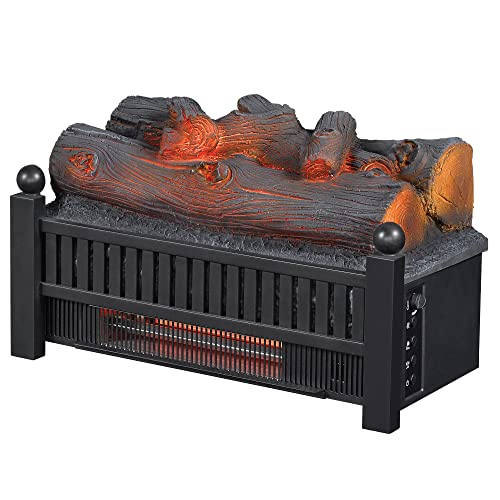 duraflame® Electric Log Set 120.52"W x 8.73" D x 14.43" H8.66 x 20.7 x 12.6 inches12.54 PoundsCheck on Amazon
The short answer: the best electric fireplace is the one that matches how you want to install it and what you want it to do. Decide first whether you want a plug-in unit you can move, a wall-mounted or recessed unit that becomes part of the room, or an insert that fits an existing opening. Then check the heater, the flame effect and the wiring requirements. For most living rooms and bedrooms, a plug-in model with a supplemental heater and a realistic, adjustable flame effect gives a lot of atmosphere with very little work. Hardwired and built-in units look cleaner but call for a licensed electrician and careful planning.
Contents
- What an electric fireplace really is
- Main types
- Heat output and wattage explained
- Flame effects and visual quality
- Controls and extra features
- Installation overview
- Placing a television above
- Safety
- Care and maintenance
- Common mistakes
- Who should choose what
- Checklist
- FAQ
- Conclusion
What an electric fireplace really is
An electric fireplace is a decorative appliance that imitates the look of a fire using lighting and a reflective or projected effect, often combined with a small electric heater. There is no combustion, so there is no chimney, no gas line, no smoke and no real flame. That is why it can be placed in apartments, bedrooms, basements and rooms where a masonry fireplace was never built.
It helps to treat the two functions separately. The flame effect uses low-power LED lighting and consumes very little electricity, so you can enjoy the glow all year with the heater switched off. The heater, if present, is a resistance or fan-forced element that behaves much like a space heater. Understanding that split makes shopping simpler: you are choosing a piece of furniture or wall decor first, and a supplemental heater second.
Because there is no combustion, an electric fireplace does not produce combustion by-products in the room and does not need a vent. It is not, however, a whole-home heating solution. Think of it as zone heating for a single room, adding comfort where you sit.
Main types
Wall-mounted and recessed
These are slim units that hang on the wall like a picture or sit flush inside a framed recess. They create a modern linear look and keep the floor clear. Some plug into a nearby outlet, and some are hardwired, which hides the cord but needs an electrician.
Mantel and surround packages
A firebox is built into a cabinet-style surround with a mantel shelf. It adds a traditional focal point to a room without construction. The surround is typically furniture-grade, so check the build material, assembly time and weight.
Inserts
An insert is designed to slide into an existing fireplace opening, replacing an unused wood or gas hearth with something cleaner and easier. Measure the opening carefully, and have a professional confirm the opening is clean and safe, particularly if it previously burned fuel.
Freestanding stoves and cabinets
These resemble a stove or a standalone cabinet and plug into any outlet. They are the most flexible, because you can move them when you rearrange the room.
| Type | Installation effort | Look | Strengths | Trade-offs |
|---|---|---|---|---|
| Wall-mounted or recessed | Moderate; electrician for hardwiring | Modern, slim | Saves floor space, clean lines | Needs a solid mounting plan, wall studs and cord routing |
| Mantel or surround package | Low; mostly assembly | Traditional | Instant focal point, no construction | Takes floor space, can be heavy and bulky |
| Insert for existing opening | Moderate; measure and check opening | Built-in | Reuses an old hearth | Fit depends on exact opening size |
| Freestanding stove or cabinet | Very low; plug in | Varies | Movable, renter-friendly | Cord visible, heat directed from one spot |
| Tabletop or compact | None | Small accent | Portable, inexpensive to run | Limited heat, little visual impact |
Heat output and wattage explained
Most plug-in electric fireplaces with heaters are designed to run on a standard household circuit, and many top out at about 1,500 watts, the usual limit for a plug-in heater on a common branch circuit. One watt equals roughly 3.4 BTU per hour, so 1,500 watts produces in the region of 5,000 BTU per hour. That is enough to take the chill off a small to medium room, but not to heat a large open space in cold weather.
As a loose guide, supplemental electric heat is often estimated at around 10 watts per square foot of floor area for a reasonably insulated room, although conditions vary a great deal. By that rule, a 1,500-watt heater suits a room of roughly 150 square feet, a little more or less depending on insulation, ceiling height and climate. Treat this as a rough starting point rather than a promise.
Electric resistance heating converts nearly all the electricity it uses into heat, so a higher-wattage heater is not more efficient, only more powerful. The real question is whether the heat reaches you. A fireplace that blows heat out of the front near the floor warms the seating area quickly. One that vents warm air from the top can be hotter at the ceiling and less useful, especially if it is mounted high or under a television.
Operating cost depends on your local electricity price and how long the heater runs. Multiply the kilowatts by the hours of use and by your tariff to estimate. Because a 1,500-watt heater is 1.5 kilowatts, an hour of use consumes 1.5 kilowatt-hours. A thermostat helps by cycling the heater off when the room is warm.
Some larger or hardwired units use higher wattage on a dedicated circuit. These should be installed by a licensed electrician who can check the breaker rating, the wire gauge and the load on the panel.
Flame effects and visual quality
The look of the fire is the main reason people buy these products, and quality varies widely. Some use simple moving reflective shapes that look artificial from certain angles. More convincing designs layer LED lighting with a faceted backdrop and a log or ember bed to create depth.
Features that make a fire look better include adjustable flame brightness and speed, multiple ember colours, a realistic log set or crystal bed, and a back panel that changes colour. Viewing angle matters: check that the flame looks believable from where you will actually sit, since some effects look flat when seen from the side.
It is also worth noting that some people find LED flames too bright for a bedroom. Look for dimming and for the ability to run the flame without the heater, and consider whether an auto shutoff timer would help.
Controls and extra features
- Remote control: almost universal, and convenient for adjusting flame and heat from the sofa.
- Thermostat: keeps the room at a set temperature by cycling the heater, saving both energy and annoyance.
- Timer and auto shutoff: a useful safeguard, so the heater does not run when nobody is in the room.
- Overheat protection: a safety feature that switches off the heater if internal temperatures rise too high. Look for it in the specifications.
- Cool-touch glass or front: a front panel designed to stay cooler than the heater outlet is useful if children or pets are present, although you should still supervise them.
- Noise: a heater fan can be audible. Check whether the flame can run silently and whether the heater has quiet settings.
Installation overview
A plug-in fireplace requires little more than an outlet. A built-in or hardwired one needs planning. The steps below apply in general terms; always follow the manual supplied with your unit.
- Choose the wall and the outlet. A plug-in unit should reach an outlet without an extension cord. A hardwired unit needs a junction box and dedicated cable run.
- Check the wall. Wall-mounted units must be fixed into studs or suitable anchors, with the unit’s weight in mind. Find studs with a stud finder, and avoid hidden wiring or pipes.
- Frame for recessed units. A recess needs a framed opening with the correct dimensions, and the manufacturer may specify non-combustible or heat-resistant finishes around the heater.
- Plan the wiring. If the unit is hardwired, hire a licensed electrician. The electrician will check the breaker, the wire gauge and whether a dedicated circuit is required.
- Mount and level. Hang the unit using the supplied bracket. A level, secure fit prevents rattles and protects the wall.
- Finish carefully. Drywall, trim and paint should respect the clearances in the manual, particularly around heat vents.
- Test. Run the flame first, then the heater, and watch for unusual smells, noises or tripped breakers.
Placing a television above
Mounting a television above a fireplace is popular, but it deserves caution. Warm air rising from a heater can reach the screen, and sustained heat is not good for electronics. The viewing height may also be uncomfortably high.
Read both manuals. The fireplace manual may specify whether a television can be placed above and what clearance and mantel depth are required. The television manual states its acceptable operating temperature range. Some fireplaces direct heat out of the front near the floor, which makes an overhead television less of a problem, but do not assume that. If the guidance is unclear, mount the television elsewhere or use the flame effect without the heater when the television is on. A deep mantel shelf between the two can also deflect rising warm air.
Safety
- Plug directly into a wall outlet. Avoid extension cords and power strips for any heater. They can overheat under continuous load.
- Do not share the circuit. A 1,500-watt heater is a heavy load. Avoid running other high-draw appliances on the same circuit at the same time.
- Check the outlet and plug. If the plug or outlet becomes warm, discolours or smells, stop using the unit and have a licensed electrician examine the circuit.
- Hardwired units need a professional. Wiring, breaker sizing and any dedicated circuit should be handled by a licensed electrician.
- Keep clearances. Maintain the clearances stated in the manual from furniture, curtains, bedding, rugs and decor. Never drape anything over the unit or block its vents.
- Do not place items on the heater outlet. Candles, plants, books and fabrics do not belong on or in front of heated surfaces.
- Supervise children and pets. Even cool-touch fronts can have hot outlets.
- Do not leave a heater running unattended. Use a timer, and switch it off when you leave the room for long or go to bed.
- Keep it dry. Do not use in bathrooms or damp areas unless the unit is rated for that and installed by a professional.
- Have working smoke alarms. Electric fireplaces carry fire risks like any heater, so ensure alarms are installed and tested.
- Stop using damaged units. A frayed cord, damaged plug or cracked housing means the unit should not be used.
Care and maintenance
Electric fireplaces need much less care than wood or gas, but a bit of routine attention extends their life.
- Switch off and unplug before cleaning, and let the unit cool.
- Dust vents and the heater outlet with a soft brush or vacuum attachment, because dust buildup can cause odour and reduce airflow.
- Clean the glass with a soft cloth and a glass cleaner suitable for the surface, spraying the cloth rather than the unit.
- Check the cord and plug periodically for wear.
- LED lights typically last a long time, but the manual explains whether the bulbs or modules can be replaced and how.
- If the heater cuts out repeatedly, check for blocked vents before assuming a fault.
Common mistakes
Buying for heat rather than ambiance. A plug-in fireplace is a supplemental heater at best. If you expect it to warm an entire home, you will be disappointed.
Ignoring the room size. A small heater in a large open space has little effect. Match output to the room.
Forgetting the outlet. A cord running across the room is an eyesore and a trip hazard. Plan the outlet position early or have an electrician add one.
Skipping the stud search. A heavy wall-mounted unit needs solid support. Hollow drywall anchors may not suffice.
Crowding it with decor. Items on a mantel or in front of vents can restrict airflow and pose a fire risk.
Who should choose what
| Situation | Suggested type | Why | Watch for |
|---|---|---|---|
| Renter, no construction allowed | Freestanding stove or mantel package | No wall modifications, easy to move | Outlet position and cord routing |
| Modern living room with a feature wall | Wall-mounted or recessed | Slim profile, strong visual statement | Studs, wiring plan and any TV above |
| Unused masonry fireplace | Insert | Uses the existing opening, familiar look | Accurate measurements and a professional check of the opening |
| Small bedroom or office | Compact or tabletop | Lower profile, soft glow | Dimmable flame, auto shutoff |
| Cool basement or den | Plug-in with heater and thermostat | Zone heating where you sit | Circuit load and insulation levels |
| Prefer a hidden-cord look | Hardwired recessed | No visible cord or outlet | Needs a licensed electrician and planning |
To compare layouts and styles, browse a range of electric fireplaces and check each listing against the clearances, wattage and installation notes above.
Checklist
- Decide whether you want atmosphere, supplemental heat or both.
- Measure the room and the wall or opening where the unit will go.
- Choose a type: wall-mounted, mantel, insert, freestanding or compact.
- Check the heater wattage and compare it with the room size.
- Locate the nearest outlet and avoid extension cords.
- Check the circuit rating and what else shares it.
- Hire a licensed electrician for any hardwired installation.
- Confirm the required clearances from furniture and curtains.
- Read both manuals before placing a television above.
- Look for overheat protection, a thermostat and an auto shutoff.
- Test the flame look from your usual seating positions.
- Check that the flame can run without the heater.
Frequently asked questions
Do electric fireplaces actually heat a room?
Models with heaters can warm a small to medium room, similar to a space heater. They are best as supplemental heat rather than whole-home heating, and results depend on insulation and room size.
Are electric fireplaces expensive to run?
The flame effect uses very little power. The heater is the main cost. A 1,500-watt heater uses 1.5 kilowatt-hours per hour, so multiply by your electricity price and hours of use to estimate.
Do electric fireplaces need venting?
No. There is no combustion, so no chimney or vent is needed. You still need to keep the unit’s own air vents clear.
Can I use an electric fireplace without the heat?
Most models let you run the flame alone, which is useful in warm weather and uses little electricity. Check the specifications to confirm this feature.
Can I mount a TV above an electric fireplace?
Sometimes, but check both manuals first. Rising warm air can affect electronics, so confirm clearances, and consider running the flame without the heater when the TV is on.
Do electric fireplaces need a dedicated circuit?
Many plug-in models are made for a standard outlet, but a heater is a heavy load and should not share a busy circuit. Hardwired and higher-wattage units may require a dedicated circuit, so consult a licensed electrician.
Can I install an electric fireplace insert in a wood-burning fireplace?
Many inserts are designed for this, but measure carefully and have the opening checked. Follow the manufacturer’s instructions, and have a professional advise if you are unsure about the condition of the old hearth.
Is it safe to leave an electric fireplace on overnight?
It is better not to leave a heater running unattended or while you sleep. Use a timer and a thermostat, and keep clearances. The flame effect alone is much lower risk than the heater.
Conclusion
Choosing from the best electric fireplaces comes down to how you want it installed, how much heat you need and how the flame looks from your seat. Treat the heater as supplemental, check the wattage against your room size, and respect electrical limits and clearances. Plug-in units are simple and flexible, while hardwired and recessed options give a cleaner look but need a licensed electrician.
When you are ready to look, consider wall-mounted electric fireplaces, electric fireplace inserts or mantel and surround packages that suit your room.
Disclosure: As an Amazon Associate, the-dreamhome.com earns from qualifying purchases made through links on this page, at no extra cost to you.
