Key takeaways
- Changing height and reach: Aim for a surface that lands between your hip and lower ribs when you stand naturally. Too low and you’ll hunch through hundreds of changes; too high and one-handed control of a squirming baby gets unsafe. Confirm the pad-to-floor total, not just the dresser height.
- Silent, controlled drawers: Metal ball-bearing glides or well-fitted fabric bins beat cheap wooden runners every time. A drawer that sticks and then releases with a bang is the single most common cause of a lost night’s sleep in an otherwise well-designed nursery.
- Anti-tip hardware and depth: Any dresser a child will eventually climb needs wall anchors installed on day one, plus a footprint deep enough (roughly 18 inches or more) to resist tipping when loaded drawers are open. Treat the included strap as mandatory, not optional.
- Finish and off-gassing: Look for certified low-emission engineered wood or solid timber with water-based finishes, and unbox at least a week before the nursery goes into use. Air quality matters in a room where someone sleeps twelve-plus hours a day.
- Second-act design: The changing top should lift off or unscrew cleanly, leaving a dresser you’d still want in a toddler’s room. Pieces where the tray is permanently molded into the frame have a hard expiration date.
What's inside
Ask any parent what wrecked their first year of sleep, and you’ll rarely hear “the crib.” More often it’s the two-in-the-morning shuffle: the frantic hunt for a clean sleeper, the drawer that shrieks when it opens, the trip down a dark hallway that wakes everyone up. From a sleep-wellness standpoint, the nursery dresser is quietly one of the most important pieces in the room, because it determines whether a night waking stays a small, drowsy interruption or turns into a full reset for both of you.
This guide looks at nursery dressers with changing tops through that lens — not just storage capacity, but how well each piece supports low-arousal night care, safe anchoring, and a room that stays calm rather than cluttered. Below you’ll find the top options for 2026, a selection framework built around real overnight use, and answers to the questions parents ask most before committing to a piece that has to survive four years of daily wear.
As an Amazon Associate we earn from qualifying purchases.



How to Choose a Nursery Dresser Changing Table (2026)
- Changing height and reach: Aim for a surface that lands between your hip and lower ribs when you stand naturally. Too low and you’ll hunch through hundreds of changes; too high and one-handed control of a squirming baby gets unsafe. Confirm the pad-to-floor total, not just the dresser height.
- Silent, controlled drawers: Metal ball-bearing glides or well-fitted fabric bins beat cheap wooden runners every time. A drawer that sticks and then releases with a bang is the single most common cause of a lost night’s sleep in an otherwise well-designed nursery.
- Anti-tip hardware and depth: Any dresser a child will eventually climb needs wall anchors installed on day one, plus a footprint deep enough (roughly 18 inches or more) to resist tipping when loaded drawers are open. Treat the included strap as mandatory, not optional.
- Finish and off-gassing: Look for certified low-emission engineered wood or solid timber with water-based finishes, and unbox at least a week before the nursery goes into use. Air quality matters in a room where someone sleeps twelve-plus hours a day.
- Second-act design: The changing top should lift off or unscrew cleanly, leaving a dresser you’d still want in a toddler’s room. Pieces where the tray is permanently molded into the frame have a hard expiration date.
The Best Nursery Dresser Changing Table (2026)s Reviewed
Nursery Dresser with Changing Top for Kid’s Room
A sensible generalist that pairs a removable changing top with deep, evenly proportioned drawers, making it easy to zone sleepwear separately from daytime clothes. The straightforward silhouette reads well in small rooms where visual clutter tends to make the whole space feel busier than it is.
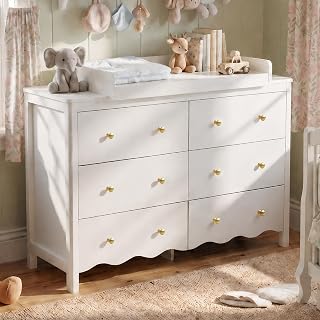
White 6-Drawer Dresser with Solid Wood Legs
The standout here is stability underfoot — solid wood legs give it a firmer stance than particleboard plinths, which matters when you’re leaning your weight onto the surface at 3 a.m. Six drawers is genuinely enough capacity to keep the nursery floor clear through the toddler years.
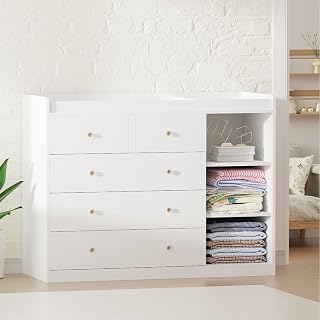
FURNJOYLIFE Nursery Dresser with Changing Table
Its three-drawer-plus-open-shelf layout is the most night-friendly configuration on this list: wipes, creams, and a spare sleepsack live in reach without opening anything. Fewer drawers means less total capacity, so pair it with a closet system if your wardrobe collection is ambitious.
6-Drawer Nursery Dresser with Diaper Station
A well-balanced pick for parents who want maximum sorted storage in a single footprint, with a contoured changing area that keeps the pad from drifting. Budget an unhurried evening for assembly — the drawer count is the trade-off for a longer build.
BOLUO Baby Dresser with Fabric Drawers
The six fabric bins are the quietest option reviewed here, sliding out with almost no mechanical noise, which makes it a strong fit for shared bedrooms and light-sleeping babies. Fabric won’t hold a crisp folded stack the way rigid drawers do, so use dividers if tidiness matters to you.
Frequently Asked Questions
How high should a changing surface be?
Most adults are comfortable with a finished pad height of 36 to 42 inches. Measure from the floor to your wrist with your arm hanging loose, then add a few inches — that range keeps your spine neutral through repeat changes.
Do I really need to anchor it to the wall?
Yes, without exception. Furniture tip-overs remain a leading cause of household injury for children under six, and a mobile toddler will test every drawer as a step. Anchor it before you load a single onesie.
Can a dresser top replace a dedicated changing table?
It can, provided you add a contoured pad with a safety strap and secure it to the surface with the supplied anchors or heavy-duty adhesive. Never rely on a flat, unsecured pad on a smooth finish.
How long will I actually use the changing function?
Plan for roughly two to three years. That’s precisely why removable tops matter — the dresser itself should carry on for another decade in a kid’s room.
Final Thoughts
If you want one piece to do everything, the White 6-Drawer Dresser with Solid Wood Legs offers the best combination of stability, capacity, and long-term looks. For genuinely quiet night changes in a shared room, the BOLUO fabric-drawer dresser is hard to beat, while the FURNJOYLIFE model’s open shelving is the smartest choice for parents who value grab-and-go access over sheer storage volume.