Key takeaways
- Best Overall (Tape): Scotch Box Lock Packing Tape, 6 rolls, 1.88 inches by 22.2 yards each.
- Best for Fragile Items: UBMOVE Foam Wrap Roll, 12 inches wide by 320 feet, 1/16 inch thick.
- Best Moving Bags: DECO EXPRESS 8-Pack Heavy Duty Moving Bags, 107 liters each, with zippers and handles.
- Best Bubble Mailers: GSSUSA 100-Pack Black Bubble Mailers, 6 by 10 inches.
- Best Shipping Labels (Home Printer): 9527 Product Half-Sheet Self Adhesive Labels, 200 labels.
- Best Boxes: BOX USA Medium Moving Boxes, 18 by 14 by 12 inches, 10-pack.
- Best Packing Paper: Bryco Goods Newsprint Packing Paper, 320 sheets.
- Best Furniture Wrap: TICONN Stretch Wrap Roll, 15 inches by 1000 feet.
The best moving and packing supplies for a whole-house move are a short list: strong tape, right-sized boxes, something soft for fragile items, zippered bags for soft goods and a way to label everything. If you can only buy one thing first, make it the Scotch Box Lock packing tape in the 6-roll pack, because tape is the supply every other item depends on and the pack covers roughly 50 boxes. For fragile items, the UBMOVE foam wrap roll is our pick over bubble wrap for cost and speed, and for clothes and bedding the DECO EXPRESS zippered moving bags are the best way to avoid buying extra boxes.
This guide is built around a real packing plan, not a random list. We compared eight main picks and four alternatives, including the items people search for separately: packing tape, bubble mailers, moving bags, foam wrap for moving and shipping labels. We did not personally use these products, so every statement is research-based, drawn from listing details and published moving advice. Where a spec is not stated, we write “not listed”. Exact prices are left out because they change, so we use tier words only.
Our top picks


As an Amazon Associate we earn from qualifying purchases at no extra cost to you.
Top Picks at a Glance
- Best Overall (Tape): Scotch Box Lock Packing Tape, 6 rolls, 1.88 inches by 22.2 yards each.
- Best for Fragile Items: UBMOVE Foam Wrap Roll, 12 inches wide by 320 feet, 1/16 inch thick.
- Best Moving Bags: DECO EXPRESS 8-Pack Heavy Duty Moving Bags, 107 liters each, with zippers and handles.
- Best Bubble Mailers: GSSUSA 100-Pack Black Bubble Mailers, 6 by 10 inches.
- Best Shipping Labels (Home Printer): 9527 Product Half-Sheet Self Adhesive Labels, 200 labels.
- Best Boxes: BOX USA Medium Moving Boxes, 18 by 14 by 12 inches, 10-pack.
- Best Packing Paper: Bryco Goods Newsprint Packing Paper, 320 sheets.
- Best Furniture Wrap: TICONN Stretch Wrap Roll, 15 inches by 1000 feet.
Comparison Table
| Product | Best for | Key specs (from listing) | Watch for | Price tier |
|---|---|---|---|---|
| Scotch Box Lock Tape | Sealing boxes | 6 rolls, 1.88 in x 22.2 yd each, clear | Needs a dispenser for speed | Mid-range |
| UBMOVE Foam Wrap | Dishes, frames, electronics | 12 in wide, 320 ft, 1/16 in thick, perforated every 12 in | Thin, needs layers for glass | Mid-range |
| DECO EXPRESS Moving Bags | Clothes, bedding, towels | 8 bags, 107 L / 28 gal, 88 lb stated, zipper | Not for heavy hard items | Mid-range |
| GSSUSA Bubble Mailers | Shipping small items ahead | 100 pack, 6×10 in, usable 6×9 in, self-seal | Too small for books | Budget |
| 9527 Half-Sheet Labels | Home-printed address labels | 8.5×5.5 in, 100 sheets, 200 labels, laser and inkjet | Needs a paper printer | Budget |
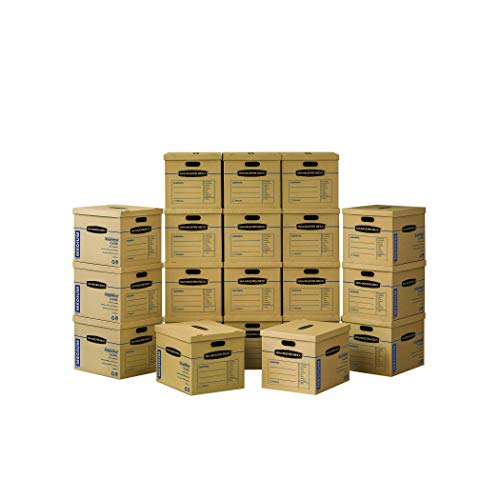
| BOX USA Medium Boxes | Books, kitchen, general | 18x14x12 in, holds 65 lb, 10-pack | Medium only, buy other sizes | Mid-range |
| Bryco Goods Packing Paper | Wrapping dishes, filling gaps | 10 lb bundle, 320 sheets, newsprint | Ink can smudge on light items | Mid-range |
| TICONN Stretch Wrap | Furniture, bundling | 15 in wide, 1000 ft roll | Not for leather in heat | Budget |
How Many Supplies Does a Whole-House Move Need?
The question most buyers have is quantity. As a planning rule, moving companies commonly suggest around 50 to 80 boxes for a two-bedroom home, with more for larger houses and for households with books or kitchen collections. Your own number depends on how much you declutter first. Count your rooms, then use this worked example for a two-bedroom, 70-box move.
- Tape: Sealing a medium box with an H-seam on top and bottom takes about 90 to 100 inches. Seventy boxes need around 6,500 inches, or 180 yards. The Scotch 6-pack gives about 133 yards, so buy two packs for a margin and for taping furniture covers and labels.
- Foam or paper: A kitchen of dishes and glasses typically uses 50 to 100 square feet of cushioning. The 320-foot foam roll at 12 inches wide gives 320 square feet, which is plenty for a kitchen plus frames and electronics.
- Soft goods: One 107 liter bag holds a shelf of folded clothes or a set of pillows. Eight bags handle most bedding and clothes, which frees up 8 to 12 boxes.
- Labels: One label per box, plus extras for furniture. Seventy boxes need 70 to 100 labels.
Buy 10 to 15 percent more than you calculate. Running out of tape on moving day is a common and avoidable problem.
1. Scotch Box Lock Packing Tape: Best Packing Tape
- 6 rolls in the pack
- 1.88 inches wide by 22.2 yards per roll
- Box Lock formula, described as sticking instantly
- Clear tape for boxes, shipping and storage
- Thickness in mils: not listed in the short title
Best for: Sealing and reinforcing boxes during a full move. Skip if: You are shipping very heavy boxes, in which case a thicker 2.7 mil roll may suit better.
Packing tape quality shows up in three ways: how it sticks to cardboard, how well it stays on a cold garage floor, and whether it tears cleanly. Scotch’s Box Lock line is aimed at the first, since it is designed to grab the box surface quickly rather than needing extra pressure. For a full move, quantity matters as much as quality, which is why a 6-roll pack is more practical than a single roll.
Use an H-pattern: one strip along the center seam and one along each edge. For heavy boxes, add a second strip across the bottom. Keep a tape gun or dispenser handy, since a handheld dispenser can roughly halve the time spent peeling and cutting.
Pros: Multi-roll value; brand name; clear. Cons: Dispenser not included; mil thickness not stated in the title.
2. UBMOVE Foam Wrap Roll: Best Foam Wrap for Moving
- 12 inches wide by 320 feet long
- 1/16 inch thick
- Perforated every 12 inches
- White polyethylene-type foam, material detail: check the listing
Best for: Wrapping plates, picture frames, electronics and furniture corners. Skip if: You are packing delicate glassware with no outer box padding; add layers or paper.
Foam wrap is faster than bubble wrap and does not pop. The perforation every 12 inches produces a square sheet that is ideal for plates and picture frames, so you can tear a sheet without scissors. At 1/16 inch it is thin, so it works best as a protective wrapping layer between items rather than as a heavy cushion for stemware. For glass, wrap two or three times and pack the item snug so it cannot shift.
Because it is soft and non-abrasive, foam wrap is also a good surface protector for tables and finished furniture. It does not leave ink marks the way newsprint can.
Pros: Fast to use; perforated; large roll. Cons: Thin; not a full replacement for bubble wrap with glass.
3. DECO EXPRESS 8-Pack Heavy Duty Moving Bags: Best Moving Bags
- 8 bags in the pack
- 107 liters (28 gallons) each
- 88 lb stated capacity
- Strong zipper, carrying handles
- Dimensions listed: 29.9 x 23.2 x 29.4 inches
Best for: Clothes, bedding, towels, pillows and stuffed toys. Skip if: You need to move heavy hard goods like books, which belong in boxes.
Moving bags convert the awkward soft goods into reusable totes. At 107 liters, each bag fits a full shelf of folded clothes, or two pillows and a comforter. The zipper stops the bag from opening on a truck and the handles let two people carry a full one. After the move, the bags fold flat for storage, so you can reuse them for seasonal storage or the next move.
Be realistic about weight. An 88 lb rating is a ceiling, not a target; a bag that heavy is hard to carry. Keep each bag under 40 or 50 pounds to protect the zipper and your back.
Pros: Reusable; large; saves boxes. Cons: Not stackable when soft; can be bulky in a small car.
4. GSSUSA 100-Pack Bubble Mailers: Best Bubble Mailers
- 100 count
- 6 by 10 inches, with usable size 6 by 9 inches (labeled #000)
- Black, self-seal, waterproof per the listing
- Padded lining, material detail: check the listing
Best for: Shipping small items before or after a move, or mailing keys, cables and small valuables. Skip if: You need to ship books or boxes.
Bubble mailers are not core moving gear, but they are useful. Before a move you will often sell small items or send things to a friend; after it you may return rental equipment or ship keys to a landlord. The 6 by 9 inch usable size fits phones, cables, jewelry and small tools. If you are mailing something fragile, add a layer of foam wrap inside and use a box for anything breakable.
A 100-pack is far more than a single move needs, so this suits resellers and households that regularly ship. If you only need a handful, a smaller pack makes more sense.
Pros: Bulk count; self-seal; opaque. Cons: More than most households need; small size.
5. 9527 Product Half-Sheet Shipping Labels: Best Labels for Home Printing
- 8.5 by 5.5 inch half-sheet labels
- 100 sheets of 8.5 by 11 inch paper, two labels per sheet, 200 labels total
- For laser and inkjet printers
- Easy-peel liner
Best for: Printing address labels and big room labels at home. Skip if: You own a thermal label printer.
Large, readable labels are the secret to a fast unload. Print the room name in large type, plus a number for the box and a short contents line. On moving day, movers or helpers should see “Kitchen – Box 4 – Plates” from across the room. The half-sheet size gives you plenty of room for that, and you can also use it as a shipping label on a package.
A color-coding system helps. Use a colored marker stripe by room, then match it with a colored sticker on the door frame at the new house. Keep an inventory list so you can tell what is missing after the move.
Pros: Large print area; inkjet and laser compatible; easy peel. Cons: Needs a printer; sheet-fed labels need careful alignment.
6. BOX USA Medium Moving Boxes: Best Boxes
- 10 boxes per pack
- 18 x 14 x 12 inches
- Holds 65 lb, per the listing
- Corrugated cardboard
Best for: Kitchen items, small appliances, shoes and general household goods. Skip if: You need large boxes for pillows and lampshades.
A medium box is the workhorse of any move. At 18 by 14 by 12 inches it is large enough to hold plenty but small enough to stay under 50 pounds, which is the practical limit for lifting. The standard rule is to put heavy items like books in small boxes, and light bulky items like towels in large boxes. A medium box fits the middle ground.
Buy more than one size. A typical two-bedroom plan includes about 10 small boxes for books and tools, 20 to 30 medium boxes and 10 large boxes for linens and bulky items. Reuse boxes if they are in good condition, but avoid those that are wet, crushed or have dust from long storage.
Pros: Practical size; stated 65 lb load capacity; 10-pack. Cons: One size only; buy small and large boxes separately.
7. Bryco Goods Newsprint Packing Paper: Best Packing Paper
- 10 lb bundle with 320 sheets
- Newsprint, unprinted paper type
- Made for wrapping and protecting dishes and glasses
- Sheet size: check the listing
Best for: Wrapping dishes and filling empty space in boxes. Skip if: You are wrapping light-colored items that ink can stain.
Packing paper is the traditional choice for plates and glasses, and it is also cheaper than foam by volume. It excels as void fill: crumpled paper stops items from shifting. Unprinted newsprint avoids the ink smears you get from old newspaper, though some residue can still transfer, so wrap delicate light items in a clean sheet first.
A common technique for plates is to wrap each in a sheet, stack three or four, wrap the stack again and pack on edge. This reduces breakage compared with laying plates flat.
Pros: Low cost; good void fill; recyclable. Cons: Takes more time to wrap; can leave residue.
8. TICONN Stretch Wrap Roll: Best for Furniture and Bundling
- 15 inches wide, 1000 feet long
- Clear plastic stretch film
- Designed for moving furniture and bundling items
- Gauge or thickness: check the listing
Best for: Wrapping couches, drawers and mattresses, and bundling lamps or rolled rugs. Skip if: You plan to leave the wrap on leather or wood in a hot truck for days, since heat can cause marks.
Stretch wrap holds drawers closed, keeps cushions together and protects fabric from dust. It sticks to itself rather than to the furniture, so it leaves less residue than tape. A 1000-foot roll covers an entire two-bedroom’s furniture. For delicate finishes, first lay a blanket or foam sheet, then wrap on top.
Pros: Covers furniture quickly; no residue on most surfaces; budget tier. Cons: Plastic waste; not breathable.
Also Consider
P PERFECTAPE Heavy Duty Packing Tape, 6 Rolls
Described as 2.7 mil, 1.88 by 60 yards per roll, for a total of 360 yards. Choose it over Scotch if you want more tape per pack and a thicker film for heavy boxes.
Fuxury Bubble Mailers, 10.5 x 16 Inch, 40 Pack
A larger mailer for clothing, framed prints and small electronics. A better fit than the 6 by 10 inch size if you ship bigger items.
Rollo 4×6 Direct Thermal Shipping Labels
A 500-label fanfold pack for thermal printers. Choose it if you already own a thermal printer, as the ink-free printing is cheaper at volume.
FYGRIP Extra Heavy Duty Moving Bags
A zippered alternative to the DECO EXPRESS, sold in 6 and 12 packs. Useful if you need more bags or a different color.
How We Chose
This guide is research-based. We compared manufacturer listing details, stated dimensions and pack sizes, and we read moving-company planning guidance and consumer publications on packing. We did not personally use these products. We focused on supplies that cover the whole job, from sealing to labeling, and we favored products that state their size, count and load rating. Items with vague claims were left out. Because the bubble mailers and shipping labels are shipping-oriented, we included them for the situations around a move, such as selling items beforehand or shipping packages to a new address.
Buying Guide: Moving and Packing Supplies
Start with the packing tape
Tape thickness is measured in mils. For household moves, 1.9 to 2.7 mil tape works well; thicker tape is better for heavy boxes and shipping. Width is usually 1.88 or 2 inches. Buy enough rolls for about 3 yards per box and a dispenser to speed work.
Pick box sizes by weight, not volume
Small boxes (about 16 by 12 by 12 inches) suit books and canned goods; medium boxes suit kitchenware; large boxes suit pillows and linens. Keep every box under about 50 pounds so it can be lifted safely, even if the box is rated for more.
Use cushioning by item type
Foam wrap suits plates, frames and electronics. Paper suits glasses and void fill. Bubble wrap suits fragile objects that need extra air cushion. For important items, mix a layer of foam and a layer of paper for the best protection.
Think about soft goods separately
Moving bags reduce the number of boxes, and they stack well on the truck floor. They are particularly good for pillows, linens and winter coats. Avoid filling them with items that could crush, like glassware.
Plan labeling before you pack
Decide on a system: room name, box number, a short contents list and an arrow for the top side. A separate “open first” box containing toilet paper, chargers, tools, kettle and cleaning supplies makes the first night easier.
A Room-by-Room Packing Order
Packing in a sensible order saves supplies and stress. Start with the rooms you use least: the garage, spare room, attic and off-season closets. These need the most boxes but the least careful wrapping, so they are the place to use up medium boxes and stretch wrap on bulky items. Next, move to the living room and bedrooms. Use the moving bags for clothes, bedding and pillows, and use foam wrap for frames, lamps and electronics.
Leave the kitchen and bathroom for last, because you will use them until the final days. For the kitchen, set aside a small box of everyday plates, cups and cutlery to keep out, and pack the rest with paper and foam. Wrap each plate individually, stand plates on edge and fill gaps with crumpled paper so nothing can shift. Label the box on at least two sides, mark the fragile ones clearly and place them on top of the stack in the truck.
On the final day, strip the beds, wrap the mattress and furniture with stretch film, and load heavy boxes first, with lighter ones on top. Keep your open-first box, important documents and valuables with you rather than on the truck.
Common Mistakes
- Overfilling boxes beyond a liftable weight.
- Using too little tape on the bottom of boxes.
- Skipping labels on the sides of boxes, since the top is hidden when stacked.
- Packing fragile items without a snug fit, letting them shift in the box.
- Buying supplies at the last minute, which limits your options.
Frequently Asked Questions
What are the best moving and packing supplies?
The core list is packing tape, medium and small boxes, foam wrap or paper, moving bags for soft goods, stretch wrap for furniture and labels. The picks above cover each item.
What is the best packing tape for moving?
A multi-roll pack of 1.88 inch clear tape at around 2 mil or thicker is ideal. The Scotch Box Lock 6-pack is our pick; the P PERFECTAPE is a thicker alternative.
Are bubble mailers good for fragile items?
They protect against light impact but not crushing. For fragile items, wrap them in foam first or use a box with padding.
Are moving bags better than boxes?
For clothes and bedding, yes: they are lighter, reusable and stack flat. For books, dishes and electronics, boxes are better.
What is the best foam wrap for moving?
A perforated 12 inch roll such as the UBMOVE is easy to use. For glassware, add a second layer or use paper plus foam.
What size shipping labels do I need?
For home printers, half-sheet 8.5 by 5.5 inch labels are suited to boxes and packages. For thermal printers, 4 by 6 inch labels are standard.
How many boxes do I need for a 2-bedroom move?
Planning guides commonly suggest roughly 50 to 80 boxes, depending on how much you own. Declutter first and adjust.
Which One Should You Buy?
For a standard house move, buy the Scotch tape pack, the BOX USA boxes, the UBMOVE foam, the DECO EXPRESS bags and a set of labels, then add paper and stretch wrap as needed. If you also ship items, add the GSSUSA bubble mailers. Choose the Bryco paper if you are packing a lot of dishes on a tight budget, and the TICONN stretch wrap if you are moving furniture yourself.
Order about two weeks before moving day, pack one room at a time and keep a small kit with scissors, markers and tape in your open-first box.
Sources
- Manufacturer product pages and listing details for Scotch, UBMOVE, DECO EXPRESS, GSSUSA, 9527 Product, BOX USA, Bryco Goods and TICONN
- American Moving and Storage Association moving planning guidance
- U-Haul packing and box size guidance
- Consumer publications on packing and moving
Last updated: October 2026