Key takeaways
- Door swing and clearance: Measure the arc, not just the cabinet. A standard hinged door needs roughly 18–24 inches of unobstructed floor in front of it, which is often impossible beside a queen bed. Sliding barn-style or bi-fold doors reclaim that space and, just as importantly, won’t wake a partner with a hinge creak at 6 a.m.
- Interior configuration over raw dimensions: A 71-inch cabinet with a single fixed shelf holds far less usable clothing than a shorter unit with an adjustable shelf stack, a full-width hanging rod, and drawers. Inventory what you own — long dresses, folded knits, small items — and match the interior to it before you fall for exterior styling.
- Lighting temperature, if any: Integrated LED strips are genuinely useful for dressing in low light, but only if they’re warm (roughly 2700K or below) and ideally dimmable. Cool white or blue-tinted LEDs at close range in the evening suppress melatonin at exactly the wrong hour. Motion-activated strips that stay on for a fixed interval are the sleep-friendliest version.
- Material, weight, and tip resistance: Engineered wood with a laminate finish is the value standard; powder-coated steel resists humidity and holds up better in basements, garages, and rentals. Either way, confirm the unit ships with an anti-tip wall anchor and use it, especially in homes with children or in seismic regions.
- Assembly and access: Most freestanding armoires arrive flat-packed and take two people two to three hours. Check that hardware is pre-drilled, that hinges are soft-close if you value silence, and that a mirrored front is shatter-backed rather than bare glass.
What's inside
Anyone who studies sleep for a living will tell you the same thing: the bedroom is a behavioral cue, not just a room. Your brain reads the space before you ever lie down, and a floor strewn with laundry, an overflowing chair, and a doorway crowded with garment racks all signal unfinished business. That low-grade visual noise raises pre-sleep arousal — the physiological alertness that keeps you staring at the ceiling — and it’s one of the most fixable sleep disruptors I encounter. Most older homes simply weren’t built with enough enclosed storage, and open shelving units only relocate the clutter rather than resolving it.
An armoire closet solves this differently. It gives clothing a door to hide behind, which is the entire point: concealed storage removes the visual stimulus without demanding a renovation. This guide walks through what actually matters when you’re choosing one — footprint versus interior volume, door mechanics in tight bedrooms, material honesty, lighting that won’t sabotage your melatonin, and assembly realities — followed by reviews of the strongest freestanding options available in 2026 across wood and steel builds, mirrored and unmirrored, budget and premium.
As an Amazon Associate we earn from qualifying purchases.




How to Choose a/an Armoire Closet (2026)
- Door swing and clearance: Measure the arc, not just the cabinet. A standard hinged door needs roughly 18–24 inches of unobstructed floor in front of it, which is often impossible beside a queen bed. Sliding barn-style or bi-fold doors reclaim that space and, just as importantly, won’t wake a partner with a hinge creak at 6 a.m.
- Interior configuration over raw dimensions: A 71-inch cabinet with a single fixed shelf holds far less usable clothing than a shorter unit with an adjustable shelf stack, a full-width hanging rod, and drawers. Inventory what you own — long dresses, folded knits, small items — and match the interior to it before you fall for exterior styling.
- Lighting temperature, if any: Integrated LED strips are genuinely useful for dressing in low light, but only if they’re warm (roughly 2700K or below) and ideally dimmable. Cool white or blue-tinted LEDs at close range in the evening suppress melatonin at exactly the wrong hour. Motion-activated strips that stay on for a fixed interval are the sleep-friendliest version.
- Material, weight, and tip resistance: Engineered wood with a laminate finish is the value standard; powder-coated steel resists humidity and holds up better in basements, garages, and rentals. Either way, confirm the unit ships with an anti-tip wall anchor and use it, especially in homes with children or in seismic regions.
- Assembly and access: Most freestanding armoires arrive flat-packed and take two people two to three hours. Check that hardware is pre-drilled, that hinges are soft-close if you value silence, and that a mirrored front is shatter-backed rather than bare glass.
The Best Armoire Closets of 2026, Reviewed
Farmhouse 4-Door LED Armoire with Sliding Barn Doors
The sliding barn doors are the headline feature here and the reason it belongs in a small bedroom: nothing swings into your walking path, and the folding-slide mechanism keeps operation quiet. Combined with drawers and a full hanging rod, it’s the most complete clutter solution on this list for anyone whose bed sits close to the wall.
VOWNER 71″ 6-Door Armoire with Drawers and Mirror
Six doors and a built-in mirror make this the natural pick if you want dressing and storage consolidated into one wall — no separate floor mirror competing for space. Capacity is genuinely large, so confirm your ceiling height and door clearance before committing to the footprint.
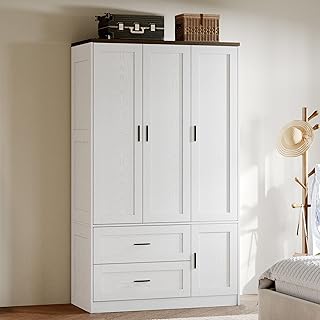
ANCTOR 3-Door Armoire with Drawers and Shelves
Soft-close hinges and adjustable shelves put this ahead of most units in its class, and the white modern-farmhouse finish keeps a small room feeling open rather than boxed in. The concealed storage is the real win: everything disappears behind a clean front, which is precisely the calm cue you want before bed.
75″ Tall Farmhouse 4-Door Armoire with 3 Drawers and LED
The extra height buys vertical shelf space for folded items and seasonal storage, while three drawers handle the small things that otherwise migrate to nightstands. Check the LED’s color temperature on arrival — swap or dim it if it reads cool, since bright white light at close range works against your evening wind-down.
GAIOUS 71″ Steel Wardrobe Cabinet with 2 Drawers
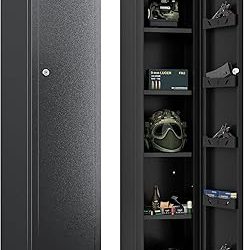
Powder-coated steel is the pragmatic choice for humid rooms, rentals, and hard-use spaces where laminate edges swell and chip. Assembly is straightforward, the single adjustable shelf plus hanging rod covers most wardrobes, and the black finish reads intentional rather than institutional.
Frequently Asked Questions
Does bedroom clutter actually affect sleep?
Yes, indirectly but measurably. Visual disorder tends to elevate pre-sleep cognitive arousal and rumination, both of which lengthen the time it takes to fall asleep. Enclosing clothing behind doors is one of the cheapest interventions available.
Wood or metal — which lasts longer?
Steel wins on moisture resistance and structural longevity; engineered wood wins on warmth, sound damping, and finish variety. If your room runs humid or the unit will move with you often, choose steel.
Are the built-in LEDs worth it?
Only if they’re warm-toned and controllable. Useful for finding a shirt without turning on the overhead; counterproductive if they’re bright, cool white, and left on while you get ready for bed.
How much hanging space do I actually need?
A rough benchmark is one linear inch of rod per hanging garment. Count what you currently hang, add ten percent, and compare against the rod length in the specifications rather than the cabinet width.
Final Thoughts
For most bedrooms, the Farmhouse 4-Door LED Armoire with sliding barn doors is the smartest overall choice — it delivers serious capacity without stealing the floor space a hinged door demands. Choose the ANCTOR 3-Door if you want soft-close quiet and a lighter, less imposing profile, or the GAIOUS steel cabinet if durability and humidity resistance outrank aesthetics. Any of the three accomplishes the goal that matters: a bedroom your nervous system reads as finished for the day.