Key takeaways
- Measure to your mattress top, not the floor: Stand a tape measure beside your bed and record the distance from the floor to the sleeping surface, compression included. Your ideal nightstand top lands within roughly two inches above or below that number, which keeps reaching effortless and drink-spilling unlikely.
- Account for thick mattresses and toppers: A 14-inch hybrid on a 14-inch frame puts your surface near 28 inches, well past the 24-inch nightstands that dominate the market. Add a memory foam topper and you may need something in the 27-to-30-inch range.
- Go lower for platform and floor-style beds: Low-profile Japanese-inspired frames often sit at 18 to 22 inches. Pairing one with a tall tower forces you to reach upward while lying down, which is precisely the movement that pulls you out of drowsiness.
- Decide what the surface must hold: A lamp, book, and water glass need about 14 inches of usable depth; a CPAP machine or humidifier needs more, plus a rear cutout for tubing and cords. Raised back guards help, but only if they don’t block your outlet.
- Prioritize outlet placement over outlet count: Rear-mounted charging panels look tidier but become unreachable once the unit is pushed against a wall. Side or front-facing ports are friendlier in the dark, and a warm, dimmable LED strip beats a bright overhead light for nighttime navigation.
What's inside
Most people shop for a nightstand the way they shop for a lamp — by looks alone — and then spend the next few years reaching down at an awkward angle for a glass of water at 3 a.m. In sleep clinics, we talk a lot about light, temperature, and routine, but the physical geometry of the space beside your bed matters more than it gets credit for. If your surface sits well below your mattress top, you twist and lean to grab things, which means more movement, more wakefulness, and a slower return to sleep. If it towers over your pillow, it becomes a shelf you can’t see the top of, and clutter accumulates where your face rests.
The fix is unglamorous: match the nightstand to your mattress, not to the showroom photo. This guide explains the measurement that actually matters, how mattress thickness and platform beds change the math, and which features earn their keep at the bedside. Below, we review six charging-equipped nightstands across a range of heights — from adjustable rolling tables to 27-inch and taller tower designs — so you can pick one that fits your bed rather than fighting it.
As an Amazon Associate we earn from qualifying purchases.


How to Choose the Right Nightstand Height (2026)
- Measure to your mattress top, not the floor: Stand a tape measure beside your bed and record the distance from the floor to the sleeping surface, compression included. Your ideal nightstand top lands within roughly two inches above or below that number, which keeps reaching effortless and drink-spilling unlikely.
- Account for thick mattresses and toppers: A 14-inch hybrid on a 14-inch frame puts your surface near 28 inches, well past the 24-inch nightstands that dominate the market. Add a memory foam topper and you may need something in the 27-to-30-inch range.
- Go lower for platform and floor-style beds: Low-profile Japanese-inspired frames often sit at 18 to 22 inches. Pairing one with a tall tower forces you to reach upward while lying down, which is precisely the movement that pulls you out of drowsiness.
- Decide what the surface must hold: A lamp, book, and water glass need about 14 inches of usable depth; a CPAP machine or humidifier needs more, plus a rear cutout for tubing and cords. Raised back guards help, but only if they don’t block your outlet.
- Prioritize outlet placement over outlet count: Rear-mounted charging panels look tidier but become unreachable once the unit is pushed against a wall. Side or front-facing ports are friendlier in the dark, and a warm, dimmable LED strip beats a bright overhead light for nighttime navigation.
The Best Nightstands by Height, Reviewed
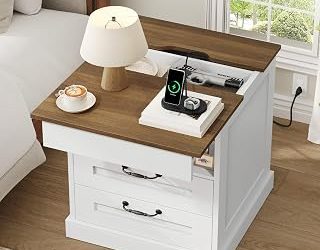
Adjustable Height Bedside Table with Wheels and Charging Station
This is the most flexible option here and the one I recommend when someone isn’t sure of their target height — the adjustable top lets you dial in the surface after the mattress and topper are in place. The locking wheels also make it genuinely useful for anyone recovering from surgery or illness, since you can roll it in close and then push it away.
WLIVE Tall Nightstand with 3 Drawers
A well-proportioned choice for taller hybrid or pillow-top mattresses, with three deep drawers that swallow the usual bedside miscellany — chargers, sleep masks, reading glasses. Two AC outlets plus two USB ports on the side panel mean you’re not fumbling behind the unit to plug in your phone.
Tall Nightstand with 4-Tier Shelves and 2 Fabric Drawers
The open shelving keeps books and a water bottle visible without opening anything, which suits light sleepers who don’t want to make noise at night. The LED accent lighting is soft enough to guide you to the bathroom without triggering the alertness response a ceiling light produces.
Tall LED Nightstand with 4 Fabric Drawers
Effectively the maximum-storage version of the design above, trading a bit of open shelf space for four collapsible fabric bins. It’s a smart pick for dorms and small bedrooms where the nightstand doubles as your primary dresser.
Lazzanto Nightstand with Rear Charging Station
The raised back guard is the standout feature — it stops phones and pill bottles from sliding into the gap between bed and wall, a small annoyance that wakes people up more often than you’d guess. Just confirm you can access the rear ports in your layout before committing.
Frequently Asked Questions
What is the standard nightstand height?
Most retail nightstands measure 24 to 28 inches tall. That range suits typical mattress-and-frame combinations, but “standard” is not the same as “correct for your bed” — always measure first.
Should a nightstand be taller or shorter than the mattress?
Slightly taller is generally more comfortable, since it prevents you from reaching downward while lying on your side. Aim for level with the mattress top or up to two inches above it.
How tall should a nightstand be for a 14-inch mattress?
With a 14-inch mattress on a common 14-inch frame, look for a nightstand around 26 to 30 inches. This is where tall three- and four-drawer designs earn their place.
Do bedside charging stations affect sleep quality?
Charging itself is harmless, but keeping a phone within arm’s reach makes late-night scrolling frictionless. If you use a bedside charger, place the phone face-down and rely on a separate alarm.
Final Thoughts
If your mattress sits high, the WLIVE Tall Nightstand offers the cleanest combination of height, drawer depth, and accessible side-panel power. For uncertain measurements or mobility needs, the adjustable rolling bedside table remains the most adaptable pick, while the Lazzanto Nightstand’s raised back guard and soft LED make it the best small-bedroom choice for anyone tired of retrieving dropped phones at midnight.