Key takeaways
- Decide if you’re sleeping in it: If the chair will host full nights — post-surgery recovery, reflux, sleep apnea, edema, chronic back pain — you need a lay-flat or infinite-position dual-motor design that separates backrest and footrest movement. Standard manual and single-motor recliners top out around 140°, which is fine for a nap but leaves the neck flexed forward over several hours.
- Check where the heat actually lands: Most units place a single heating element in the lumbar zone. That’s the right location for lower-back tension, but if your discomfort sits in the glutes, hamstrings, or calves, confirm the seat and leg pads are heated too. Look for auto shut-off in the 20–30 minute range; sustained heat against skin during sleep is a burn and dehydration risk, not a benefit.
- Treat massage motors as relaxation, not therapy: Vibration motors ease surface muscle tension and help downshift arousal before bed. They don’t replicate kneading or shiatsu. Four to eight zones with independent control is plenty; more motors on a cheap frame usually means more noise, which defeats the purpose.
- Match the mechanism to your mobility: Lift chairs raise you toward standing and are the safest option for anyone with knee, hip, or balance limitations. Swivel-rocker recliners are better for able-bodied users who want motion and flexibility. Never put a lift chair on thick carpet without checking clearance behind the seat back.
- Look at upholstery through a temperature lens: Faux leather wipes clean and suits caregiving contexts but traps heat, and core body temperature needs to fall for sleep to initiate. Breathable leather or a soft woven fabric is the better choice if you’ll be in the chair for hours.
What's inside
Most people don’t buy a recliner because they want furniture. They buy one because the last hour of the evening has stopped working. The couch is too flat to relax in and too soft to get out of, the bed feels like a commitment made two hours too early, and somewhere in between there’s a stretch of restless, half-comfortable time that quietly erodes sleep quality. As someone who spends most of my working life on sleep behavior and sleep environments, I can tell you that this transitional window matters more than almost any gadget you can put on a nightstand. Heat and gentle vibration both nudge the nervous system toward a parasympathetic state, and a reclined posture takes measurable load off the lumbar spine and the hips — which is why a well-chosen chair can do more for your night than another app.
The trouble is that “heated massage recliner” covers everything from a $400 rocker with a buzzing lumbar pad to a dual-motor medical-grade lift chair rated for overnight sleeping. Those are not competing products; they’re different tools. This guide sorts the 2026 field by what you actually need the chair to do — evening wind-down, all-night sleeping, or safe transfers in and out — and explains the specs that determine whether the heat and massage functions are genuinely therapeutic or just marketing. Below are the models I’d point a client toward, followed by a buying framework and answers to the questions that come up most often in consultations.
As an Amazon Associate we earn from qualifying purchases.


🛒 Best Price Today on Amazon
Prime members get fast, free shipping on everything above, plus member-only deals. New members get a 30-day free trial — cancel anytime.
How to Choose a Heated Massage Recliner (2026)
- Decide if you’re sleeping in it: If the chair will host full nights — post-surgery recovery, reflux, sleep apnea, edema, chronic back pain — you need a lay-flat or infinite-position dual-motor design that separates backrest and footrest movement. Standard manual and single-motor recliners top out around 140°, which is fine for a nap but leaves the neck flexed forward over several hours.
- Check where the heat actually lands: Most units place a single heating element in the lumbar zone. That’s the right location for lower-back tension, but if your discomfort sits in the glutes, hamstrings, or calves, confirm the seat and leg pads are heated too. Look for auto shut-off in the 20–30 minute range; sustained heat against skin during sleep is a burn and dehydration risk, not a benefit.
- Treat massage motors as relaxation, not therapy: Vibration motors ease surface muscle tension and help downshift arousal before bed. They don’t replicate kneading or shiatsu. Four to eight zones with independent control is plenty; more motors on a cheap frame usually means more noise, which defeats the purpose.
- Match the mechanism to your mobility: Lift chairs raise you toward standing and are the safest option for anyone with knee, hip, or balance limitations. Swivel-rocker recliners are better for able-bodied users who want motion and flexibility. Never put a lift chair on thick carpet without checking clearance behind the seat back.
- Look at upholstery through a temperature lens: Faux leather wipes clean and suits caregiving contexts but traps heat, and core body temperature needs to fall for sleep to initiate. Breathable leather or a soft woven fabric is the better choice if you’ll be in the chair for hours.
The Best Heated Massage Recliners (2026) Reviewed
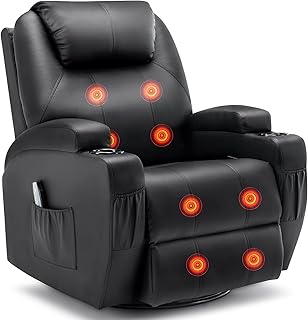
Korser 360° Swivel Rocking Recliner with Massage and Heat
A manual, mechanically simple chair that does the evening wind-down job well: rocking motion is genuinely calming, and the swivel base plus cup holder make it practical in a nursery or bedroom corner. Skip it if you need to sleep upright all night or have difficulty standing from a low seat.
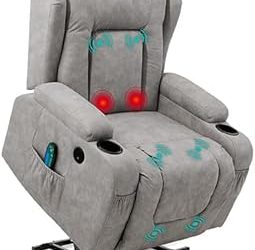
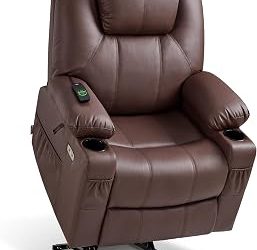
MCombo Electric Power Lift Recliner 7040
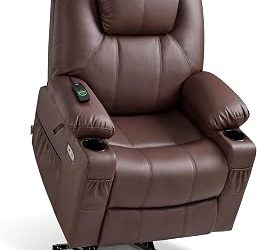
My default recommendation for caregivers on a budget — the powered lift is smooth and predictable, and the three preset positions cover reading, TV, and napping without fuss. The faux leather runs warm, so plan on a breathable throw if the room isn’t well cooled.
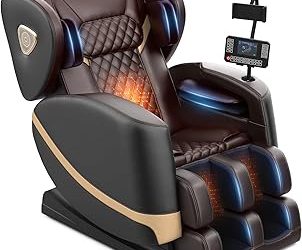
Dual Motor Lay Flat Power Lift Recliner with Heat and Massage
The dual-motor system lets you drop the back nearly horizontal while keeping the legs elevated, which is the configuration I recommend for edema and post-operative recovery. This is the pick when the chair is functionally replacing a bed.
Power Lift Recliner with Heat & Massage, Breathable Leather
Infinite position adjustment plus breathable upholstery makes this the strongest all-night option here, since you can fine-tune trunk angle for reflux or apnea rather than settling for a preset. Build quality and motor noise are both a step above the category average.
Ketaiyou Power Swivel Rocker Recliner (Mocha)
An oversized fabric glider with infinite positioning and a USB port — comfortable, quiet, and considerably cooler to sit in than the leather-look competition. Best for larger frames and long evening sessions rather than clinical use.
Frequently Asked Questions
Is it bad to sleep in a recliner every night?
Not inherently, and for reflux, apnea, or certain back conditions it can be an improvement over lying flat. The risks are positional: prolonged hip and knee flexion raises deep-vein thrombosis concerns, so choose a chair that allows near-horizontal legs and get up and walk periodically.
Does the massage function actually help me fall asleep?
Indirectly. Low-intensity vibration and warmth reduce muscle tension and shift autonomic balance toward rest, which shortens the time it takes to feel drowsy. Use it for 15–20 minutes before you intend to sleep, not during — motor noise and movement fragment sleep once you’re under.
Lift chair or swivel rocker?
Choose a lift chair if standing up unassisted is difficult or likely to become so. Choose a swivel rocker if you value motion, a smaller footprint, and lower cost, and you have no mobility concerns.
How long should I run the heat?
Twenty to thirty minutes per session, then let it rest. Continuous low-grade heat can dry skin, dull sensation, and — for anyone with neuropathy or reduced sensitivity — cause burns without warning.
Final Thoughts
If the chair needs to carry full nights, buy the Power Lift Recliner with Heat & Massage in breathable leather; the infinite positioning and cooler upholstery are what make long stretches sustainable, with the Dual Motor Lay Flat model as a close alternative for recovery use. If you simply want a better place to unwind before bed, the Ketaiyou swivel rocker delivers the heat and vibration benefits in a quieter, more breathable package — and at that point you’re buying sleep hygiene, not medical equipment.