Key takeaways
- Measure the drawer, not the dresser: Manufacturers love quoting overall dimensions. What you want is interior drawer height — roughly 6 inches handles folded sweaters and jeans, while 8 inches or more starts accommodating pillows and packable bedding. A 63-inch-wide unit with shallow boxes stores less usable volume than a narrower one built properly.
- Prioritize quiet glides: If you or a partner get dressed while the other is still asleep, a screeching wooden runner is a genuine disruption. Metal ball-bearing slides or handle-free push-open systems open with far less noise, and the difference matters most in the early morning.
- Watch the height against your mattress: A tall five-drawer chest beside a low platform bed can feel looming from a lying position. Long horizontal dressers read as calmer in a small bedroom and double as a TV stand or bench-height surface for a lamp.
- Ask about off-gassing: Engineered wood panels can release volatile compounds for weeks. Look for low-emission board certification, and regardless of what you buy, unbox it, run the drawers open, and ventilate the room for several days before you sleep beside it.
- Check the anti-tip hardware: Deep drawers loaded with heavy textiles shift a dresser’s center of gravity significantly. Every unit on this list should be strapped to a wall stud — non-negotiable in any home, and especially with children or pets.
What's inside
Most people shopping for a dresser are counting drawers, not thinking about how they sleep. That’s a mistake I see constantly in my work with clients on their sleep environments. A bedroom crowded with laundry baskets, half-folded sweaters draped over a chair, and bins shoved under the bed keeps the nervous system subtly alert — your brain registers unfinished business, and unfinished business is the enemy of easy sleep onset. Shallow drawers are a major culprit here, because bulky items simply won’t fit, so they end up living in the open where you can see them every night.
Deep drawers solve a storage problem and a sleep-hygiene problem at the same time. A drawer with real vertical clearance swallows folded denim, chunky knits, spare duvets, and off-season bedding without the daily fight, which means fewer visual triggers in the room where you’re trying to wind down. This guide covers what actually matters when you’re choosing a deep-drawer dresser — glide quality, drawer depth in inches, off-gassing, height relative to your bed — plus my reviews of the six models below and answers to the questions I get asked most.
As an Amazon Associate we earn from qualifying purchases.




How to Choose a Dresser With Deep Drawers (2026)
- Measure the drawer, not the dresser: Manufacturers love quoting overall dimensions. What you want is interior drawer height — roughly 6 inches handles folded sweaters and jeans, while 8 inches or more starts accommodating pillows and packable bedding. A 63-inch-wide unit with shallow boxes stores less usable volume than a narrower one built properly.
- Prioritize quiet glides: If you or a partner get dressed while the other is still asleep, a screeching wooden runner is a genuine disruption. Metal ball-bearing slides or handle-free push-open systems open with far less noise, and the difference matters most in the early morning.
- Watch the height against your mattress: A tall five-drawer chest beside a low platform bed can feel looming from a lying position. Long horizontal dressers read as calmer in a small bedroom and double as a TV stand or bench-height surface for a lamp.
- Ask about off-gassing: Engineered wood panels can release volatile compounds for weeks. Look for low-emission board certification, and regardless of what you buy, unbox it, run the drawers open, and ventilate the room for several days before you sleep beside it.
- Check the anti-tip hardware: Deep drawers loaded with heavy textiles shift a dresser’s center of gravity significantly. Every unit on this list should be strapped to a wall stud — non-negotiable in any home, and especially with children or pets.
The Best Dressers With Deep Drawers (2026) Reviewed
White 9-Drawer Dresser, 63″ with Golden Handles
The nine-drawer layout across 63 inches gives you a genuine sorting system — light layers up top, bulk below — which is what makes a nightly reset take two minutes instead of twenty. The brass-tone pulls are the visual draw, but the practical win is the low, wide profile that keeps sightlines open in a modest bedroom.
Euro Slide 9-Drawer Handle-Free Dresser
My pick for shared bedrooms and light sleepers: the handle-free push-open fronts eliminate hardware rattle entirely, so a 6 a.m. sock retrieval doesn’t wake anyone. At 15.7 inches deep it also fits along tight walk-throughs and closet walls where a standard 18-inch case won’t clear.
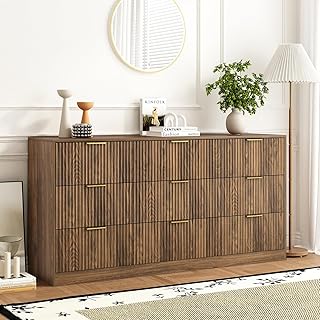
Fluted 9-Drawer Dresser in Walnut
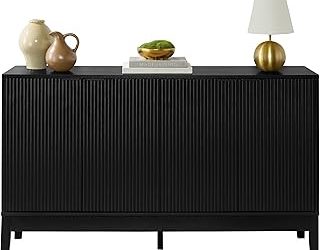
The vertical fluting and warm walnut tone do something clinically useful — they read as texture rather than clutter, which is exactly the low-stimulation surface quality I recommend for bedrooms. Same generous nine-drawer capacity as the white version, in a finish that hides dust and fingerprints far better.
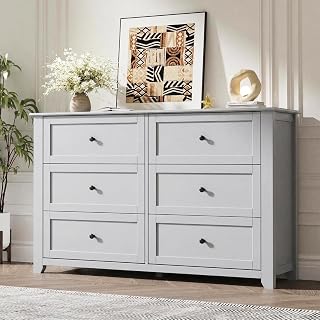
GarveeHome 6-Drawer Grey Dresser
Fewer, larger drawers mean deeper boxes, and this one earns its place if your storage problem is bulk rather than variety — think folded throws, spare sheet sets, and heavy sweatshirts. The muted grey and simple metal knobs make it an easy fit in a hallway or entryway if the bedroom is already furnished.
5-Drawer Tall Farmhouse Dresser in White
The best answer for narrow floor space, since it builds capacity upward instead of sideways. I’d keep this one across the room rather than at bedside — tall vertical furniture near the head of the bed tends to make a room feel more compressed than it is.
Jocoevol Black 6-Drawer Dresser, 47.2″
The 5.9-inch drawer depth is the headline here, and it’s honestly stated rather than vague, which I appreciate. The black finish absorbs light instead of bouncing it back, a quiet advantage in a room you want dim after sunset.
Frequently Asked Questions
How deep is a “deep” drawer, really?
Anything at or above roughly 6 inches of interior height qualifies in practice. Below 5 inches you’re limited to flat-folded shirts and underwear; above 8 inches you can start storing bedding and pillows, which is where a dresser genuinely reduces closet pressure.
Can I store bedding in a bedroom dresser?
Yes, and it’s one of the better uses of deep drawers — just make sure linens are fully dry before they go in. Trapped moisture in a closed drawer invites mildew, and a musty smell in the room you sleep in is worth avoiding for both comfort and respiratory reasons.
Do dressers need to be assembled?
Nearly all of these ship flat-packed and require assembly, typically one to two hours with a second pair of hands for the larger 63-inch models. Assemble it somewhere other than the bedroom if you can, then ventilate before it moves in.
Should the dresser match the bed frame?
It doesn’t need to match, but it should not compete. Keeping your large surfaces within a narrow tonal range reduces visual noise, and a calmer room genuinely is easier to fall asleep in.
Final Thoughts
If you want maximum organized capacity with the least disruption to a sleeping partner, the Euro Slide 9-Drawer handle-free dresser is the strongest overall choice. Those who prefer warmth and texture over stark white should go with the Fluted 9-Drawer Walnut, and anyone short on floor space but long on bulky items will get the most out of the GarveeHome 6-Drawer Grey. Whichever you choose, anchor it to the wall and give it a week of airing out before it becomes part of the room you sleep in.