Key takeaways
- Best Overall: BLACK+DECKER BHDC201, 1500 W high, 750 W low and fan-only, with an adjustable thermostat
- Best Value: Pereysi 1500W small PTC ceramic heater with thermostat and 3 modes
- Best with Remote: DREO 1500W PTC ceramic heater with remote, 12H timer and a listed 34 dB
- Best Budget Mini: Gaiatop 500W mini PTC heater with 45 degree tip-over protection
- Best Dual Power: GiveBest, switchable 1500 W and 750 W with thermostat
- Best Programmable: Honeywell ThermaWave 6 with programmable thermostat
- Best Tiny Personal Heater: BZGG mini personal desk heater, quiet and compact per the listing
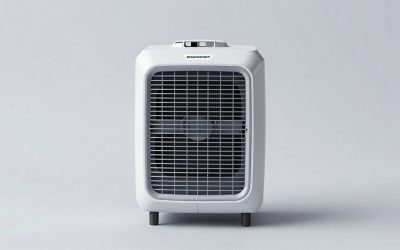
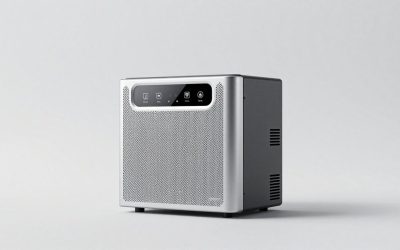
The best compact ceramic space heater for a desk is the BLACK+DECKER BHDC201 if you want a small, simple unit with a manufacturer-documented 1500 watt high setting and a 750 watt low setting. If you want a remote, a timer and a thermostat in a still-compact body, the DREO 1500W PTC ceramic heater with a listed 34 dB noise level is the runner-up.
A desk heater has a different job from a room heater. It does not need to warm the whole house; it needs to take the chill off your legs and hands in a cool corner without tripping a breaker, humming through a call or tipping onto the floor. Ceramic (PTC) heaters suit that job because they warm up quickly, have a self-limiting element, and come in small bodies. This guide compares seven compact ceramic models, shows how to size one for a desk, and explains the safety rules that matter more than any spec.
Space heaters are a leading source of home heating fires, so read the safety section even if you are in a hurry.
Top Picks at a Glance
- Best Overall: BLACK+DECKER BHDC201, 1500 W high, 750 W low and fan-only, with an adjustable thermostat
- Best Value: Pereysi 1500W small PTC ceramic heater with thermostat and 3 modes
- Best with Remote: DREO 1500W PTC ceramic heater with remote, 12H timer and a listed 34 dB
- Best Budget Mini: Gaiatop 500W mini PTC heater with 45 degree tip-over protection
- Best Dual Power: GiveBest, switchable 1500 W and 750 W with thermostat
- Best Programmable: Honeywell ThermaWave 6 with programmable thermostat
- Best Tiny Personal Heater: BZGG mini personal desk heater, quiet and compact per the listing
Quick Comparison Table
| Product | Best for | Key specs | Watch for | Price tier |
|---|---|---|---|---|
| BLACK+DECKER BHDC201 | Simple desk use | 1500 W high / 750 W low / fan, thermostat, 7.3 x 6.3 x 9.2 in, 2.8 lb | Manual controls only | Budget |
| Pereysi 1500W Small PTC | Cheap thermostat control | 1500 W, thermostat, 3 modes | Little public documentation | Budget |
| DREO PTC Ceramic with Remote | Feature-rich compact | 1500 W, remote, thermostat, 12H timer, 5 modes, 34 dB listed | Noise figure is the maker’s own | Mid-range |
| Gaiatop Mini 500W | Tight spaces | 500 W PTC ceramic, 45 deg tip-over protection, indicator light | Low wattage heats a small area only | Budget |
| GiveBest Desk Heater | Two power steps | 1500 W / 750 W, thermostat, overheat and tip-over protection | Fan noise not stated in numbers | Budget |
| Honeywell ThermaWave 6 | Programmable schedules | Ceramic, programmable thermostat | Wattage and size not in the title | Premium |
| BZGG Mini Personal Heater | Under a small desk | Compact, overheat and tip-over protection | Wattage not listed | Budget |
Specs come from product listings and, for the BLACK+DECKER, the manufacturer’s support page. Where a number is not given we write “not listed” rather than guess. The right wattage depends on your space, so use the sizing section below before choosing between a 500 watt mini and a 1500 watt unit.
1. BLACK+DECKER BHDC201 Personal Ceramic Heater: Best for Simple Desk Heating
- 1500 W high, 750 W low, and a fan-only setting
- Adjustable thermostat, manual controls
- About 7.3 x 6.3 x 9.2 inches and 2.8 pounds, per the maker’s support page
- Overheat protection and automatic tip-over shut-off
- Carrying handle and a 6-foot cord
Best for: a desk, a small office or a corner where you want a small unit without remote or display.
Skip if: you want a remote, a digital display or a timer.
The BHDC201 is the most clearly documented compact heater on this list. The maker’s support page gives the wattage steps, dimensions, weight and safety features, which makes it easy to judge whether it will fit your desk. At 2.8 pounds it is easy to move from one room to another.
Be aware that some retailer listings attach features such as a remote, digital display and 360 degree heating to this model number. Those details appear to belong to a different product; the maker’s own support page describes manual controls. Trust the maker over a reseller.
The 6-foot cord is short, which is a good reason to plug it directly into a wall outlet near your desk rather than extending it. The three settings are enough to take the edge off a cool office: fan only in warm weather, 750 W for a mild chill, 1500 W for fast warming.
Pros
- Clear maker documentation
- Compact and light
- Overheat and tip-over protection
- Thermostat and three settings
Cons
- No remote or timer
- 6-foot cord limits placement
2. Pereysi 1500W Small PTC Ceramic Heater: Best Value With Thermostat
- 1500 W PTC ceramic
- Thermostat
- 3 modes
- Listed for office room and desk use
- Multiple protections, per the listing
Best for: someone who wants thermostat control in a small heater at a budget-tier price.
Skip if: you need published dimensions, noise levels or a remote.
The Pereysi pitches itself as a small desk and office heater with a thermostat and three modes. That combination makes it a cost-conscious alternative to the BLACK+DECKER.
The listing is general about its protections and does not give dimensions, weight or noise in the title. We could not verify those from a maker page, so we mark them as not listed. Check the full page for the size before you place it near your legs.
For a first desk heater at a low cost, it is a reasonable pick. As with any lesser-known brand, buy from a seller with a straightforward return policy and check the plug and cord on arrival.
Pros
- 1500 W with thermostat
- 3 modes
- Budget-tier cost
Cons
- Dimensions and noise not listed
- Less documentation
3. DREO 1500W PTC Ceramic Heater With Remote: Best With Remote and Timer
- 1500 W PTC ceramic
- Adjustable thermostat
- Remote control
- 12-hour timer and 5 modes
- Listed noise level of 34 dB
Best for: people who want to change settings from the chair without reaching under the desk.
Skip if: you want the smallest possible footprint or the cheapest unit.
DREO is one of the better-documented names in this category, and this model’s listing states a remote, a 12-hour timer, five modes and a 34 dB noise level. The remote matters at a desk because you can adjust without bending under it.
A note on the noise figure: DREO’s own pages for a related model list a slightly higher number than the 34 dB used in some retailer listings, so the figure varies between models and sources. Treat 34 dB as the listing’s claim and compare it with the maker’s page for the exact model you are buying.
The body is larger than the BLACK+DECKER, but it is still a tabletop or floor unit rather than a big console heater. The thermostat lets it hold a room temperature rather than blast continuously.
Pros
- Remote and 12-hour timer
- Thermostat and 5 modes
- Listed 34 dB noise level
Cons
- Larger than a personal heater
- Noise figure is a maker claim
4. Gaiatop Mini 500W Desk Heater: Best Budget Mini
- 500 W lightweight PTC ceramic
- 45 degree tip-over protection
- Overheat protection
- Indicator light
- Marketed for office and home
Best for: a very small space or a desk where you only need a gentle blast near your hands.
Skip if: you want to warm a whole room or fight a real chill.
At 500 W this is a personal heater, not a room heater. It uses a fraction of the power of a 1500 W unit and fits on a corner of a desk. That also means it will not do much in a cold room.
The listing states tip-over protection at 45 degrees and an indicator light, plus quiet operation. Noise figures are not given in numbers.
If you only want to warm a hand or a foot, it is an economical option. If your office is cold all day, choose a 1500 W model.
Pros
- Very compact
- Low power draw
- Tip-over and overheat protection
Cons
- 500 W limits its reach
- Noise level not given in numbers
5. GiveBest Space Heater: Best for Two Power Steps
- 1500 W and 750 W settings
- Thermostat
- Overheat and tip-over protection
- Ceramic heater fan design
Best for: people who want a simple choice between full and half power.
Skip if: you need a remote or a timer.
GiveBest lists two power steps and a thermostat. That is a practical combination for a desk: half power keeps a small corner comfortable, and full power warms up quickly when you first sit down.
The listing describes quiet operation but does not give a decibel figure. The fan makes it a ceramic heater fan rather than a silent radiant unit, so there will be some airflow noise.
It is a good budget option, with the usual caution to check cord length and plug condition on arrival.
Pros
- Two power steps
- Thermostat
- Safety protections
Cons
- No remote or timer
- Noise not quantified
6. Honeywell ThermaWave 6 Ceramic Heater: Best Programmable Thermostat
- Ceramic technology
- Programmable thermostat
- Black finish
- Wattage, size and noise: not listed
Best for: people who want a heater that follows a schedule.
Skip if: you want exact specs in the listing or a budget price.
Honeywell is a well-known heating brand, and the ThermaWave 6’s programmable thermostat is the feature to note. A schedule lets it warm your office before you sit down rather than running all day.
The listing we reviewed is short and does not give the wattage or size. That is unusual for a premium-tier product, so check the maker’s page for the dimensions before assuming it fits under a desk.
It is a better fit for a small home office room than for a tight under-desk footwell.
Pros
- Programmable thermostat
- Recognised brand
- Ceramic technology
Cons
- Specs not listed in the title
- Premium-tier cost
7. BZGG Mini Personal Heater: Best Tiny Desk Heater
- Compact personal size
- Overheat protection
- Tip-over protection
- Listed as quiet
- Wattage: not listed
Best for: a small desk or a shelf where space is scarce.
Skip if: you need clear wattage and dimension figures.
The BZGG is pitched as a mini personal heater with safety features and quiet running. That makes it a candidate for small desk corners.
The title does not give wattage or size, so we cannot say how much warmth to expect. Check those before you buy.
It is the least documented model on the list, so treat it as a budget experiment rather than a first choice.
Pros
- Compact
- Safety features listed
- Budget-tier cost
Cons
- Wattage and size not listed
- Little documentation
Also Consider
Lasko 23 Inch Ceramic Tower Heater
A 1500 W tower with remote, oscillation, two heat settings, a timer and overheat protection. It is bigger than a desk heater but good for a small office room.
JIBUFI 17 Inch Space Heater
A 1500 W unit with 70 degree oscillation, remote and 12-hour timer. A more full-size option.
WINHL 1500W Space Heater
Oscillating, thermostat, remote and five modes in a small body, per the listing.
DREO 60 Degree Tilt Heater
Adjustable tilt that aims warmth at your legs, with a listed 34 dB noise level.
How We Chose
We compared compact ceramic heaters using store listings, manufacturer support pages, published space heater safety guidance and independent consumer-testing publications. Specs in this article come from those sources.
We have not used these heaters ourselves and we do not claim lab figures. Where a listing is vague we write “not listed”. Price is a tier since prices move.
We kept to a maximum of two products per brand, favoured models with clearly stated safety features, and covered both mini 500 W units and 1500 W models.
Buying Guide
Pick the right wattage
A common rule of thumb is about 10 watts per square foot of floor area for a room, so a 1500 W heater can warm roughly 150 square feet. A desk heater has a different aim: warming you, not the room. For that, 500 W can be enough in a mild chill, while 750 to 1500 W suits a cool office.
Most US household circuits are 15 amps, and 1500 W is about 12.5 amps, so a 1500 W heater should have its own outlet. Do not share the circuit with a monitor stand full of power bricks.
Understand ceramic (PTC) heaters
PTC stands for positive temperature coefficient. The ceramic element’s resistance rises as it heats, which limits its temperature and gives a built-in safety margin. Ceramic heaters warm up quickly and are usually compact. Most use a fan to push warm air, which makes noise.
Radiant or infrared heaters work differently and can feel more direct on your legs, but our list sticks to ceramic.
Check the safety features
Tip-over shut-off and overheat protection are the two features to look for. Both are listed for the BLACK+DECKER, GiveBest, Gaiatop and BZGG. A thermostat helps the heater cycle, and a timer ensures it does not run when you leave.
Look for a recognised safety mark such as UL or ETL in the listing or on the product label.
Size and placement
Compact units fit on a desk corner or the floor beside your feet. Keep at least three feet of clear space from anything flammable, including curtains, paper and bedding. Place the heater on a hard, flat, level surface.
Never put a heater on top of a stack of books or on a soft chair.
Cord and outlet
Plug the heater straight into a wall outlet. Avoid power strips and extension cords, which are not designed for the load. If the plug or cord becomes warm, stop using the heater.
The BLACK+DECKER’s 6-foot cord is a good reason to position the heater near an outlet.
Safety Rules for Desk Heaters
Follow these rules for any heater, regardless of price.
- Plug directly into a wall outlet, not a power strip or extension cord
- Keep at least three feet of clear space around the heater
- Place it on a flat, hard surface
- Never leave it running unattended or while you sleep
- Check the cord and plug for damage and heat
- Use a heater with tip-over and overheat protection
Running Cost: A Worked Example
A 1500 W heater uses 1.5 kilowatt-hours for every hour it runs at full power. At an illustrative electricity rate of 16 cents per kilowatt-hour, that is about 24 cents per hour. Four hours a day for 20 working days comes to roughly 120 kilowatt-hours, or about 19 dollars a month. Your rate will differ, so substitute your own.
A 500 W mini heater uses a third of that, about 8 cents per hour at the same rate, but it also delivers a third of the heat. The thermostat matters: a heater that cycles off when the room reaches your set point will use less than the full-power figure. A timer helps avoid running when you leave.
This is why the cheapest heater is not always the cheapest to run. If a 500 W unit cannot keep you comfortable, you will end up using a second heater or heating the whole room.
Common Desk Heater Mistakes
The biggest mistake is plugging a heater into a power strip. The second is leaving it on under a desk with papers nearby. The third is placing it too close to your legs so the warmth is uncomfortable. Treat a heater as an appliance that needs space.
Another mistake is buying on wattage alone. A 1500 W heater with no thermostat will run hot and dry the air. A smaller heater with a thermostat and a timer can be more comfortable.
Which Heater for Which Desk
For a small desk in a spare bedroom where you only need warm hands, the Gaiatop 500 W is enough and uses little power. For a typical home office of around 100 square feet with a drafty window, a 1500 W model such as the BLACK+DECKER, Pereysi or GiveBest is more realistic, because a 500 W unit simply cannot keep pace with heat loss.
If you sit for hours and want the heater to look after itself, the DREO with its remote, thermostat and 12-hour timer is the better fit, since you can set a target temperature and a stop time and forget about it. If you work on a schedule, the Honeywell’s programmable thermostat is the closest match.
If your desk has a closed modesty panel or a very shallow footwell, avoid placing any heater inside it. Put the heater beside the desk with clear space on all sides, and aim the warmth at your legs from a safe distance. Compact does not mean it can be boxed in.
Heater Placement Checklist
Before you switch a heater on for the first time, walk around the desk and look for anything that could touch or sit near it: curtains, paper stacks, cardboard boxes, a rug with a long fringe or a cable bundle. Move them. Then confirm the surface is hard and level, the cord can reach the wall without crossing a walkway, and nobody will kick the unit when they stand up.
Switch it on at the lowest setting and stay in the room for the first session. Smell for any burning odour beyond the faint dusty smell new heaters sometimes give off, check that the plug is not warm, and note how the thermostat cycles. If anything seems off, unplug it and contact the seller.
Frequently Asked Questions
What is the best compact ceramic space heater for a desk?
The BLACK+DECKER BHDC201 is our pick for simplicity and documentation, with 750 W and 1500 W settings and a thermostat. For a remote and timer, look at the DREO ceramic model.
Is a 500 W desk heater enough?
It can take the edge off a mild chill and warm your hands or feet at close range, but it will not heat a cold room. For a cool office, a 750 to 1500 W unit is more realistic.
Are ceramic heaters safe to use under a desk?
They can be if the unit has tip-over and overheat protection, is plugged directly into a wall outlet and has clear space around it. Under-desk spaces are tight, so check clearance and keep paper and cables away.
How much does it cost to run a space heater?
A 1500 W heater uses 1.5 kWh per hour at full power. Multiply by your electricity rate to find the cost. A thermostat and timer reduce the running time.
Are ceramic heaters noisy?
Most use a fan, which produces some noise. Some listings state a decibel figure, such as the 34 dB for DREO, but those are maker claims. A fan-free radiant heater is quieter, but is a different type.
Can I plug a space heater into a power strip?
No. Safety guidance advises plugging heaters directly into a wall outlet because power strips and extension cords can overheat under the load.
Do I need a thermostat?
It is not essential, but it helps hold a steady temperature and saves power. A timer is a useful addition if you forget to switch off.
Which One Should You Buy?
If you want a simple, well-documented desk heater, buy the BLACK+DECKER BHDC201. If you want a remote and a timer in a compact body, buy the DREO ceramic model. If cost is the priority, the Pereysi and GiveBest are the budget routes, and the Gaiatop is the tiny option for a very small space.
If you want a schedule, the Honeywell ThermaWave 6 is worth a look, though you should check its specs on the maker’s page first.
Whatever you buy, plug it into the wall, give it space, and turn it off when you leave.
Sources
- BLACK+DECKER BHDC201 support page and specifications
- Store listing details for the DREO, Pereysi, Gaiatop, GiveBest, Honeywell and BZGG heaters
- Home heating equipment safety guidance from US fire safety organisations
- UL and ETL certification program descriptions
Last updated: October 2026