Key takeaways
- Measure the platform, not the old mattress: Factory mattresses compress and shrink over years of use. Measure the frame or cutout itself, then confirm whether you need short queen (60×75), short full (48×74 or 48×75), or a narrow bunk width like 36″.
- Match profile to your build and hardware: A 6-inch mattress preserves headroom in bunks and lift-up storage beds; 10 to 12 inches gives side sleepers the shoulder and hip sink they need. Check that thicker options still clear slide-outs, safety rails, and window ledges.
- Prioritize airflow in a sealed cabin: RV bedrooms trap body heat and moisture far more than a bedroom does. Gel-infused foam, open-cell structures, and pocketed coil layers all move warm air away from the sleep surface, which matters for staying in deep sleep uninterrupted.
- Verify material safety certifications: Look for CertiPUR-US and OEKO-TEX marks, and specifically for fiberglass-free construction. In a small living space you breathe the same air as your bedding for weeks at a stretch, so off-gassing and fire-barrier materials are worth scrutinizing.
- Plan for moisture and weight: Condensation forms readily under a mattress sitting on solid plywood. Waterproof vinyl covers or removable washable covers help, and a lighter all-foam build spares you both payload capacity and a wrestling match through a narrow doorway.
What's inside
The mattress that came with your RV was almost certainly chosen for one reason: it fit the platform and cost the manufacturer very little. Most factory RV mattresses are thin slabs of low-density foam that bottom out within a season, and because RV berths use non-standard dimensions — short queen, short full, narrow bunks — you can’t simply swap in a residential bed and call it solved. Add a plywood platform with minimal ventilation, wide overnight temperature swings, and the reality that you’re often sleeping at altitude or in humidity, and you have a recipe for restless nights on the road.
This guide approaches the problem from a sleep-physiology standpoint rather than a spec-sheet one: what actually keeps a spine neutral on a shallow profile, why heat buildup matters more in a confined sleeping space, and how to weigh foam against hybrid construction when weight and moisture are both in play. Below are six current replacement options spanning short full, short queen, and bunk sizes, with notes on who each one genuinely suits.
As an Amazon Associate we earn from qualifying purchases.




🛒 Best Price Today on Amazon
Prime members get fast, free shipping on everything above, plus member-only deals. New members get a 30-day free trial — cancel anytime.
How to Choose a/an Replacement Mattress For Rv (2026)
- Measure the platform, not the old mattress: Factory mattresses compress and shrink over years of use. Measure the frame or cutout itself, then confirm whether you need short queen (60×75), short full (48×74 or 48×75), or a narrow bunk width like 36″.
- Match profile to your build and hardware: A 6-inch mattress preserves headroom in bunks and lift-up storage beds; 10 to 12 inches gives side sleepers the shoulder and hip sink they need. Check that thicker options still clear slide-outs, safety rails, and window ledges.
- Prioritize airflow in a sealed cabin: RV bedrooms trap body heat and moisture far more than a bedroom does. Gel-infused foam, open-cell structures, and pocketed coil layers all move warm air away from the sleep surface, which matters for staying in deep sleep uninterrupted.
- Verify material safety certifications: Look for CertiPUR-US and OEKO-TEX marks, and specifically for fiberglass-free construction. In a small living space you breathe the same air as your bedding for weeks at a stretch, so off-gassing and fire-barrier materials are worth scrutinizing.
- Plan for moisture and weight: Condensation forms readily under a mattress sitting on solid plywood. Waterproof vinyl covers or removable washable covers help, and a lighter all-foam build spares you both payload capacity and a wrestling match through a narrow doorway.
The Best Replacement Mattress For Rv (2026)s Reviewed
WanderRest 12″ Cool Hybrid RV Mattress (Short Full 48×74)
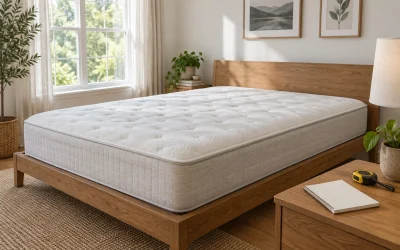
The pocketed coil base gives this one genuine edge stability and a responsive push-back that all-foam short fulls rarely achieve, while the plush-medium gel foam layer above accommodates side sleepers without collapsing at the hip. At 12 inches it’s the closest thing to a residential feel you’ll find in RV dimensions — just confirm your headroom first.
Zinus 8 Inch Short Queen Ultima RV Mattress
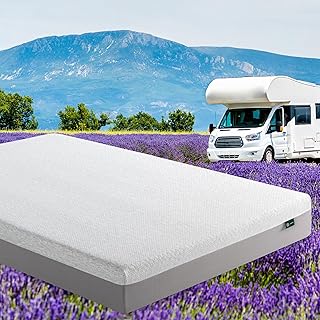
A sensible medium-firm all-foam option for combination sleepers who shift positions overnight, with breathable airflow foam that resists the heat trapping typical of budget memory foam. Fiberglass-free with both CertiPUR-US and OEKO-TEX certification, it’s an easy recommendation for full-timers concerned about indoor air quality.
Short Full 6-Inch Memory Foam RV Mattress (48″ x 75″)
The open-cell foam here breathes better than its price suggests, and the slim 6-inch profile is purpose-built for lift-up storage beds and low-clearance berths where thicker mattresses simply won’t close. Best suited to back sleepers and lighter-framed sleepers, since side sleepers will want more material under the shoulder.
Greaton 8-Inch High Density Foam RV Mattress (75″ x 36″)
High-density foam with a nylon vinyl waterproof cover makes this the practical answer for bunks, truck cabs, and any berth where condensation or spills are a recurring problem. The medium-firm response supports the lumbar curve well and holds its shape better than comparable low-density bunk mattresses.
Celestial Sleep 10 Inch RV Short Queen Mattress
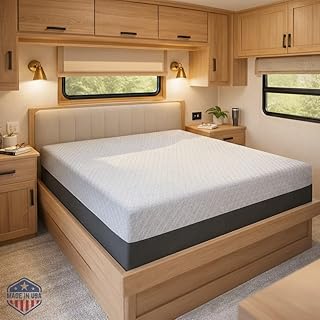
A well-balanced medium build with cooling memory foam that suits couples who don’t agree on firmness, and it carries CertiPUR-US, OEKO-TEX, and fiberglass-free certifications for peace of mind in tight quarters. USA-made construction shows in the consistency of the foam layers over long-term use.
Frequently Asked Questions
How is a short queen different from a standard queen?
A short queen measures roughly 60 by 75 inches — about five inches shorter than a residential queen’s 80-inch length. Standard queen sheets will fit loosely, so buying RV-specific bedding prevents the bunching that wakes people up.
Do I need a mattress protector on a plywood platform?
Yes, and ideally something underneath too. Air can’t circulate under a solid deck, so condensation collects and eventually leads to mildew. A slatted insert, ventilated pad, or even a breathable underlay meaningfully extends mattress life.
How long should off-gassing take?
Unroll a new foam mattress with windows open and the fan running, and give it 24 to 72 hours before sleeping on it. In a small cabin the odor concentrates more than in a house, so err toward the longer end.
Is foam or hybrid better for RV use?
Foam is lighter and easier to maneuver through narrow doorways, which matters for payload. Hybrids sleep cooler and offer firmer edge support, making them worth the extra weight if you sleep hot or sit on the bed’s edge regularly.
Final Thoughts
For most travelers replacing a tired factory slab, the WanderRest 12″ Cool Hybrid delivers the most complete upgrade in short full dimensions, while the Celestial Sleep 10 Inch Short Queen is the stronger choice for couples wanting a certified, cooling medium feel. If clearance or budget is the binding constraint, the Zinus 8 Inch Ultima remains a dependable, well-certified performer that punches above its profile.