Key takeaways
- Load rating over looks: Winter coats, suits, and heavy knits add up fast. Systems rated in the 800 lb range give you enormous headroom and, more importantly, won’t sag or sway when you tug a jacket free in the dark.
- Hanging length vs. shelf space: Count your long items — dresses, trousers, robes — before you buy. Most people over-buy shelving and then discover they have nowhere to hang anything full-length.
- Dust and allergen control: If you wake congested, an enclosed or covered unit keeps fabric dust and dander out of your breathing zone. Open racks are cleaner-looking but demand more frequent wiping.
- Visual calm: Fabric covers and closed drawers hide colour chaos, which genuinely helps a bedroom read as restful. Open chrome-and-mesh systems suit closets, dressing rooms, and spare corners better than the wall you face while falling asleep.
- Footprint and expandability: Measure width, depth, and ceiling clearance, then leave breathing room around the unit. Modular systems that accept add-on rods and shelves let you grow without replacing the whole thing.
What's inside
Most people troubleshoot poor sleep by buying a new mattress, a white-noise machine, or another bottle of melatonin. Far fewer look at the corner of the room where yesterday’s clothes are piled on a chair, the closet door won’t shut, and three seasons of laundry are competing for the same eighteen inches of rod. That visual noise matters more than it seems. A cluttered bedroom keeps the nervous system in low-grade problem-solving mode at exactly the hour it should be winding down, and it turns getting dressed at 6 a.m. into a small daily stress event. Storage, in other words, is sleep hygiene.
This guide looks at freestanding and modular wardrobe systems through that lens: how quietly they live in a bedroom, how much they actually swallow, and whether they’ll still be standing straight in two years. I’ve prioritized load ratings that hold up to real coat-and-denim weight, dust protection for anyone with allergies or sensitive airways, and layouts that make a nightly five-minute reset genuinely easy rather than aspirational. Below you’ll find the picks, followed by a buying framework and answers to the questions readers ask most.
As an Amazon Associate we earn from qualifying purchases.


How to Choose a Wardrobe Solution (2026)
- Load rating over looks: Winter coats, suits, and heavy knits add up fast. Systems rated in the 800 lb range give you enormous headroom and, more importantly, won’t sag or sway when you tug a jacket free in the dark.
- Hanging length vs. shelf space: Count your long items — dresses, trousers, robes — before you buy. Most people over-buy shelving and then discover they have nowhere to hang anything full-length.
- Dust and allergen control: If you wake congested, an enclosed or covered unit keeps fabric dust and dander out of your breathing zone. Open racks are cleaner-looking but demand more frequent wiping.
- Visual calm: Fabric covers and closed drawers hide colour chaos, which genuinely helps a bedroom read as restful. Open chrome-and-mesh systems suit closets, dressing rooms, and spare corners better than the wall you face while falling asleep.
- Footprint and expandability: Measure width, depth, and ceiling clearance, then leave breathing room around the unit. Modular systems that accept add-on rods and shelves let you grow without replacing the whole thing.
The Best Wardrobe Solutions Reviewed (2026)
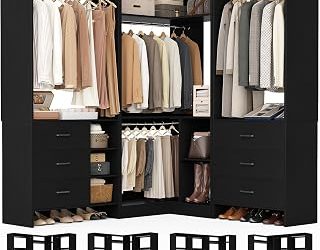
VIPEK V5 Heavy Duty Modular Closet System
With four 23.6-inch rods, eight shelves, and an 890 lb rating, the V5 is the closest thing here to a built-in wardrobe you can assemble with an Allen key — and it accepts accessories later, so it evolves with your wardrobe rather than capping it. The open black steel frame is best suited to a walk-in, dressing area, or a wall you don’t stare at from bed.
HOMIDEC Portable Wardrobe Closet
A tidy four-tier design that balances folded storage against a usable hanging rod, making it a sensible one-unit answer for a bedroom or cloakroom with a modest footprint. Assembly is straightforward and the steel frame feels reassuringly rigid once the connectors are fully seated.
E10 Stretchable Clothes Rack
The extendable 73–97 inch rod is the standout feature: it lets you fit the rack to the wall you have instead of the wall you wish you had, and the 800 lb capacity means the flexibility costs you nothing in strength. At 15 inches deep it stays slim enough to sit along a bedroom wall without dominating the room.
6-Drawer Modular Wood Closet System
This is the pick for anyone who wants a genuine built-in look — six drawers, eight expandable rods, and a 5–14 ft configurable span in a warm white wood finish that reads as furniture rather than hardware. Closed drawers do a lot of quiet work here, hiding the small-item clutter that makes a bedroom feel unsettled.
LOKEME Portable Closet
Chunky 19 mm steel tubing, three rods, six shelves, and side pockets add up to a well-considered mid-size unit that punches above its price. The pockets are more useful than they sound for socks, sleep masks, and the small things that otherwise migrate to your nightstand.
VTRIN Covered Portable Wardrobe
At 67 inches wide with four rods, four shelves, and a full dust cover, this is the choice for allergy-prone sleepers and anyone who wants their clothing visually shut away at night. The cover also protects seldom-worn garments from light and airborne dust between seasons.
Frequently Asked Questions
Does bedroom clutter really affect sleep?
Consistently, yes. A visually busy room delays wind-down and gives an already-restless mind more to catalogue at 11 p.m. Enclosing clothing storage is one of the highest-return, lowest-effort changes you can make.
Should I choose open shelving or a covered wardrobe?
Covered units win in bedrooms — less dust, calmer sightlines. Open systems belong in closets and dressing areas where accessibility beats concealment.
How much weight do these racks actually hold?
Ratings here range from moderate to roughly 890 lb. Treat the number as a stability indicator, not a target: heavier-rated frames stay square and quiet under everyday use.
Can I add to a system later?
Only if it’s genuinely modular. The VIPEK V5 and the six-drawer wood system are both designed for expansion; most single-frame portable closets are not.
Final Thoughts
For sheer capacity and long-term flexibility, the VIPEK V5 is the strongest all-rounder. If your priority is a restful, furniture-grade bedroom, the six-drawer modular wood closet system is worth the extra assembly time, while the covered VTRIN is the smartest pick for dust-sensitive sleepers who want everything out of sight before lights out.