Key takeaways
- Load rating over looks: A rack that sags under winter coats becomes a daily irritation. Check stated maximum load and steel tube diameter — 19mm or thicker is the threshold where wobble stops being an issue.
- Measure ceiling-to-floor, not just wall width: Most freestanding units run 68–72 inches tall. Confirm you have overhead clearance for assembly tilt, and leave a few inches so the top shelf stays reachable without a stool.
- Enclosed vs. open storage: Fabric covers hide visual noise, which genuinely helps in a bedroom. Open racks are easier to access but demand that you keep them tidy — be honest about which version of yourself will maintain it.
- Hanging-to-shelf ratio: Count your actual wardrobe. Someone with mostly dresses and shirts needs long hanging rods; someone living in knits and denim needs shelf real estate. Buying the wrong split is the most common regret.
- Assembly and reversibility: Renters should favor tool-light, freestanding designs that can be disassembled and moved. Homeowners committing long-term get better value from modular wood systems that can be reconfigured as needs change.
What's inside
Ask most people what’s keeping them from sleeping well and they’ll blame caffeine, screens, or stress. Rarely does anyone point at the pile of laundry on the armchair — yet the state of a bedroom shapes rest more than we like to admit. Sleep researchers have long observed that visual clutter raises cortisol and delays the mental “wind-down” that precedes sleep onset. When clothing has nowhere to live, the bedroom stops reading as a place for rest and starts reading as an unfinished task. Your brain notices, even when you don’t.
This guide approaches wardrobe storage the way I’d approach any sleep-hygiene intervention: does it reduce friction, does it hold up over months rather than weeks, and does it make the room feel calmer at 10 p.m.? Below you’ll find the freestanding closets, modular towers, and garment racks I’d recommend in 2026 for renters, small-bedroom dwellers, and anyone doing a full closet rebuild — plus the specifications that actually matter once the box is open.
As an Amazon Associate we earn from qualifying purchases.


How to Choose a Wardrobe Solution (2026)
- Load rating over looks: A rack that sags under winter coats becomes a daily irritation. Check stated maximum load and steel tube diameter — 19mm or thicker is the threshold where wobble stops being an issue.
- Measure ceiling-to-floor, not just wall width: Most freestanding units run 68–72 inches tall. Confirm you have overhead clearance for assembly tilt, and leave a few inches so the top shelf stays reachable without a stool.
- Enclosed vs. open storage: Fabric covers hide visual noise, which genuinely helps in a bedroom. Open racks are easier to access but demand that you keep them tidy — be honest about which version of yourself will maintain it.
- Hanging-to-shelf ratio: Count your actual wardrobe. Someone with mostly dresses and shirts needs long hanging rods; someone living in knits and denim needs shelf real estate. Buying the wrong split is the most common regret.
- Assembly and reversibility: Renters should favor tool-light, freestanding designs that can be disassembled and moved. Homeowners committing long-term get better value from modular wood systems that can be reconfigured as needs change.
The Best Wardrobe Solutions (2026), Reviewed
HOMIDEC Portable Wardrobe Closet with 4-Tier Shelves
A well-judged balance of hanging space and shelving that suits a guest room or a shared bedroom where one unit has to do everything. The four tiers keep folded items visible, which in practice means you stop excavating and re-piling clothes late at night.
E10 Freestanding Clothes Rack with Stretchable Rod
The 73–97″ adjustable width makes this the most adaptable pick here — genuinely useful in awkward alcoves or along a long wall where fixed-width units waste space. An 800 lb load rating puts it comfortably beyond what any home wardrobe will ask of it.
Modular Closet System with 6 Drawers
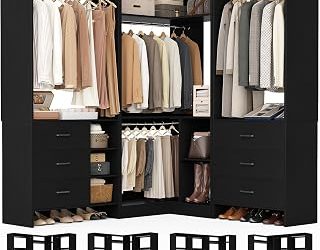
If you have a walk-in and you’re ready to stop improvising, this is the upgrade: eight expandable rods, adjustable shelves, and real drawers in a wood finish that reads as built-in rather than temporary. Plan the layout on paper first, because the modularity rewards forethought.
E1 Heavy Duty Closet Garment Rack
Six adjustable tiers and four hanger rods in an expandable metal frame, with assembly that’s mercifully straightforward. The open design suits dressing rooms and laundry areas better than bedrooms, unless you’re disciplined about presentation.
LOKEME Portable Closet with Side Pockets
The 19mm steel pipe is the headline here — it’s the difference between a closet that stays square and one that leans by spring. Three rods, six shelves, and side pockets for small items make it a strong single-unit solution for a bedroom without built-ins.
Frequently Asked Questions
Does bedroom clutter really affect sleep?
The evidence points to yes, indirectly. Cluttered environments are associated with higher perceived stress and longer sleep-onset latency, likely because unfinished visual tasks keep the mind in problem-solving mode rather than letting it downshift.
Should I choose a covered or uncovered closet?
For bedrooms, covered. A fabric cover reduces visual stimulation before bed and keeps dust off clothing. Reserve open racks for hallways, dressing areas, or spaces you don’t sleep in.
How much weight can portable closets actually hold?
Quality freestanding units handle 200–800 lbs depending on frame gauge. The practical limit is rarely the rod — it’s whether the joints stay tight, which is why thicker steel tubing matters more than the headline number.
Can I install these in a rental?
All the freestanding options here require no wall anchoring, no drilling, and no landlord conversation. The modular wood system is better suited to a home you own, though it remains technically removable.
Final Thoughts
For most bedrooms, the LOKEME Portable Closet is the sensible default — sturdy tubing, a sane mix of rods and shelves, and an enclosed profile that keeps the room restful. Renters working with irregular wall space should look at the E10 Clothes Rack for its adjustable width, while anyone renovating a walk-in will get far more long-term value from the Modular Closet System with 6 Drawers. Whichever you pick, the goal is the same: give every garment a home so your bedroom can go back to being a place you sleep.