Key takeaways
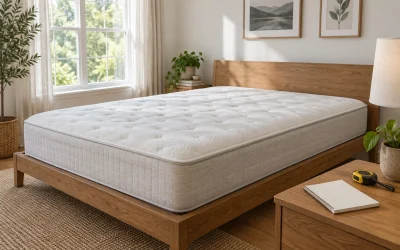
- Total height, honestly assessed: Aim for 12 inches minimum and treat 14 to 16 inches as the sweet spot. Height alone guarantees nothing, but a taller build leaves room for a genuinely thick support core beneath the comfort layers, which is where load-bearing actually happens.
- Support core construction: Pocketed coils with a reinforced perimeter generally outperform all-foam cores at higher body weights because steel returns to shape rather than fatiguing. If you prefer foam, insist on high-density base foam and zoned transition layers instead of a single undifferentiated slab.
- Comfort layer depth versus firmness: Heavier sleepers sink further into any given layer, so a plush 4-inch top can put you straight through to the core. A medium-firm surface with a shallower comfort layer usually produces better lumbar alignment than a soft one, even if it feels less inviting in the showroom.
- Heat management: Greater body mass means more metabolic heat and more surface contact with the mattress. Look for gel infusions, open-cell or perforated foam, breathable covers, and coil units that permit vertical airflow.
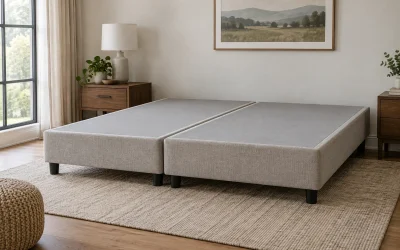
- Warranty language and foundation requirements: Read the impression-depth threshold — a warranty that only covers sagging beyond 1.5 inches is weaker than one covering 0.75 inches. Also confirm the required slat spacing, since an unsupported center on a king frame is the most common cause of premature failure.
What's inside
Weight-bearing capacity is the most under-discussed spec in the mattress industry. Manufacturers publish firmness scales, foam densities, and cooling claims, but very few state plainly how much load a bed can carry before its support core begins to compress permanently. For sleepers over roughly 230 pounds — and especially for couples whose combined weight exceeds 450 — that omission matters enormously. A mattress that feels supportive in week one can develop a body-shaped trough by month eight, and once the core deflects, no amount of pillow-topping or rotation will bring the spine back into neutral alignment.
This guide approaches the problem from a sleep-physiology standpoint rather than a marketing one. Below you’ll find current king-size options that hold up under higher loads, followed by the specifications that actually predict longevity, short expert assessments of each bed, and answers to the questions I hear most often in consultations. The goal is simple: help you buy once, sleep well, and avoid the eighteen-month replacement cycle that traps so many heavier sleepers.
As an Amazon Associate we earn from qualifying purchases.


🛒 Best Price Today on Amazon
Prime members get fast, free shipping on everything above, plus member-only deals. New members get a 30-day free trial — cancel anytime.
How to Choose a King Size Mattress For Heavy People (2026)
- Total height, honestly assessed: Aim for 12 inches minimum and treat 14 to 16 inches as the sweet spot. Height alone guarantees nothing, but a taller build leaves room for a genuinely thick support core beneath the comfort layers, which is where load-bearing actually happens.
- Support core construction: Pocketed coils with a reinforced perimeter generally outperform all-foam cores at higher body weights because steel returns to shape rather than fatiguing. If you prefer foam, insist on high-density base foam and zoned transition layers instead of a single undifferentiated slab.
- Comfort layer depth versus firmness: Heavier sleepers sink further into any given layer, so a plush 4-inch top can put you straight through to the core. A medium-firm surface with a shallower comfort layer usually produces better lumbar alignment than a soft one, even if it feels less inviting in the showroom.
- Heat management: Greater body mass means more metabolic heat and more surface contact with the mattress. Look for gel infusions, open-cell or perforated foam, breathable covers, and coil units that permit vertical airflow.
- Warranty language and foundation requirements: Read the impression-depth threshold — a warranty that only covers sagging beyond 1.5 inches is weaker than one covering 0.75 inches. Also confirm the required slat spacing, since an unsupported center on a king frame is the most common cause of premature failure.
The Best King Size Mattress For Heavy People (2026)s Reviewed
BedStory 14 Inch Hybrid King
This is the most obviously purpose-built option here: a pocket-spring core with zoned lumbar reinforcement, marketed explicitly for higher body weights and backed by a 10-year warranty. The independently encased coils resist the roll-together effect that plagues foam beds when two heavier partners share a king, and the sturdier center third helps keep the pelvis from dropping out of alignment overnight.
Novilla AiryFlow 16 Inch Gel Memory Foam King
At 16 inches, this is the deepest build on the list, which gives its gel-infused and green-tea-treated foams a substantial base to work against rather than bottoming out. The medium-firm calibration is the right call for anyone carrying more weight, and motion isolation is strong enough that a restless partner won’t telegraph every turn across the mattress.
Sweetnight CoolNest 14 Inch King
The five-zone ergonomic layout is the notable feature: softer relief under the shoulders, firmer support beneath the hips and lumbar region, which is precisely the differentiation heavier side sleepers need to avoid a hammocked spine. Breathability is above average for an all-foam bed, and the CertiPUR-US certification addresses off-gassing concerns.
Sealy Dreamlife 14″ Foam Mattress-in-a-Box, King
Sealy’s advantage is quality control at scale — the SealyComfort gel layer over a dedicated SealySupport transition foam produces a more predictable feel than many direct-to-consumer foams in this price bracket. It’s the conservative pick for someone who wants an established manufacturer’s foundation guidance and service network behind the purchase.
Tuft & Needle New Mint Gel Foam
Worth flagging with a caveat: the New Mint listed here is a full-size, medium-plush build, so confirm king availability before ordering, and note that plush surfaces are generally the wrong direction for sleepers over 230 pounds. For a lighter partner or a guest room, its cooling performance and 100-night trial are genuinely strong.
Frequently Asked Questions
How firm should a mattress be if I weigh over 250 pounds?
Medium-firm to firm on the industry 1–10 scale, roughly 6.5 to 8. Because greater mass compresses every layer more deeply, a bed that reads “firm” on paper often feels medium once you’re actually on it — so the labeled firmness overstates what you’ll experience.
Is a hybrid genuinely better than all-foam for heavier sleepers?
Usually, yes. Steel coils recover their shape indefinitely, whereas polyurethane foam gradually loses resilience under sustained load. A high-density all-foam bed can still perform well; a low-density one almost never does at higher weights.
Does my bed frame affect how long the mattress lasts?
Substantially. A king mattress needs center support and slats no more than 2 to 3 inches apart. Wide gaps let the core deflect between slats, which creates sagging that manufacturers will classify as improper use and decline to cover.
How often should a heavier sleeper replace a mattress?
Expect six to eight years from a well-built hybrid rather than the ten commonly quoted. Rotate head-to-foot every three months from the start — it distributes wear before impressions have a chance to set.
Final Thoughts
For most heavier sleepers, the BedStory 14 Inch Hybrid is the soundest structural choice, since a pocketed-coil core with zoned lumbar reinforcement addresses load-bearing at the source rather than compensating for it up top. If you prefer the contouring feel of memory foam, the Novilla AiryFlow 16 Inch offers enough depth to support that preference without bottoming out, while the Sweetnight CoolNest 14 Inch is the value pick for side sleepers who need zoned shoulder and hip relief. Whichever you choose, invest in a properly slatted frame with center support — it is the cheapest longevity upgrade available.