Key takeaways
- Read firmness down one notch: A mattress marketed as medium-firm will feel firm to you, and a true firm will feel unyielding. Lighter side sleepers are usually happiest in the soft-to-medium band, roughly 4–6 on the ten-point scale.
- Prioritize comfort-layer depth over total height: A 14-inch profile means nothing if 11 of those inches are dense base foam or coils. Look for at least three inches of soft, adaptive material above the support core so your shoulder has somewhere to go.
- Favor pocketed coils with a finer gauge: Individually wrapped springs flex under localized pressure rather than pushing back as a unit. Thinner-gauge coils in the shoulder region respond to modest weight; heavy-duty coils built for larger sleepers will barely register you.
- Treat zoning as a real feature, not marketing: Three- and five-zone builds soften deliberately at the shoulder and firm up at the lumbar. For side sleeping, that differential is what keeps the spine straight instead of hammocked.
- Insist on a long, no-hassle trial: Pressure problems surface after two to four weeks, not two nights. A 365-night trial with free returns is meaningfully better protection than the standard 100 nights, especially if you’re buying unseen.
What's inside
Weighing under about 130 pounds changes the math of mattress shopping more than most buyers realize. A mattress rated “medium” by the industry behaves like a firm slab under a lighter frame, because there simply isn’t enough mass to compress the comfort layers and let the shoulder and hip sink in. The result is a familiar complaint in sleep clinics: a numb arm by 3 a.m., a sore shoulder joint at breakfast, and a spine that spent the night bowed sideways instead of neutral. Side sleeping is the position most sensitive to this mismatch, since two narrow contact points carry nearly all the load.
This guide approaches the problem from the surface inward. Below you’ll find the six mattresses-in-a-box that lighter side sleepers most often land on in 2026, followed by the specifications that actually predict comfort at low body weight — top-layer thickness, foam density, coil gauge, and zoning — plus honest notes on where each model earns its place and where it doesn’t. Trial windows matter here too, and we’ve flagged them, because contouring is something you can only judge after your shoulder has had a few weeks to report back.
As an Amazon Associate we earn from qualifying purchases.


🛒 Best Price Today on Amazon
Prime members get fast, free shipping on everything above, plus member-only deals. New members get a 30-day free trial — cancel anytime.
How to Choose a Mattress For Light Side Sleepers (2026)
- Read firmness down one notch: A mattress marketed as medium-firm will feel firm to you, and a true firm will feel unyielding. Lighter side sleepers are usually happiest in the soft-to-medium band, roughly 4–6 on the ten-point scale.
- Prioritize comfort-layer depth over total height: A 14-inch profile means nothing if 11 of those inches are dense base foam or coils. Look for at least three inches of soft, adaptive material above the support core so your shoulder has somewhere to go.
- Favor pocketed coils with a finer gauge: Individually wrapped springs flex under localized pressure rather than pushing back as a unit. Thinner-gauge coils in the shoulder region respond to modest weight; heavy-duty coils built for larger sleepers will barely register you.
- Treat zoning as a real feature, not marketing: Three- and five-zone builds soften deliberately at the shoulder and firm up at the lumbar. For side sleeping, that differential is what keeps the spine straight instead of hammocked.
- Insist on a long, no-hassle trial: Pressure problems surface after two to four weeks, not two nights. A 365-night trial with free returns is meaningfully better protection than the standard 100 nights, especially if you’re buying unseen.
The Best Mattresses For Light Side Sleepers (2026), Reviewed
Soft Plush 12-Inch Hybrid
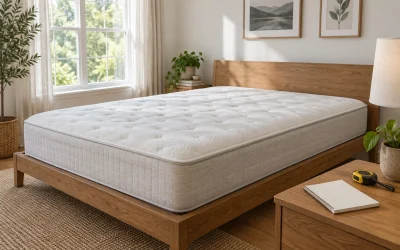
This is the most literal answer to the brief: a genuinely plush hybrid built around gel memory foam over pocketed springs, tuned for sleepers who need the surface to yield rather than resist. For anyone who has bounced off “side-sleeper” mattresses that turned out to be medium-firm in disguise, the softer calibration plus a 365-night trial makes it the safest first try.
Sweetnight CoolNest 14-Inch
An all-foam build with five-zone ergonomic shaping, which suits lighter sleepers who want deep, slow contouring without coil pushback under the shoulder. The tradeoff is the usual one for foam: less edge support and a slightly enveloped feel, so it favors sleepers who stay put rather than roll frequently.
Sleepmax 14-Inch Hybrid
A thick, well-padded hybrid that leans toward the softer end of medium while keeping the stability of a coil core, making it a sensible pick for couples where one partner is light and side-sleeping and the other sleeps on their back. Cooling is competent rather than aggressive, and the 365-night trial removes most of the risk.
Luxury Hotel 14-Inch Zoned Hybrid
The standout here is targeted hip, shoulder, and lumbar zoning, which is precisely the mechanism that keeps a lighter side sleeper’s spine neutral instead of curved. Expect a slightly more supportive, hotel-style surface — excellent for combination sleepers, marginally firm for the very lightest buyers.
12-Inch Cooling Gel Hybrid
A well-balanced medium-firm option with strong motion isolation from its pocketed coils, best suited to lighter side sleepers who also spend part of the night on their back. If your shoulders are sensitive, size up the comfort layer elsewhere in this list; if you simply run hot, this is a strong value.
Frequently Asked Questions
What firmness should a 120-pound side sleeper choose?
Generally soft to medium — around 4 to 6 out of 10. Below roughly 130 pounds you don’t generate enough compressive force to sink into firmer builds, so the mattress supports your ribs while your shoulder and hip stay proud of the surface.
Is memory foam or hybrid better for light side sleepers?
Both work. Memory foam contours more deeply and isolates motion better; hybrids offer stronger edge support, easier repositioning, and usually better airflow. Choose foam if you sleep still, hybrid if you move or share the bed.
Will a soft mattress hurt my back?
Not if it’s soft in the right place. Back pain comes from a misaligned spine, not from softness itself — a plush top layer over a supportive core keeps alignment intact, while a uniformly squishy mattress with a weak base does not.
How long should I test a new mattress before deciding?
Give it at least 21 to 30 nights. Your body needs time to adapt to a new support profile, and genuine pressure-point problems are consistent and worsening rather than intermittent.
Final Thoughts
For most lighter side sleepers, the Soft Plush 12-Inch Hybrid is the logical starting point — it’s the only one on this list designed from the outset for sleepers who need real give at the shoulder, and its year-long trial makes the experiment low-stakes. If you prefer the sink-in feel of foam with dedicated shoulder relief, the Sweetnight CoolNest is the stronger choice, while the Luxury Hotel 14-Inch Zoned Hybrid suits anyone who values precise spinal zoning and a firmer, more hotel-like surface.