Key takeaways
- Match firmness to sleep position, not preference: Side sleepers generally need enough surface give to let the shoulder and hip settle in while the waist stays supported; back and stomach sleepers do better on a firmer feel that resists lumbar sag. If you switch positions overnight, a medium-firm hybrid is the safest landing spot.
- Look at coil zoning, not just coil count: A zoned unit places firmer coils under the lumbar region and softer ones under the shoulders, which does more for alignment than a high total coil number spread uniformly. Descriptions mentioning 5-zone or 7-zone support are signalling this design.
- Understand the cooling mechanism: Airflow through the coil layer is the most reliable cooling feature in a hybrid; gel infusions and phase-change covers help at the surface but fade over the night. If you run hot, prioritise breathable pillow-top covers paired with an open coil core over foam-heavy builds.
- Check certifications and fire-barrier construction: CertiPUR-US certification indicates the foams were tested for emissions and prohibited substances, and a stated fiberglass-free build means you won’t face a hazardous cleanup if the cover is ever unzipped or torn.
- Treat the trial period as part of the product: Your nervous system needs roughly two to four weeks to recalibrate to a new sleep surface, so a 365-night trial and a 10-year warranty aren’t marketing filler — they’re what let you evaluate the bed honestly instead of judging it on night three.
What's inside
Most shoppers hit the same wall around the $1,000 mark: below it, the market is flooded with look-alike boxes promising “luxury hybrid” comfort, and the spec sheets rarely explain what actually happens to your spine at 3 a.m. Coil counts get advertised without gauge, “cooling” gets claimed without a mechanism, and firmness labels drift wildly between brands — a “medium firm” from one factory can sleep two full steps softer than another. The result is a lot of returns, a lot of morning stiffness, and a lot of people convinced they simply aren’t good sleepers.
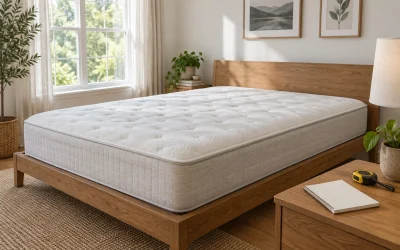
The good news is that pocketed-coil-and-foam construction has matured enough that genuinely well-built hybrids now sit comfortably under four figures. This guide looks at the sub-$1,000 category through a sleep-health lens rather than a marketing one: how each bed handles spinal alignment, heat dissipation, pressure at the hip and shoulder, and motion transfer between partners. Below you’ll find current standout models, a practical framework for matching a mattress to your sleep position and body type, and answers to the questions that most often come up before checkout.
As an Amazon Associate we earn from qualifying purchases.
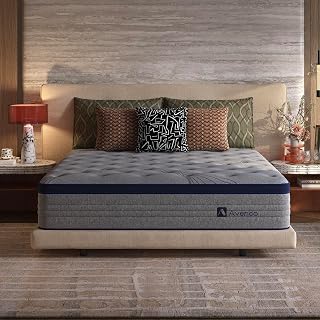


🛒 Best Price Today on Amazon
Prime members get fast, free shipping on everything above, plus member-only deals. New members get a 30-day free trial — cancel anytime.
How to Choose a Hybrid Mattress Under 1000 (2026)
- Match firmness to sleep position, not preference: Side sleepers generally need enough surface give to let the shoulder and hip settle in while the waist stays supported; back and stomach sleepers do better on a firmer feel that resists lumbar sag. If you switch positions overnight, a medium-firm hybrid is the safest landing spot.
- Look at coil zoning, not just coil count: A zoned unit places firmer coils under the lumbar region and softer ones under the shoulders, which does more for alignment than a high total coil number spread uniformly. Descriptions mentioning 5-zone or 7-zone support are signalling this design.
- Understand the cooling mechanism: Airflow through the coil layer is the most reliable cooling feature in a hybrid; gel infusions and phase-change covers help at the surface but fade over the night. If you run hot, prioritise breathable pillow-top covers paired with an open coil core over foam-heavy builds.
- Check certifications and fire-barrier construction: CertiPUR-US certification indicates the foams were tested for emissions and prohibited substances, and a stated fiberglass-free build means you won’t face a hazardous cleanup if the cover is ever unzipped or torn.
- Treat the trial period as part of the product: Your nervous system needs roughly two to four weeks to recalibrate to a new sleep surface, so a 365-night trial and a 10-year warranty aren’t marketing filler — they’re what let you evaluate the bed honestly instead of judging it on night three.
The Best Hybrid Mattresses Under 1000 (2026), Reviewed
BedStory Firm 13 Inch Hybrid
This is the pick for back and stomach sleepers who wake with lower-back tightness, thanks to zoned lumbar reinforcement under a genuinely firm surface that keeps the pelvis from dipping. Side sleepers under about 130 lb may find it too unyielding at the shoulder, but the 365-night trial and 10-year warranty make it low-risk to test.
Sleepmax 14 Inch Hybrid
A well-balanced all-rounder that handles the awkward middle ground of combination sleeping — enough contouring for side-lying pressure relief without the sinking sensation that makes rolling over feel like work. CertiPUR-US certified foams and a fiberglass-free build add real peace of mind at this price.
Sweetnight CoolNest 14 Inch Hybrid
Built specifically around heat management, this one layers a breathable pillow top over a 7-zone coil core so warm air has somewhere to go rather than pooling under your torso. If night sweats or a warm bedroom are your primary complaint, start here.
DreamCloud 12″ Hybrid
The most refined feel of the group, with memory foam layered over coils for a slow, cradling response that suits people with joint sensitivity or arthritic pain. Its lower profile also means standard-depth sheets actually fit — a small detail that matters more than people expect.
16 Inch Luxury Hybrid
The tall profile delivers a plush, hotel-bed surface with 7-zone support underneath, and motion isolation is strong enough that a restless partner or pet won’t register across the mattress. Heavier sleepers benefit most from the extra layer depth here.
Frequently Asked Questions
Are hybrid mattresses good for back pain?
Often, yes. The coil layer resists sagging under the pelvis while the foam layers reduce pressure at contact points, which together support a neutral spine. Zoned lumbar reinforcement, as in the BedStory model, is the feature to look for specifically.
How firm should my mattress be?
Side sleepers typically do best around medium to medium-firm, back sleepers at medium-firm, and stomach sleepers firm. Body weight shifts this: heavier sleepers experience any given mattress as softer than lighter sleepers do.
Do hybrids sleep hotter than innerspring beds?
Slightly, because of the foam comfort layers — but far less than all-foam mattresses, since the coil unit allows continuous airflow. Cooling covers and pillow tops narrow the gap further.
How long does a new mattress take to break in?
Expect two to four weeks of adjustment, and allow 24 to 72 hours after unboxing for the layers to fully expand. Judge the bed at the end of that window, not the beginning.
Final Thoughts
If lower-back support is your priority, the BedStory Firm 13 Inch is the most targeted option here; hot sleepers should go straight to the Sweetnight CoolNest; and anyone wanting a plush, pressure-relieving feel with premium polish will be best served by the DreamCloud 12″. All three come with year-long trials, so let your own mornings make the final call.