Key takeaways
- Heating-element guard: Reduces accidental contact and keeps sticks from resting directly on the element.
- Stable, non-slip feet: Particularly important when children pull on a roasting stick.
- Cool-touch handles: Useful when moving the unit after it has been unplugged, although the body may still be hot.
- Automatic shutoff or timer: Helpful when conversation distracts the host.
- Flame snuffer: Essential for gel-fuel models; verify that it fits the burner completely.
- Short, manageable cord: Long enough to reach a nearby outlet but not so long that it crosses a walking route.
Best Indoor S’mores Makers for Entertaining
The best indoor s’mores maker for entertaining is an electric tabletop model with a guarded heating element, removable food-contact parts, and enough roasting space for four to six guests; choose a flameless electric unit for families and apartments, a gel-fuel set for a more traditional flame experience, or a simple tabletop burner when compact storage matters most.
Indoor s’mores makers are not interchangeable. Some gently warm marshmallows with electricity, some use an open gel flame, and some are essentially serving trays with a separate heat source. The right choice depends on how many people you serve, whether children or pets are nearby, how much counter space you have, and whether you want roasting or only warming.
Our top picks

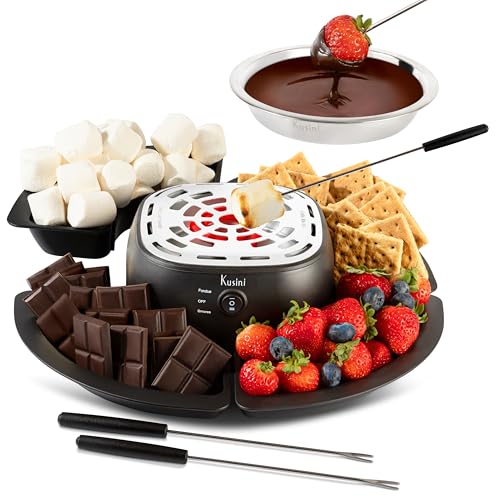


As an Amazon Associate we earn from qualifying purchases at no extra cost to you. Ratings are shown as listed on Amazon.
Quick comparison: which type suits your gathering?
| Type | Typical capacity | Heat source | Typical footprint | Best for | Main compromise |
|---|---|---|---|---|---|
| Electric s’mores maker | 4–6 roasting sticks | Enclosed electric heating element | About 12–16 in. wide by 8–12 in. deep | Families, apartments, frequent entertaining | Needs an outlet and may roast more slowly than an open flame |
| Gel-fuel tabletop set | 4–8 roasting sticks | Canned chafing fuel or gel burner | About 10–14 in. wide by 8–12 in. deep | Adults wanting flame-style roasting | Open flame, fuel storage, and more demanding cleanup |
| Tea-light or candle warmer | 2–4 roasting sticks | One or more small candles | About 8–12 in. wide by 6–10 in. deep | Occasional use and very small tables | Low heat and limited control; usually better for warming than browning |
| Serving tray with separate burner | 4–8 guests | Varies by burner | Often 16–24 in. wide | Large dessert spreads | Uses more table space and creates more pieces to wash and store |
Best choices by entertaining situation
| Your situation | Best choice | Why |
|---|---|---|
| Small apartment or 10-by-12-foot dining room | Compact electric unit | No fuel canisters and usually a smaller safety zone around the heat source |
| Children or pets at the table | Electric model with a guard and cool-touch handles | Removes an exposed flame, although the heating area still becomes hot |
| Renters who cannot install anything | Plug-in electric model | Portable, reversible, and easy to put away after a party |
| Adults seeking a campfire-like experience | Gel-fuel set with a snuffer lid | Provides visible flame and higher direct heat |
| Eight or more guests | Two compact electric units or a larger serving tray | One small maker can create a queue and encourage guests to crowd the heat |
| Limited storage | Model with a removable tray and nesting accessories | Flat components are easier to fit in a 12-inch-deep cabinet |
Electric versus gel fuel: the most important decision
Electric heating
Electric models are the practical default for indoor entertaining. A guarded element produces steady heat without smoke, ash, or an open flame. Look for a power cord of at least 4 feet, an on/off switch, non-slip feet, and an element shield that prevents a roasting stick from touching the hottest metal.
The trade-off is speed. Electric units commonly warm marshmallows gradually, so guests get better results by holding them a few inches above the element and rotating them instead of pressing them directly against the guard. A 300–500-watt unit is generally adequate for a small tabletop gathering, but the wattage alone does not predict roasting performance; element placement and airflow matter too.
The Nostalgia SMM200 Indoor Electric Stainless Steel S’mores Maker is a recognizable example of this category. Its appeal is the dedicated indoor format: a central electric heating area surrounded by space for ingredients and roasting sticks. As with similar units, confirm the available table area and keep the cord away from walkways before serving.
Gel fuel and candle heating
Gel-fuel makers create a more visible flame and can brown marshmallows quickly, but they demand stricter placement. Keep at least 3 feet between the flame and curtains, paper decorations, chair backs, or hanging light fixtures. A heat-resistant, level surface is essential, and the burner should include a fitted snuffer rather than relying on a loose lid or improvised cover.
Candle-based designs are usually quieter and smaller, but they are often underpowered for rapid roasting. They work better for a small dessert ritual than for a party where several people expect to toast at once. Never substitute a candle, alcohol, or another fuel type unless the maker specifically permits it.
Capacity is about table flow, not just stick count
A product advertised for six sticks does not necessarily serve six people at the same time. Measure the usable roasting area and the space around it. For comfortable access, allow approximately 24 inches of table edge per person and keep 12 inches of clear space around an electric heating area. For an open-flame unit, a 24-inch clearance zone is a safer planning target where the table layout allows it.
On a 36-inch round dining table, a 14-inch-wide maker leaves roughly 11 inches of table depth from its edge to the table rim. That is enough for a small plate, but not for a crowded spread of chocolate, graham crackers, fruit, napkins, and drinks. For six guests, use side plates or a second serving surface rather than placing every ingredient around the heat source.
For two to four people, a 10- to 12-inch footprint is usually comfortable. For six people, look for a 14- to 16-inch-wide model or plan two batches. If your dining table is only 30 inches wide, a narrow electric maker is safer than a broad flame-based tray because it preserves more usable space at the perimeter.
Safety features worth paying for
- Heating-element guard: Reduces accidental contact and keeps sticks from resting directly on the element.
- Stable, non-slip feet: Particularly important when children pull on a roasting stick.
- Cool-touch handles: Useful when moving the unit after it has been unplugged, although the body may still be hot.
- Automatic shutoff or timer: Helpful when conversation distracts the host.
- Flame snuffer: Essential for gel-fuel models; verify that it fits the burner completely.
- Short, manageable cord: Long enough to reach a nearby outlet but not so long that it crosses a walking route.
Place the maker on a level, heat-resistant surface, not on a sofa table covered with loose fabric or directly beneath a shelf. Keep roasting sticks pointed inward, never across another guest’s place setting. Children should have adult supervision, even with an enclosed electric model, because melted sugar and the heating area can cause burns.
Cleanup and accessory storage
Melted marshmallow is the main cleanup problem. A removable stainless-steel or dishwasher-safe tray is easier to maintain than a fixed heating basin. Before washing, unplug the unit and let it cool fully. Do not immerse an electric base unless the manufacturer specifically says it is waterproof. Soak removable parts in warm water rather than scraping hardened sugar with a knife, which can damage nonstick coatings.
Check how the accessories store. A good design lets roasting forks sit inside the tray or beneath the serving platform. Otherwise, six long sticks can require a drawer at least 14 inches deep. Keep fuel canisters separate from the appliance, away from heat and out of children’s reach. For occasional entertainers, a removable ingredient tray that nests upside down over the base can reduce the storage height to roughly 5–7 inches.
What to expect when moving and storing one
Most compact electric makers weigh about 2–5 pounds before packaging, while larger serving trays and metal gel-fuel sets can approach 6–10 pounds. The product may fit on a 24-inch shelf but arrive in a box too large for that space because of protective foam. Measure cabinet openings, not only shelf dimensions; a 12-inch-wide appliance will not pass through an 11-inch cabinet opening at an angle if its handles add another inch.
What usually wears first is the nonstick coating on a removable tray, followed by small plastic accessory clips and the power switch. Avoid metal utensils, abrasive pads, and storing heavy cookware on top of the maker. Stainless-steel surfaces generally tolerate frequent use better, while glossy plastic bodies stay lighter but can show heat discoloration if placed too close to a flame.
Bottom line
Choose a guarded electric s’mores maker for most indoor entertaining, especially in a small home or around children and pets. Choose gel fuel only when the visible flame is part of the experience and you can provide a generous clear zone. Prioritize a removable washable tray, stable feet, a genuine snuffer or automatic shutoff, and accessory storage over decorative extras. For a group larger than six, capacity and table flow matter more than the maker’s headline stick count: two compact stations are often safer and more enjoyable than one crowded centerpiece.