Key takeaways
- Firmness window: Aim for medium-firm — roughly 6 to 7 on the ten-point industry scale. Anything softer permits pelvic sink when you roll onto your stomach; anything firmer leaves your shoulder propped and your lumbar curve unsupported on your side.
- Zoned or reinforced support: Look for coil units or foam cores with a stiffened lumbar section. Zoning lets the shoulder region give way while the waist-to-hip band pushes back, which is precisely the split that combination sleepers need.
- Comfort layer depth: Two to three inches of foam above the support core is the sweet spot. Deeper pillow tops feel welcoming in the showroom but allow the hips to settle too far once you turn face-down.
- Response speed: If you change position frequently, choose latex-like foams, gel-infused memory foam with quick rebound, or a hybrid build. Slow-recovery foam creates a shallow trough you have to climb out of each time you turn.
- Trial length and body weight: Spinal alignment problems often take three to four weeks to reveal themselves, so a 365-night trial has real value. Heavier sleepers should size up a firmness step; lighter sleepers under about 130 pounds usually land better one step down.
What's inside
Sleeping on your side one hour and your stomach the next puts you in an awkward position — literally and commercially. Side sleeping concentrates body weight onto two narrow contact points, the shoulder and the hip, which demands a surface soft enough to let those joints settle in. Stomach sleeping does the opposite: it pushes the pelvis down and tips the lumbar spine into extension, which demands a surface firm enough to hold the midsection up. Add existing back pain to the equation and the usual advice collapses, because the “plush for side, firm for stomach” rule of thumb tells combination sleepers to buy two different beds.
The workable answer is a single mattress tuned to a narrow middle band: a supportive core that refuses to let the hips drop, paired with a shallow, responsive comfort layer that yields at the shoulder without swallowing it. Below you’ll find the models that hit that balance in 2026, followed by the specifications that actually matter, expert notes on each pick, and answers to the questions I hear most often from clients managing morning stiffness.
As an Amazon Associate we earn from qualifying purchases.




🛒 Best Price Today on Amazon
Prime members get fast, free shipping on everything above, plus member-only deals. New members get a 30-day free trial — cancel anytime.
How to Choose a Mattress For Side And Stomach Sleepers With Back Pain (2026)
- Firmness window: Aim for medium-firm — roughly 6 to 7 on the ten-point industry scale. Anything softer permits pelvic sink when you roll onto your stomach; anything firmer leaves your shoulder propped and your lumbar curve unsupported on your side.
- Zoned or reinforced support: Look for coil units or foam cores with a stiffened lumbar section. Zoning lets the shoulder region give way while the waist-to-hip band pushes back, which is precisely the split that combination sleepers need.
- Comfort layer depth: Two to three inches of foam above the support core is the sweet spot. Deeper pillow tops feel welcoming in the showroom but allow the hips to settle too far once you turn face-down.
- Response speed: If you change position frequently, choose latex-like foams, gel-infused memory foam with quick rebound, or a hybrid build. Slow-recovery foam creates a shallow trough you have to climb out of each time you turn.
- Trial length and body weight: Spinal alignment problems often take three to four weeks to reveal themselves, so a 365-night trial has real value. Heavier sleepers should size up a firmness step; lighter sleepers under about 130 pounds usually land better one step down.
The Best Mattresses For Side And Stomach Sleepers With Back Pain (2026) Reviewed
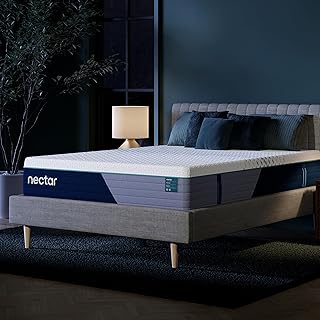
Nectar Premier 13″ Hybrid
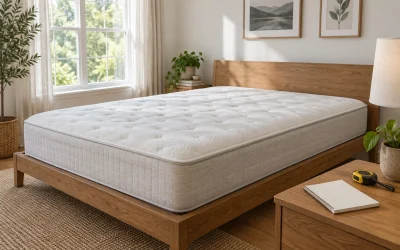
This is the most reliably calibrated medium-firm build on the list, with a coil unit that keeps the pelvis level and a cooling cover that manages the heat foam tends to trap. The one-year trial gives you enough runway to judge whether your morning symptoms genuinely improve rather than fluctuate.
BedStory 14″ Firm Hybrid
The zoned lumbar band here is the standout feature — it resists compression right where stomach sleepers hyperextend, while the upper zone softens enough to accept a shoulder. Best suited to sleepers who already know they prefer a firm surface, or anyone over roughly 200 pounds.
Sleepmax 14″ Cooling Hybrid
A well-judged compromise: enough surface cushioning to relieve hip pressure during side sleeping, with pocketed coils underneath that stop the midsection from dipping. The fiberglass-free construction and CertiPUR-US foams are worth noting if indoor air quality matters to you.
EGOHOME 14″ Copper Gel Memory Foam
Choose this one if you share the bed with a restless partner — all-foam construction absorbs movement far better than springs, and the copper-infused layer counters the heat retention that usually disqualifies memory foam for stomach sleepers. Expect a slightly slower rebound than the hybrids above.
BedStory Firm 13″ Hybrid
A slimmer take on the zoned-support formula, with a hotel-style firm feel that suits sleepers whose pain flares specifically after face-down nights. The 13-inch profile also works better with standard-depth fitted sheets than the 14-inch models.
Frequently Asked Questions
What firmness should I pick if I split time between side and stomach?
Medium-firm. Track which position you wake up in for a week — that’s the one your body defaults to during deep sleep, and it should carry the most weight in your decision.
Can a mattress genuinely reduce back pain?
Controlled research consistently links medium-firm surfaces to reduced pain and better sleep quality compared with very firm ones. A mattress won’t resolve disc pathology or muscular dysfunction, but a poorly matched one reliably makes both feel worse.
Are hybrids better than all-foam for this combination?
Usually, yes. Coils resist localized sinking under the pelvis more effectively than foam, and they breathe better. All-foam wins when motion isolation is the priority.
How long until I can tell if it’s working?
Give it three to four weeks. Your paraspinal muscles adapt to whatever surface they’ve been sleeping on, and a brief adjustment ache is common and not a sign of a bad match.
Final Thoughts
For most combination sleepers managing back pain, the Nectar Premier Hybrid is the safest starting point thanks to its balanced feel and generous trial period. Heavier sleepers or those whose pain traces clearly to stomach sleeping will get more from the BedStory 14″ Firm Hybrid, while couples who prioritize undisturbed sleep should look at the EGOHOME copper gel foam.