Key takeaways
- Slat spacing: Measure the gaps on your frame before you buy. Anything wider than about three inches lets foam sag between the boards, and that dip becomes permanent within a season. A bunkie board or a sheet of plywood cut to size solves it cheaply.
- Profile height: Platform beds already sit higher than a traditional frame-and-foundation stack. Aim for a total mattress-plus-frame height near 25 inches so your feet rest flat on the floor when you sit on the edge — that’s the measurement that matters for getting in and out comfortably.
- All-foam versus hybrid: Foam contours more deeply and silences motion transfer, which suits light-to-average-weight sleepers and couples. Pocket coils add airflow, edge stability, and a firmer support core, which serves heavier bodies and anyone who shifts positions repeatedly through the night.
- Firmness matched to position: Side sleepers need enough give at the shoulder and hip to keep the spine level; back and stomach sleepers need resistance at the lumbar curve. Medium-firm satisfies both ends of that spectrum for most mixed-position sleepers, which is why it dominates this category.
- Certifications and trial length: Confirm CertiPUR-US foam and a fiberglass-free fire barrier, then check the trial window. Your body needs two to four weeks to recalibrate to a new surface, so anything shorter than 100 nights doesn’t give you a fair evaluation period.
What's inside
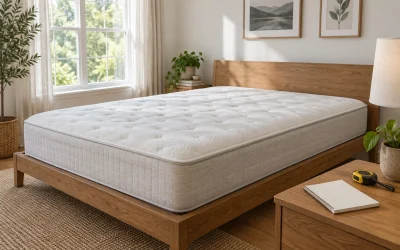
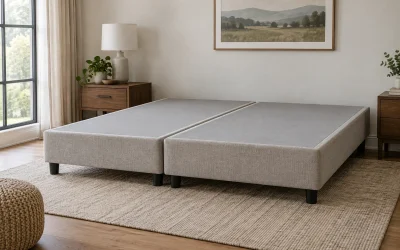
A box spring was never really a comfort component. It was shock absorption for the steel innerspring beds of the mid-century, built to flex in sympathy with the coils resting on top of it. Modern foam and hybrid mattresses handle that job internally, which is why nearly every bed-in-a-box brand now asks for the opposite condition: a flat, rigid, evenly supported surface. Set one of these mattresses on a springy foundation and you invite uneven deflection, early body impressions, and in many cases a warranty claim that gets denied on a technicality.
That turns the decision into a practical one rather than a philosophical one. Which mattresses actually perform on a platform bed, a slatted frame, an adjustable base, or a bunkie board? Below are the 2026 models I’d steer a client toward when a box spring isn’t part of the setup, followed by the specifications I check before recommending anything and the questions that surface most often during a sleep consultation.
As an Amazon Associate we earn from qualifying purchases.


🛒 Best Price Today on Amazon
Prime members get fast, free shipping on everything above, plus member-only deals. New members get a 30-day free trial — cancel anytime.
How to Choose a Mattress Without a Box Spring (2026)
- Slat spacing: Measure the gaps on your frame before you buy. Anything wider than about three inches lets foam sag between the boards, and that dip becomes permanent within a season. A bunkie board or a sheet of plywood cut to size solves it cheaply.
- Profile height: Platform beds already sit higher than a traditional frame-and-foundation stack. Aim for a total mattress-plus-frame height near 25 inches so your feet rest flat on the floor when you sit on the edge — that’s the measurement that matters for getting in and out comfortably.
- All-foam versus hybrid: Foam contours more deeply and silences motion transfer, which suits light-to-average-weight sleepers and couples. Pocket coils add airflow, edge stability, and a firmer support core, which serves heavier bodies and anyone who shifts positions repeatedly through the night.
- Firmness matched to position: Side sleepers need enough give at the shoulder and hip to keep the spine level; back and stomach sleepers need resistance at the lumbar curve. Medium-firm satisfies both ends of that spectrum for most mixed-position sleepers, which is why it dominates this category.
- Certifications and trial length: Confirm CertiPUR-US foam and a fiberglass-free fire barrier, then check the trial window. Your body needs two to four weeks to recalibrate to a new surface, so anything shorter than 100 nights doesn’t give you a fair evaluation period.
The Best Mattresses Without a Box Spring (2026), Reviewed
EGOHOME 8 Inch Green Tea Memory Foam, Full
At eight inches, this is the profile I recommend for daybeds, trundles, bunks, and guest rooms where a 14-inch slab would swallow the frame and strand the headboard. The green tea gel infusion does more for odor management than temperature, but the medium-firm feel is honest and the foam density holds up better than the price suggests.
Nectar 12 Inch Memory Foam, Queen
The reliable default for anyone who wants classic slow-response memory foam with a genuine cradling sensation rather than a bouncy imitation of it. Its twelve-inch build flexes cleanly on an adjustable base, and the year-long trial removes essentially all of the guesswork from an online purchase.
Sweetnight CoolNest 14 Inch, Queen
The five-zone core is the standout here: softer foam under the shoulders, reinforced density through the lumbar region, so side sleepers get pressure relief at the hip without their midsection drifting downward. Breathability is noticeably better than a single-density foam block of the same thickness.
Novilla 14 Inch Gel Memory Foam, Queen
Motion isolation is this mattress’s real strength, and it’s the one I mention to couples with mismatched schedules or a dog that relocates twice a night. The deep gel-foam profile reads plush on first contact, then settles into steady medium support once it fully expands.
Sleepmax 14 Inch Hybrid, Queen
Pocket springs deliver what pure foam can’t: usable edge support, meaningful airflow through the core, and enough pushback for heavier or combination sleepers who bottom out on softer builds. A 365-night trial and fiberglass-free construction make it the low-risk hybrid pick of the group.
Frequently Asked Questions
Can I place these directly on a platform bed?
Yes, and that’s the intended setup. Foam and hybrid mattresses supply their own support layers, so a solid or closely slatted platform gives them exactly the rigid base they’re engineered for.
Does skipping the box spring void the warranty?
Usually the reverse is true. Most bed-in-a-box warranties explicitly require a non-flexing foundation and exclude damage caused by an old coil box spring, so check the support requirements in your paperwork rather than assuming.
My frame has five-inch slat gaps. What now?
Add a bunkie board, a slat conversion kit, or plywood over the existing boards. It’s a modest expense that prevents the single most common cause of premature sagging in foam mattresses.
Is putting the mattress on the floor acceptable?
Short term, yes. Long term, no — floor placement traps body moisture underneath the mattress with nowhere to evaporate, and mold along the underside is a genuine risk in humid rooms.
Final Thoughts
For most sleepers replacing a mattress on a platform or slatted frame, the Nectar 12 Inch is the safest landing spot thanks to its balanced medium-firm feel and generous trial period. Heavier sleepers, hot sleepers, and anyone who values edge support should go with the Sleepmax 14 Inch hybrid instead, while the EGOHOME 8 Inch remains the smartest choice for guest rooms, bunks, and low-profile frames where height is the constraint.