Key takeaways
- Firmness window: Aim for medium. Side sleepers need the comfort layer to accept the shoulder by roughly an inch and a half while still supporting the waist gap — firm surfaces create pressure points, ultra-soft ones let the hips drop out of alignment.
- Comfort-layer depth: Look for at least three inches of true adaptive foam above the support core. Thin comfort layers “bottom out” under the hip, which is what people describe as sinking and then hitting a wall.
- Heat pathways: Dense memory foam traps warmth by design. Prioritise phase-change covers, ventilated cell structures, or a hybrid coil core if you run hot or share the bed.
- Topper versus replacement: If your existing mattress is structurally sound but too firm, a three-inch topper solves the pressure problem for a fraction of the cost. If the core sags, no topper will rescue it.
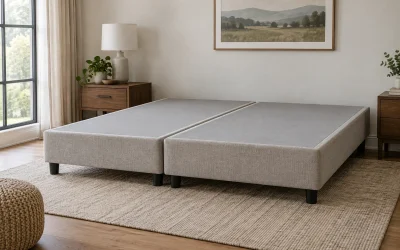
- Trial length and base compatibility: Lateral pressure relief takes two to three weeks to assess honestly. Favour generous sleep trials, and confirm your foundation offers continuous, gap-free support.
What's inside
Side sleeping is the most popular sleep posture among adults, and it is also the least forgiving of the wrong surface. Lie on your side and roughly a third of your body weight funnels into two narrow contact zones: the point of the shoulder and the bony prominence of the hip. A mattress that refuses to yield at those two spots pushes the spine into a lateral bow, compresses circulation through the shoulder, and provokes the low-grade repositioning that quietly fragments deep sleep without ever waking you fully. Most people blame the pillow, the room temperature, or a stressful week. Often the real culprit is a surface that simply will not let the shoulder sink.
Tempur-Pedic built its name on this exact problem — viscoelastic foam that responds to body heat and load rather than pushing back uniformly. The trouble is that the current lineup is easy to misread: “medium” behaves very differently in a Tempur cell structure than it does in a conventional poly-foam bed, and the retrofit route (a topper over a mattress you already own) is frequently the smarter buy. Below, I break down what actually matters for lateral sleepers, review the strongest Tempur options for 2026 alongside two well-matched alternatives, and answer the questions that come up most often in consultations.
As an Amazon Associate we earn from qualifying purchases.


🛒 Best Price Today on Amazon
Prime members get fast, free shipping on everything above, plus member-only deals. New members get a 30-day free trial — cancel anytime.
How to Choose a Tempur Mattress For Side Sleepers (2026)
- Firmness window: Aim for medium. Side sleepers need the comfort layer to accept the shoulder by roughly an inch and a half while still supporting the waist gap — firm surfaces create pressure points, ultra-soft ones let the hips drop out of alignment.
- Comfort-layer depth: Look for at least three inches of true adaptive foam above the support core. Thin comfort layers “bottom out” under the hip, which is what people describe as sinking and then hitting a wall.
- Heat pathways: Dense memory foam traps warmth by design. Prioritise phase-change covers, ventilated cell structures, or a hybrid coil core if you run hot or share the bed.
- Topper versus replacement: If your existing mattress is structurally sound but too firm, a three-inch topper solves the pressure problem for a fraction of the cost. If the core sags, no topper will rescue it.
- Trial length and base compatibility: Lateral pressure relief takes two to three weeks to assess honestly. Favour generous sleep trials, and confirm your foundation offers continuous, gap-free support.
The Best Tempur Mattress For Side Sleepers (2026) Reviewed
TEMPUR-Adapt 2.0 Medium, 11-Inch (Queen)
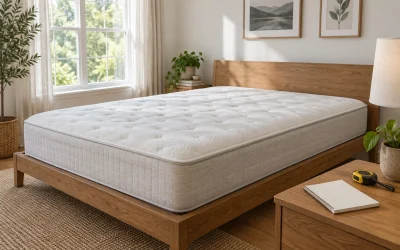
This is the benchmark for side sleepers who want the genuine article. The 11-inch build pairs a responsive comfort layer with a dense support core, so the shoulder is admitted without the hip sagging — and motion transfer across a queen is effectively nil, which matters if your partner is restless.
TEMPUR-Adapt 2.0 Medium, 11-Inch (Full)
The same construction in a footprint that suits guest rooms, smaller bedrooms, and solo sleepers who want space to spread out. Expect a short break-in period of one to two weeks while the cell structure calibrates to your body temperature and weight distribution.
TEMPUR-Adapt + Cooling 3-Inch Topper (Full)
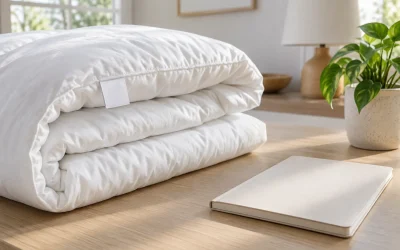
The most cost-effective route to Tempur pressure relief when your current mattress is firm but sound. Three inches is the meaningful threshold for shoulder accommodation, and the cooling cover offsets the heat retention that puts some people off memory foam entirely.
TEMPUR-Adapt + Cooling 3-Inch Topper (Twin)
Ideal for adjustable beds, dorm setups, and teenagers whose growing frames are outpacing an old spring mattress. The washable cover is a practical detail that manufacturers frequently overlook, and it keeps the surface hygienic over years of use.
DreamCloud 12-Inch Hybrid (Queen)
A sensible cross-shop for side sleepers who want coil-assisted airflow and stronger edge support than all-foam construction typically delivers. Budget-focused buyers should also weigh the Sleepmax 14-inch hybrid, which offers similar pressure-relieving intent with a long trial window.
Frequently Asked Questions
Is “medium” soft enough for side sleeping?
Yes, in Tempur’s material science. Viscoelastic foam softens in response to body heat, so a medium Tempur surface behaves noticeably more yieldingly at the shoulder than a medium spring mattress rated the same way.
Will a memory foam mattress sleep hot?
Older formulations did. Current cooling covers and ventilated cell structures manage this well for most sleepers, though hot sleepers and menopausal women may still prefer a hybrid coil core for its convective airflow.
Can a topper fix a mattress that’s too firm?
Reliably, provided the underlying mattress is flat and supportive. A topper redistributes surface pressure; it cannot compensate for a collapsed core or a sagging centre channel.
How long before I judge a new mattress?
Give it a minimum of 14 nights. Your body needs time to unlearn the compensations it developed on the old surface, and early-week stiffness is common and usually temporary.
Final Thoughts
For most side sleepers ready to replace their bed, the TEMPUR-Adapt 2.0 Medium 11-inch is the clearest choice — it delivers the shoulder accommodation and spinal alignment this posture demands. If your current mattress is merely too firm, the TEMPUR-Adapt + Cooling 3-inch topper achieves much the same pressure relief for far less outlay, while the DreamCloud 12-inch hybrid remains the strongest pick for hot sleepers who want coil support underfoot.