Key takeaways
- Rigidity above all: Lateral sway is the single biggest sleep disruptor in a bunk. Look for full-length guardrails, thick posts, bolt-through joinery rather than cam locks, and a stated weight capacity well above what you plan to put on it — headroom in the rating usually signals a stiffer frame.
- Mattress depth and rail clearance: Pediatric guidance calls for at least five inches of guardrail standing proud of the sleeping surface. Most upper bunks want a mattress no deeper than six to eight inches, so read the frame’s spec before you buy anything plush.
- Heat management: Warm air pools at the ceiling, so the top bunk can run several degrees hotter. Slatted decks beat solid panels for airflow, and the upper sleeper should get lighter bedding than the lower one — not matching sets.
- Light discipline: Integrated LED strips are genuinely useful for orientation at night, but only if they’re warm-toned and dimmable. Cool white or color-cycling light at bedtime works against melatonin release; use it as a wayfinding glow, not a nightlight left burning until morning.
- Egress and storage: Stairs with treads suit younger children and anyone who wakes for the bathroom; ladders save floor area. Built-in drawers and hanging space matter more than they sound, because visible clutter measurably raises pre-sleep arousal in small shared rooms.
What's inside
Bunk beds are usually bought under pressure: a second child arrives, a family downsizes, or two siblings who have never shared a room suddenly have to. The decision gets made on footprint and price, and the thing that actually matters — whether two people can fall asleep and stay asleep three feet apart — barely enters the conversation. Then the frame creaks every time someone rolls over, the top sleeper overheats, and the 2 a.m. ladder descent wakes the whole house.
I evaluate beds the way I evaluate any sleep environment: stability, temperature, light control, and how easily a sleeper can get in and out without fully waking. This guide applies that lens to the bunk beds worth considering in 2026, covering low-profile wooden frames for young kids, convertible models that split into two standalone beds, and steel-framed staircase units with drawers, integrated lighting, and study space built in.
As an Amazon Associate we earn from qualifying purchases.



🛒 Best Price Today on Amazon
Prime members get fast, free shipping on everything above, plus member-only deals. New members get a 30-day free trial — cancel anytime.
How to Choose a Bunk Bed (2026)
- Rigidity above all: Lateral sway is the single biggest sleep disruptor in a bunk. Look for full-length guardrails, thick posts, bolt-through joinery rather than cam locks, and a stated weight capacity well above what you plan to put on it — headroom in the rating usually signals a stiffer frame.
- Mattress depth and rail clearance: Pediatric guidance calls for at least five inches of guardrail standing proud of the sleeping surface. Most upper bunks want a mattress no deeper than six to eight inches, so read the frame’s spec before you buy anything plush.
- Heat management: Warm air pools at the ceiling, so the top bunk can run several degrees hotter. Slatted decks beat solid panels for airflow, and the upper sleeper should get lighter bedding than the lower one — not matching sets.
- Light discipline: Integrated LED strips are genuinely useful for orientation at night, but only if they’re warm-toned and dimmable. Cool white or color-cycling light at bedtime works against melatonin release; use it as a wayfinding glow, not a nightlight left burning until morning.
- Egress and storage: Stairs with treads suit younger children and anyone who wakes for the bathroom; ladders save floor area. Built-in drawers and hanging space matter more than they sound, because visible clutter measurably raises pre-sleep arousal in small shared rooms.
The Best Bunk Beds of 2026, Reviewed
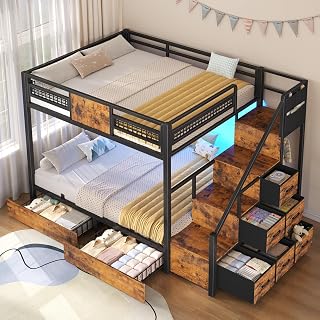
Twin Over Twin Bunk Bed with Stairs, Drawers and LED Lights
The steel frame and staircase access make this the most sleep-friendly configuration for kids under eight, with eight drawers and a hanging section that absorb the storage load a shared room usually can’t. Set the LED strip to its warmest, lowest setting and treat it purely as stair lighting. A full-over-full version of the same design exists if you need adult-sized berths.
Max & Lily Fundamental Twin Low Bunk Bed
Solid pine, reinforced slats, and a deliberately low overall height make this the calmest option for first-time bunk sleepers and for parents who want to sit on the lower bunk to read. The non-toxic finish also matters more than most buyers realize — new furniture off-gasses into a closed bedroom for weeks.
Full Over Full Bunk Bed with Trundle, Grey
Two full-size berths plus a trundle handle sleepovers and multigenerational visits without a guest room, and the frame separates into two freestanding platform beds when the kids outgrow stacking. Full-length rails and a sturdy ladder keep it appropriate for teens and adults, not just children.
Merax Twin Over Full Bunk Bed
The staggered twin-over-full layout suits siblings of different ages, giving the older child a wider surface below while the removable ladders and two drawers keep the room’s traffic path clear. Like the trundle model, it converts into two separate beds, which extends its useful life by years.
Full Over Full Bunk Bed with Desk and Charging Station
A sensible pick for teens in a single room, combining two full berths, five drawers, and a desk that keeps schoolwork off the mattress — a small but real win for sleep hygiene. Be strict about the charging station: phones on the desk, not on the pillow.
Frequently Asked Questions
What age is safe for the top bunk?
Six years is the consensus minimum, and it’s a floor rather than a target. Judge the individual child’s balance, whether they sleep restlessly, and how reliably they can navigate the ladder half-asleep.
Do built-in LED lights hurt sleep?
Only if misused. Warm amber light at low intensity has minimal effect on melatonin and helps prevent stumbles; bright or blue-shifted color modes running through the night will delay sleep onset in both bunks.
How do I stop the frame from creaking?
Re-torque every bolt after the first month, then twice yearly — most noise comes from joints loosening as timber or steel settles. Felt pads between slats and frame, and a small anti-slip mat under each mattress, silence most of what’s left.
Can adults sleep in a bunk bed long-term?
Yes, provided the frame is rated for it and the upper bunk has adequate headroom to sit up without ducking. Full-over-full and convertible models are built for adult weight; twin-over-twin kids’ frames generally aren’t.
Final Thoughts
For young siblings, the Max & Lily Fundamental low bunk is the safest, quietest starting point, and the twin-over-twin staircase model with drawers and LED lighting is the best all-round solution for a cluttered shared room. Families thinking past the next five years should look hard at the Full Over Full with Trundle, which stops being a bunk bed and becomes two proper beds the moment your kids want their own space.