Key takeaways
- Firmness is non-negotiable: Infants need a firm, flat surface that springs back rather than cradling. Press the center with your palm — if it dimples and holds the shape, it’s too soft. Plushness that feels luxurious to an adult hand is a hazard for a baby who can’t yet reposition their own head.
- Fit beats brand every time: A standard U.S. crib mattress runs roughly 27.25″ x 51.6″ and must not exceed 6 inches thick. Once installed, you shouldn’t be able to slide more than two fingers between the mattress edge and the crib frame. Any larger gap is an entrapment risk, no matter how good the mattress is.
- Prioritize airflow and heat shedding: Babies thermoregulate poorly and overheating is a known sleep risk factor. Open-cell foam structures, ventilated cores, and knit covers move warm, humid air away from the sleep surface far better than sealed vinyl.
- Read the certifications, not the adjectives: GREENGUARD Gold addresses chemical emissions into indoor air, OEKO-TEX Standard 100 covers substances in textiles, and CertiPUR-US applies to foam content. “Non-toxic” on its own is a marketing word with no governing body behind it.
- Buy for two stages: A dual-sided design — firm infant face, slightly softer toddler face — plus a machine-washable cover turns one purchase into three or four years of use and spares you a second mattress hunt at 18 months.
What's inside
Parents will agonize over stroller suspension and bottle nipple flow rates, then grab a crib mattress in the last week of the third trimester because it is the boring rectangle the crib needs to function. That is backwards. A newborn logs 14 to 17 hours a day on that surface, and a two-year-old is still clocking 11 to 14. No other product in the house gets that kind of contact time. Meanwhile the category is crowded with language — breathable, dual-sided, organic, hypoallergenic, gel-infused — that sounds meaningful but rarely comes with a definition attached.
This guide cuts through it. I’ve evaluated the 2026 field the way I’d assess any sleep surface: how the core resists compression under a small body, how heat and moisture move through the build, what the materials are actually certified against, how easily the thing survives a 3 a.m. diaper blowout, and whether it earns its keep once your baby becomes a toddler who sleeps sideways. Below are the picks worth your attention, plus the buying criteria that separate a genuinely good crib mattress from a well-photographed one.
As an Amazon Associate we earn from qualifying purchases.




🛒 Best Price Today on Amazon
Prime members get fast, free shipping on everything above, plus member-only deals. New members get a 30-day free trial — cancel anytime.
How to Choose a Crib Mattress (2026)
- Firmness is non-negotiable: Infants need a firm, flat surface that springs back rather than cradling. Press the center with your palm — if it dimples and holds the shape, it’s too soft. Plushness that feels luxurious to an adult hand is a hazard for a baby who can’t yet reposition their own head.
- Fit beats brand every time: A standard U.S. crib mattress runs roughly 27.25″ x 51.6″ and must not exceed 6 inches thick. Once installed, you shouldn’t be able to slide more than two fingers between the mattress edge and the crib frame. Any larger gap is an entrapment risk, no matter how good the mattress is.
- Prioritize airflow and heat shedding: Babies thermoregulate poorly and overheating is a known sleep risk factor. Open-cell foam structures, ventilated cores, and knit covers move warm, humid air away from the sleep surface far better than sealed vinyl.
- Read the certifications, not the adjectives: GREENGUARD Gold addresses chemical emissions into indoor air, OEKO-TEX Standard 100 covers substances in textiles, and CertiPUR-US applies to foam content. “Non-toxic” on its own is a marketing word with no governing body behind it.
- Buy for two stages: A dual-sided design — firm infant face, slightly softer toddler face — plus a machine-washable cover turns one purchase into three or four years of use and spares you a second mattress hunt at 18 months.
The Best Crib Mattresses of 2026, Reviewed
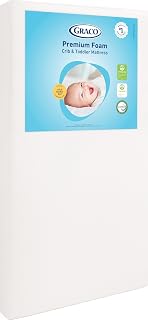
Graco Premium Foam Crib & Toddler Mattress
The strongest value proposition in the category: a genuinely firm foam core, a waterproof and machine-washable cover, and both GREENGUARD Gold and OEKO-TEX Standard 100 certifications — a combination that usually costs considerably more. It’s lightweight enough that sheet changes stop being a two-person job.
Newton Baby Crib Mattress & Toddler Bed
Newton’s food-grade polymer core is roughly 90% air, which makes it the standout for hot sleepers and humid bedrooms, and the entire mattress — cover and core — can go through the wash. Worth noting: breathability supports temperature management, but it is not a substitute for following safe-sleep guidance.
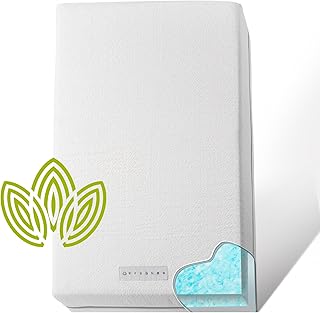
Dourxi Dual-Sided Gel Memory Foam Crib Mattress
At 5.5 inches, this is a substantial build with a properly firm infant face and a gel-infused toddler face that stays cooler than standard memory foam. The removable, washable cover and true dual-stage design make it a sensible one-and-done buy; a slimmer triple-layer version is available if your crib sits low.
Organic Cotton Covered 2-Sided Crib Mattress
For parents prioritizing natural-fiber contact, the organic cotton cover pairs with a CertiPUR-certified foam core and a waterproof, washable outer layer. At 52 x 27.5 x 4 inches it’s noticeably light, which simplifies handling without sacrificing edge support.
Letmxiu Premium Crib & Toddler Mattress
The knitted fabric and fleece surface give this one the nicest hand-feel of the group while the 5-inch core stays firm where it counts. A good pick for a nursery that runs cool, or for toddlers transitioning out of a bassinet.
Frequently Asked Questions
How firm should a crib mattress really be?
Firmer than feels intuitive. The standard check: press down in the center and at the edges — the surface should rebound immediately with no lingering impression. Adult comfort is the wrong benchmark here.
Do I need a separate waterproof protector?
If the mattress already has a waterproof cover, a thin fitted protector is optional but useful — it lets you strip one layer at night instead of laundering the whole cover. Skip anything padded, quilted, or loose.
When should I flip to the toddler side?
Most manufacturers specify around 12 months, though some say 18. Follow the label for your specific mattress rather than a general rule, and don’t flip early to make a fussy sleeper more comfortable.
Can I reuse a mattress from an older sibling?
Often yes, if it’s still firm, flat, uncompressed, free of tears, and has been stored dry. Discard anything with a permanent body impression, a musty smell, or visible mold.
Final Thoughts
For most families, the Graco Premium Foam delivers the best certification-to-cost ratio in the 2026 lineup. If airflow and washability top your list, Newton Baby remains the benchmark, and the Dourxi Dual-Sided is the smartest long-game buy for anyone who wants a single mattress to carry them from newborn nights into toddler beds. Whichever you choose, pair it with a fitted sheet and nothing else — and check your pediatrician’s current safe-sleep guidance.