Key takeaways
- Firmness is a safety spec, not a comfort preference: press the surface with your palm — it should spring back immediately with no lasting impression. Infants lack the neck strength to reposition on a yielding surface, so anything that cradles or contours is wrong for the first year.
- Measure before you buy: a standard crib mattress runs roughly 52″ x 27.25″ and no more than 6″ thick. Once the mattress is seated in the frame, you should not be able to slip more than two fingers between the mattress edge and the crib rail.
- Read the certifications properly: GREENGUARD Gold covers chemical emissions into nursery air, CertiPUR-US addresses what is inside the foam, and OEKO-TEX Standard 100 applies to the textile cover. They test different things, and a mattress carrying two or three is meaningfully better documented than one carrying none.
- Assume the cover will get soiled weekly: a bonded waterproof layer protects the foam core, and a removable, machine-washable outer cover saves you from spot-cleaning a diaper blowout at 3 a.m. Zippered covers that go in the wash on warm are the practical standard now.
- Buy for two stages, then check the weight: dual-sided models pair a firm infant face with a gentler toddler face, stretching one purchase across three or four years. Also note the shipping weight — you will lift this thing one-handed while holding a baby more often than you expect.
What's inside
Of everything you will put in a nursery, the mattress earns the most hours by a wide margin. A newborn logs somewhere between fourteen and seventeen hours of sleep a day, and nearly all of it happens on that one rectangle of foam. Yet it is usually the last item parents research and the first place they try to economize. The shopping experience does not help: listings pile up acronyms — GREENGUARD Gold, CertiPUR-US, OEKO-TEX Standard 100 — beside adjectives like “plush,” “cloud-soft,” and “breathable,” several of which point in directions that infant sleep guidance actively discourages.
This guide sorts that noise out. I evaluated current nursery mattresses the way I assess any sleep surface: firmness under load, dimensional fit to a standard crib, verified emissions and materials testing, how the cover handles the realities of leaks and reflux, and whether the mattress can survive the jump to a toddler bed instead of becoming landfill at eighteen months. Below are the models worth your attention in 2026, plus the criteria that separate a genuinely good crib mattress from a well-photographed one.
As an Amazon Associate we earn from qualifying purchases.



🛒 Best Price Today on Amazon
Prime members get fast, free shipping on everything above, plus member-only deals. New members get a 30-day free trial — cancel anytime.
How to Choose a Nursery Mattress (2026)
- Firmness is a safety spec, not a comfort preference: press the surface with your palm — it should spring back immediately with no lasting impression. Infants lack the neck strength to reposition on a yielding surface, so anything that cradles or contours is wrong for the first year.
- Measure before you buy: a standard crib mattress runs roughly 52″ x 27.25″ and no more than 6″ thick. Once the mattress is seated in the frame, you should not be able to slip more than two fingers between the mattress edge and the crib rail.
- Read the certifications properly: GREENGUARD Gold covers chemical emissions into nursery air, CertiPUR-US addresses what is inside the foam, and OEKO-TEX Standard 100 applies to the textile cover. They test different things, and a mattress carrying two or three is meaningfully better documented than one carrying none.
- Assume the cover will get soiled weekly: a bonded waterproof layer protects the foam core, and a removable, machine-washable outer cover saves you from spot-cleaning a diaper blowout at 3 a.m. Zippered covers that go in the wash on warm are the practical standard now.
- Buy for two stages, then check the weight: dual-sided models pair a firm infant face with a gentler toddler face, stretching one purchase across three or four years. Also note the shipping weight — you will lift this thing one-handed while holding a baby more often than you expect.
The Best Nursery Mattresses (2026) Reviewed
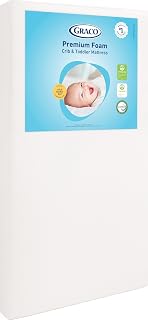
Graco Premium Foam Crib & Toddler Mattress
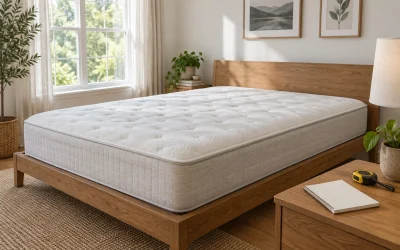
The sensible default, and the one I recommend most often to first-time parents: a genuinely firm foam core, GREENGUARD Gold and OEKO-TEX certification, a waterproof machine-washable cover, and a low enough weight that sheet changes are a one-person job. Nothing here is exotic, which is precisely the point.
Letmxiu Premium Crib & Toddler Mattress
A 5″ knitted-fabric build with a fleece-finished surface and hypoallergenic construction, aimed at parents who want a softer hand-feel on the cover without softening the support beneath it. Confirm the firmer face is upward during the infant stage and it serves well into the toddler years.
Organic Cotton Dual-Sided 2-Stage Crib Mattress
At 52″ x 27.5″ x 5.5″, this one splits its personality intelligently: a firm CertiPUR-US infant side and a cooling-gel memory foam toddler side beneath an organic cotton cover. Leave the memory foam side unused until your child is comfortably past their first birthday and moving freely on their own.
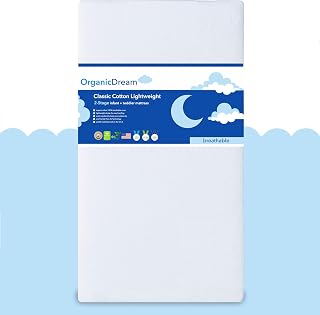
ORGANICDREAM Breathable 2-Stage Crib Mattress
A GREENGUARD-certified, 6″ breathable design with a lightweight core and a removable two-stage cover, built around airflow through the sleep surface. Breathable construction is a reasonable added layer, though it supplements rather than replaces the fundamentals: back sleeping, a bare crib, and a firm flat surface.
Premium Hypoallergenic Crib & Toddler Mattress (52″ x 27.6″)
A straightforward 5″ hypoallergenic option sized precisely for standard cribs and toddler beds, with a firm core and a breathable surface. A strong pick when you want certified basics without paying for organic textiles or gel layers you may never use.
Frequently Asked Questions
How firm should a crib mattress actually feel?
Firmer than any adult would choose. Press down in the center and at the edges; the surface should resist and rebound instantly. If your hand leaves a visible dent, it is too soft for infant sleep.
Should I add a mattress topper or extra padding?
No. Toppers, pillows, quilts, and bumpers all increase suffocation risk. Use a snug fitted sheet and nothing else — a thin waterproof protector under the sheet is the only acceptable addition.
When do I flip to the toddler side?
Most manufacturers specify around twelve months, once your child rolls, sits, and repositions independently. There is no benefit to flipping early, so wait until the milestone rather than the birthday.
Can I use a crib mattress in a pack and play?
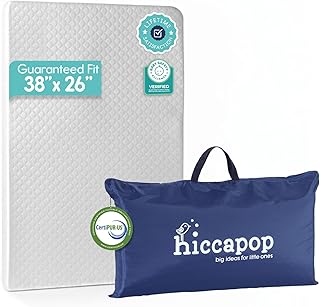
No — playards require their own thin, tight-fitting pad. The Hiccapop Playard Mattress Pad at 1.25″ is the standard travel solution, sized for the frame and packable in its carry bag.
Final Thoughts
For most nurseries, the Graco Premium Foam mattress remains the value benchmark: firm, triple-documented, washable, and light. If you want one purchase to carry you into the toddler bed, the Organic Cotton Dual-Sided 2-Stage model is the smartest long-game buy, while the ORGANICDREAM breathable 6″ is worth the premium for parents who prioritize airflow — paired, always, with a bare crib and back sleeping.