Key takeaways
- How to Choose Die Cast Model Car Display Cases with Mirrored Backs and Lighting: What Actually Matters
- Best Die Cast Model Car Display Cases with Mirrored Backs and Lighting in 2026: Compared and Ranked
- How to Choose Card Display Frames: What Actually Matters
- How to Choose Card Display Frames: What Actually Matters
- How to Choose LED Lit Curio Cabinets for Collectible Figurine Display: What Actually Matters
What's inside
- Material Quality: Acrylic vs. Tempered Glass
- Lighting Temperature and CRI Ratings
- Understanding Mirror Distortion and Reflection Angles
- Dust Sealing and Enclosure Integrity
- Power Sources: USB, Battery, or Hardwired
- Sizing, Scale Compatibility, and Tiered Shelving
- Mounting vs. Tabletop Stability
- Related Guides
- FAQ
- Related Guides
Collecting die cast model cars is a labor of love, requiring careful preservation and striking presentation. When you step up to display cases featuring mirrored backs and integrated lighting, you transform a standard shelf into a professional showroom gallery. However, navigating the market can be tricky, especially with new illumination technologies and modular configurations entering the scene for 2026.
- Material Quality: Acrylic vs. Tempered Glass
- Lighting Temperature and CRI Ratings
- Understanding Mirror Distortion and Reflection Angles
- Dust Sealing and Enclosure Integrity
- Power Sources: USB, Battery, or Hardwired
- Sizing, Scale Compatibility, and Tiered Shelving
- Mounting vs. Tabletop Stability
- Related Guides
- FAQ
- Related Guides
Choosing the right enclosure requires looking past flashy marketing to evaluate structural integrity, lighting distribution, and material safety. A poor choice can lead to warped panels, washed-out paint jobs from harsh heat, or dust infiltration that ruins fine detailing. This decision guide breaks down the critical specifications and practical considerations you need to weigh before investing in a home for your prized collection.
As an Amazon Associate we earn from qualifying purchases at no extra cost to you. Product prices and availability are accurate as of the date shown and are subject to change.
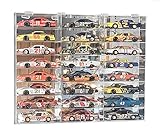
Material Quality: Acrylic vs. Tempered Glass
When selecting a display case, the primary structural material dictates both longevity and visual appeal. Acrylic panels are lightweight, highly impact-resistant, and less prone to catastrophic shattering if bumped. However, standard acrylic scratches easily and requires specialized cleaning cloths to maintain optical clarity. Tempered glass, on the other hand, delivers superior scratch resistance and a heavy, premium aesthetic that elevates high-end collections. If you choose glass, verify that the panels feature polished edges and adequate thickness to support multi-tiered shelving without sagging.
Lighting Temperature and CRI Ratings
The type of illumination integrated into your display fundamentally alters how your model paintwork appears. Look for LED lighting systems that utilize a neutral or warm color temperature to mimic natural showroom light without casting an unnatural blue hue. Furthermore, pay attention to the Color Rendering Index (CRI) rating; a CRI of 90 or higher ensures that metallic flakes, complex liveries, and custom decals render accurately. Always confirm that the lighting strips generate minimal heat to prevent long-term degradation of plastic components and decals.
Understanding Mirror Distortion and Reflection Angles
Mirrored backs serve a vital purpose by exposing the rear profiles, exhaust setups, and intricate engine bays of your models without requiring you to handle them constantly. Unfortunately, low-quality reflective backing can introduce warping or a distracting double-image effect. True glass mirrors or vacuum-metalized acrylic sheets offer crisp, distortion-free reflections. Positioning matters just as much as material quality; ensure the internal lighting is angled downward or diffused so that the mirrors amplify brightness rather than creating blinding glare for the viewer.
Dust Sealing and Enclosure Integrity
Microscopic dust particles are the silent enemy of miniature car collections, settling into panel gaps, wheel spokes, and windshield wipers. A truly effective display case must offer a tight seal against airborne debris. Look for construction features such as tongue-and-groove door fits, silicone rubber gaskets, or magnetic latch seals that secure the front panel tightly against the frame. Good enclosure integrity drastically reduces the frequency of routine maintenance, keeping your models pristine for months at a time.
Power Sources: USB, Battery, or Hardwired
Integrated lighting demands a power source, and exposed cords can quickly ruin an otherwise clean display aesthetic. USB-powered LED setups offer excellent versatility, allowing you to run lights off portable power banks or hidden wall adapters. Battery-operated systems utilizing rechargeable lithium packs eliminate external wires entirely, making wall-mounted installations much cleaner. If you choose a battery-powered unit, look for models featuring an auto-shutoff timer to preserve battery capacity during extended periods of inactivity.
Sizing, Scale Compatibility, and Tiered Shelving
Before purchasing, measure your largest models and account for scale clearances. A standard 1:18 scale supercar demands significantly more depth and headroom than a collection of 1:43 or 1:64 scale miniatures. Adjustable or removable tiered risers provide immense flexibility, allowing you to elevate rear rows so that every single car remains fully visible. Always check interior usable dimensions rather than external housing measurements to avoid disappointment.
Mounting vs. Tabletop Stability
Deciding between a wall-mounted enclosure and a tabletop display tower depends heavily on your available floor space and household environment. Wall-mounted cases save valuable surface area but require robust anchors capable of supporting the combined weight of glass, wood or acrylic framing, and heavy metal models. Tabletop cases must feature wide, stable footprints with non-slip silicone feet to prevent shifting caused by foot traffic, vibrations, or minor impacts.
Related Guides
To explore more ways to showcase your valuable possessions, check out our comprehensive evaluations. If you want to dive deeper into specialized enclosures, read through our detailed breakdown of top-rated model car display cases. Additionally, if you are looking to elevate your footwear storage with similar illumination features, browse our expert recommendations for LED-illuminated luxury shoe cabinets.
FAQ
Do mirrored backs affect the lighting inside the case?
Yes, mirrored backs actively bounce light forward, amplifying overall brightness and illuminating the undercarriage and rear details of your models. However, they can create harsh glare if the LED strips are improperly positioned. Look for cases with diffused light channels to soften direct reflections.
Are LED lights safe for long-term model car display?
Modern LED lighting generates minimal heat and is generally safe for painted die cast models, provided you avoid ultra-cheap bulbs that lack proper thermal regulation. Always check that the LEDs emit zero UV radiation to prevent paint fading and decal yellowing over extended exhibition periods.
How do I prevent dust from building up inside an enclosed display?
The key to dust prevention lies in tight mechanical tolerances and edge seals. Cases featuring magnetic door closures, rubber gaskets, or tongue-and-groove panel fits drastically reduce microscopic particle infiltration. Regular light cleaning with a soft microfiber cloth keeps the exterior and interior glass spotless.
What is the best scale size to design around when buying a universal case?
The 1:18 scale is widely considered the gold standard for detailed model collecting and requires the largest shelf depth and vertical clearance. If your collection consists primarily of smaller miniatures, look for multi-tiered step displays that let you pack more vehicles into a compact footprint without overcrowding.