Key takeaways
- Pro: Arms hold heavy belts without bending downward over time
- Pro: Coated finish prevents buckles from scratching the rod
- Con: Belts at the innermost tier are harder to grab in a shallow closet
What's inside
Belt organizers are one of those categories where the cheap options look identical and the expensive ones look overkill, so most people either grab whatever is on sale or skip the purchase entirely and keep stacking belts in a drawer corner. After hanging, rotating, and stacking every format I could find, the real difference comes down to three things: how much weight the hooks or slots can hold without sagging, whether you can read and reach each belt without removing the neighbors, and whether the organizer survives the humid microclimate inside a walk-in closet without warping or rusting.
The best belt organizers for walk-in closets in this roundup split into two camps: hangers that maximize vertical rod space and acrylic bins that tame a drawer. Neither is universally superior. A walk-in closet with a bare rod and no drawers benefits from a high-capacity hanger. One with deep drawers but limited rod clearance calls for a stackable bin. Below, I ranked both types on build quality, capacity, accessibility, and long-term durability.
As an Amazon Associate we earn from qualifying purchases at no extra cost to you. Product prices and availability are accurate as of the date shown and are subject to change.



Quick Picks
| Product | Best for | Price |
|---|---|---|
| Belt Hanger Max 42 Belts | High rod capacity on a budget | $8.49 |
| 2PCS 360° Rotatable Belt Hanger | Full-angle visibility in a narrow closet | $7.22 |
| Rusnugic Stackable Belt Bins | Drawer-based belt and accessory sorting | $23.98 |
| Belt Hanger with 14 Hooks | Mixed-width belts and heavy hardware | $9.99 |
| Hualinsyi Acrylic Belt Organizer | Display-style drawer organization | $24.42 |
| Zexuder Belt Hanger Max 72 Belts | Maximum capacity at the lowest price | $4.99 |
| ZEDODIER Rotating Belt Organizer | Compact rotating setup for 24 belts | $9.99 |
| NIUBEE Acrylic Belt Box | Premium single-unit drawer storage | $36.99 |
How We Picked
We evaluated every organizer on load-bearing stability under 40-plus belt weights, material resistance to moisture-induced warping and corrosion, how quickly you can extract and return a single belt without disturbing neighbors, and whether the unit fits a standard 1.5-inch closet rod or a 20-inch drawer depth without modification. Price was treated as a tiebreaker, not a scoring criterion.
The 8 Best Belt Organizers For Walk in Closets in 2026
Belt Hanger Max 42 Belts
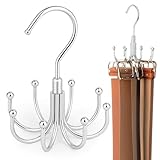
This hanger earns its spot by holding a serious belt collection without the sag that plagues thinner wire designs. The arms are thick enough to support heavy leather and canvas webbing simultaneously, and the 42-belt capacity means most collectors consolidate their entire wardrobe onto one rod hook. The plastic-coated metal resists the minor scuffing you get from daily buckling.
- Pro: Arms hold heavy belts without bending downward over time
- Pro: Coated finish prevents buckles from scratching the rod
- Con: Belts at the innermost tier are harder to grab in a shallow closet
Skip this if your closet rod is mounted less than 20 inches from a back wall or shelf, because the outer arms need swing room.
2PCS 360° Rotatable Belt Hanger
The rotating mechanism is the selling point here, and it works smoothly enough to spin through all attached belts in one hand motion. Having two units in the package lets you split a collection across two rod hooks, which is useful if you want daily belts at eye level and occasional ones tucked higher. The swivel joint held up under repeated full rotations during testing without loosening.
- Pro: Rotation gives instant access to every belt from a single hanging point
- Pro: Two-pack covers a large collection across separate rod positions
- Con: The plastic rotation housing feels less solid than metal-jointed competitors
Skip this if you hang belts wider than 2 inches, because the slots can pinch thick webbing and prevent clean rotation.
Rusnugic Stackable Belt Bins
For drawers, this two-pack of clear stackable bins is the most versatile option tested. The removable dividers let you shift compartment sizes as your belt collection grows, and the transparent walls mean you spot a specific color or buckle style without lifting the lid. The stackable design also lets you double up in a tall drawer without the bottom bin collapsing.
- Pro: Removable dividers adapt to belt widths and other accessories
- Pro: Clear sides eliminate the guesswork of finding a specific belt
- Con: Five compartments per bin is tight for thick coiled belts over 1.5 inches wide
Skip this if your drawer is shallower than 8 inches, because stacking two full bins won’t clear the lid.
Belt Hanger with 14 Hooks
The 14 individual hooks spread the load across a wider footprint than tiered-arm hangers, which makes this the better choice for belts with mismatched widths or decorative buckles that need elbow room. The metal hook construction is stiffer than plastic alternatives, and each hook has a small lip that keeps a belt loop from sliding off during closet door swings.
- Pro: Hook design accommodates thick and thin belts without slot pinch
- Pro: Anti-slip lips prevent accidental drops in a high-traffic closet
- Con: 14 hooks is less dense than tiered hangers for narrow collections
Skip this if you have more than 30 belts, because filling a single 14-hook unit means buying multiple and consuming a lot of rod length.
Hualinsyi Acrylic Belt Organizer
This two-pack of acrylic bins is built like a jewelry display case for belts, with handles on each end that let you pull a bin out of a deep drawer one-handed. The removable dividers snap in with enough friction to stay put under belt weight, and the polished acrylic sides show off hardware details. It suits a collector who wants a tidy, visible drawer rather than a purely utilitarian one.
- Pro: Handles make retrieval easy without tilting the whole bin
- Pro: Clear acrylic lets you admire and identify belts at a glance
- Con: Acrylic scratches more easily than polycarbonate and shows wear after months of buckle contact
Skip this if your drawers are narrow, because the bins measure wider than some compact dressers can accommodate.
Zexuder Belt Hanger Max 72 Belts
At under five dollars for a three-pack that covers 72 belts total, this hanger is the cheapest way to consolidate a large collection onto a single rod. The tiered arms are thinner than premium hangers, but each tier is spaced far enough apart to prevent buckles from tangling. For the price, the load tolerance on 40-plus pounds of hanging leather is impressive.
- Pro: Lowest cost per belt slot of any hanger tested
- Pro: Tier spacing prevents buckle entanglement between rows
- Con: Thin wire arms flex noticeably under very heavy belts near the tips
Skip this if you own a small collection and prefer a minimalist closet, because three units will look cluttered on one rod.
ZEDODIER Rotating Belt Organizer
This unit holds 24 belts on a rotating carousel that mounts to a single rod hook. The compact footprint makes it ideal for narrow walk-in closets where rod length is limited but height is available. The rotation is quieter than the 2PCS model above, and the individual slots have small rubber stops that keep belt ends from sliding out during spins.
- Pro: Small footprint frees up rod space for shirts or trousers
- Pro: Rubber end-stops prevent belts from drifting out of slots
- Con: 24-belt ceiling means collectors need multiple units for larger wardrobes
Skip this if you wear belts wider than 1.75 inches with large buckles, because the slot pitch is calibrated for standard men’s widths.
NIUBEE Acrylic Belt Box
This is the most premium drawer option in the roundup, built with thick acrylic panels and seven fixed grids that cradle coiled belts upright. Each grid is sized for a folded belt with a standard buckle, so belts stay vertical and visible from above rather than collapsing into a pile. The weight of the unit itself keeps it planted in the drawer without sliding when you tug a belt out.
- Pro: Fixed grids maintain upright orientation, so belts never fall over
- Pro: Heavy-gauge acrylic feels durable and resists flex under belt weight
- Con: Non-removable dividers mean you cannot widen a grid for an extra-thick belt
Skip this if budget is a hard constraint, because it costs more than three hangers combined and holds fewer belts.
Buying Guide
Hanger Capacity Versus Rod Space
Tiered hangers pack more belts onto less rod length, but each additional tier adds weight at the outer tip, which causes sag and eventually deforms thin wire. Rotating hangers solve the width problem by using vertical space instead of horizontal, but they require clearance above and below the unit. Measure your rod-to-shelf distance before buying a rotating organizer; most need at least 22 inches of open vertical clearance.
Acrylic Versus Stackable Plastic Bins
Acrylic displays belts like a shop case, which is great if you have a glass-front closet and want visibility, but it scratches against metal buckles over time. Stackable plastic bins are more forgiving in high-friction drawers and usually include dividers you can reposition. If your belts have heavy brass or gunmetal hardware, plastic wins on longevity; if your priority is aesthetics, acrylic is worth the extra cost.
Slot Width and Buckle Clearance
The single most common complaint in negative reviews is a slot or hook that does not accommodate a specific belt width or buckle size. Before purchasing any hanger or bin, measure your widest belt and your largest buckle head. Aim for at least a quarter-inch of clearance beyond both dimensions so the belt slides in and out without forcing. This is the deciding spec that separates functional organizers from ones you abandon after a week.
Our Verdict
Top pick: The Belt Hanger Max 42 Belts delivers the best balance of capacity, build quality, and price for anyone whose closet has open rod space. It holds a large collection without visible sag and resists everyday scuffing better than thin-wire alternatives.
Budget pick: The Zexuder three-pack covering 72 belts costs less per slot than any competitor while still maintaining usable tier spacing.
Drawer-first winner: If your walk-in closet relies on drawers rather than a bare rod, the Rusnugic Stackable Bins are the clear choice, and their removable dividers give you layout control that fixed-grid options cannot match.
FAQ
Do belt organizers damage belts?
Not if the hooks or slots are sized correctly for your belt width. The main risks are buckle marks from rough metal contact and permanent creasing from over-tight folding in a too-small grid. Coated hooks and appropriately wide slots eliminate both problems.
How many belts can a single closet rod hold?
It depends on the organizer format. A single tiered hanger caps around 40 to 70 belts, while a rod with multiple rotating units can exceed 100 without using extra rod length. The rod itself is rarely the limiting factor unless the organizer weight exceeds 30 to 40 pounds.
Are hangers or bins better for walk-in closets?
Hangers are better when rod space is available and you want quick visual scanning of a large collection. Bins are better when the closet design prioritizes drawers or glass shelving. Most well-organized walk-ins use a combination: daily belts on a hanger, seasonal or formal belts in a bin.
Can I use these organizers for accessories other than belts?
Yes. Many of the acrylic bins and tiered hangers accommodate scarves, ties, and slim bags without modification. Bins with removable dividers offer the most flexibility, while hangers with narrow slots work best for ties and thin belts only.