Key takeaways
- Pros: Extremely affordable; app-based editing is fast for batch jobs like a spice rack.
- Con: Build quality feels plasticky, and the print head occasionally smudges on curved surfaces.
What's inside
Labels seem like the simplest thing in the world until you are standing in a pantry at 10 p.m. trying to figure out which jar of beans you bought in bulk three months ago, or when a toddler’s water bottle keeps ending up in the wrong cubby at daycare. The best label makers for organizing solve a very specific frustration: they make it fast to produce durable, legible labels that actually stick around after a dishwasher cycle or a summer in a school bag.
What separates a good label maker from a bad one in practice is less about print resolution and more about workflow friction. If it takes you four steps and a fiddly keyboard to make a single label, you will stop using it by week two. Bluetooth connectivity, intuitive editing apps, and tape sizes that fit your real-world surfaces matter far more than the number of fonts on offer. We compared eight models across pantry shelves, file cabinets, kids’ gear, and garage bins to see which ones actually reduce the effort of staying organized.
As an Amazon Associate we earn from qualifying purchases at no extra cost to you. Product prices and availability are accurate as of the date shown and are subject to change.



Quick Picks
| Product | Best for | Price |
|---|---|---|
| Nelko P21 | Lowest-cost entry into Bluetooth labeling | $16.99 |
| SUPVAN E11 | Keyboard plus Bluetooth flexibility | $28.48 |
| DYMO LetraTag LT-100H | Simple handheld with no app dependency | $28.81 |
| TYPONOS PM240 | Multi-tape kits for varied label sizes | $33.99 |
| Brother PT-N20 | Durable color label tape on a budget | $29.99 |
| Brother PTD210 | Power users who want a bundled tape set | $69.99 |
| SUPVAN E10 | Compact Bluetooth with a fun color | $19.99 |
| NIIMBOT B1 | Large 2-inch labels for bins and shelves | $27.99 |
How We Picked
We evaluated each label maker on four criteria: connection friction (how many steps from idea to printed label), tape compatibility and availability beyond the starter set, physical size relative to where you will actually store the device, and real-world durability of prints after exposure to water, sunlight, and handling. A label maker that prints beautifully but requires a proprietary cartridge ecosystem you cannot refill locally is a liability. We weighted Bluetooth models slightly higher because phone-based editing removes the biggest barrier to consistent labeling habits.
The 8 Best Label Makers For Organizing in 2026
Nelko P21
This is the label maker for anyone who has been meaning to start organizing but keeps getting stuck on the setup. Bluetooth pairing worked on the first try, and the companion app lets you type, resize, and add icons without touching a physical keyboard. At sixteen dollars it is the cheapest Bluetooth option here, which makes it an easy purchase for a household testing whether labeling is a habit worth building.
- Pros: Extremely affordable; app-based editing is fast for batch jobs like a spice rack.
- Con: Build quality feels plasticky, and the print head occasionally smudges on curved surfaces.
Skip it if you need labels on rough-textured surfaces like painted cinder block or heavily textured plastic bins, where the adhesive struggles to grip.
SUPVAN E11
The E11 is the rare label maker that works whether your phone is dead or you are in a metal-clad garage with no signal. The built-in keyboard handles quick one-off labels, while Bluetooth opens up richer template options from the app. It ships with four tape widths, which covers everything from file folder tabs to medium shelf tags.
- Pros: Dual input methods; generous starter tape selection means no immediate resupply.
- Con: The keyboard layout is compact and can cause typos on longer text strings.
Skip it if you want the absolute smallest footprint; the E11 is wider than most handhelds because of the physical keys.
DYMO LetraTag LT-100H
DYMO has been making handheld labelers since before Bluetooth existed, and this pink model is proof that simplicity still sells. The thirteen-character LCD screen is tiny, but the ABC keyboard is tactile and familiar enough that you do not need a manual. For parents labeling lunchboxes or teachers tagging classroom bins, the no-app-required workflow is a genuine advantage.
- Pros: Reliable brand ecosystem; works anywhere with no connectivity needed.
- Con: The small screen makes proofreading longer labels tedious.
Skip it if your labels exceed the display width regularly or if you want to print barcodes, QR codes, or clip-art style graphics.
TYPONOS PM240
This one is aimed at people who organize multiple rooms and need different tape widths without juggling three separate devices. The PM240 comes with three tapes in a single set, and the black body has a slightly more premium finish than most budget labelers. Bluetooth connectivity lets you pull up saved templates for recurring tasks like weekly meal-prep container labels.
- Pros: Three included tapes reduce resupply friction; solid Bluetooth range from across a room.
- Con: The app interface is functional but lacks the polish of more established competitors.
Skip it if you are a purist who wants one tape width and maximum portability; the three-tape kit adds bulk you may not use.
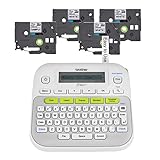
Brother PT-N20
Brother’s P-Touch line has a loyal following for good reason, and the PT-N20 is the entry point that still uses the proven Btag color tape system. The half-inch width handles most household labeling needs, and the color option adds visual hierarchy to bins where you want a quick at-a-glance distinction between categories.
- Pros: Trusted tape format available nearly everywhere; portable and lightweight.
- Con: No Bluetooth; editing on the small onboard screen is slow for multi-line labels.
Skip it if your primary use case is large-format labeling on bins or shelves, where a 12mm tape looks disproportionately small.
Brother PTD210
The PTD210 is what you buy when you want to stop thinking about label makers entirely. It includes four tape widths in the bundle, covers 115 built-in fonts and dozens of symbol sets, and the editing screen is large enough that you can actually see what you are doing before printing. It is the most capable standalone unit in this group.
- Pros: Four-tape bundle offers immediate versatility; rich symbol and font library.
- Con: At sixty-nine dollars it costs three to four times what budget rivals charge.
Skip it if your needs are straightforward and you already have a phone you are comfortable editing labels on; the premium buys features you may never use.
SUPVAN E10
The green bundle version of the E10 is essentially SUPVAN’s answer to people who want a compact, colorful device that lives in a junk drawer and gets pulled out twice a week. It prints at a narrower width than its sibling the E11, but the three included tapes and Bluetooth app editing make it a complete starter kit at under twenty dollars.
- Pros: Tiny form factor fits anywhere; low price with Bluetooth included.
- Con: Limited tape width range constrains you to smaller labels.
Skip it if you need labels on large surfaces like storage totes or garage shelving, where visibility from a distance matters.
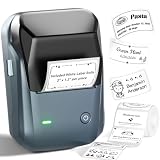
NIIMBOT B1
The B1 is the one here that handles two-inch wide labels, which immediately makes it the best pick for anyone organizing a garage, a home office with file boxes, or a kitchen with clear storage bins on open shelves. Bluetooth setup is quick, and the app templates for bin labels with multiple fields (category, contents, date) are genuinely useful for systems where labels need to carry more than a single word.
- Pros: Large 2-inch print width; app templates handle multi-field labels elegantly.
- Con: The wider footprint means it does not pocket-carry like the smaller handhelds.
Skip it if your labels are primarily narrow (file folder tabs, small jar lids) since the device and consumables are oversized for those tasks.
Buying Guide
Tape Width Is the First Decision
Before comparing brands or prices, decide what surfaces you are labeling. Narrow tapes (6mm to 12mm) work for file folders, cables, small containers, and name tags. Mid-range tapes (12mm to 24mm) cover shelf edges, storage bins, and kitchen jars. Wide tapes (up to 50mm) are needed for garage totes, moving boxes, and any label that must be legible from a few feet away. The best label makers for organizing are the ones whose included tape widths match your actual surfaces, because a label you cannot read from across the room defeats the purpose.
Bluetooth Versus Onboard Editing
Bluetooth-connected label makers let you edit on your phone screen, use templates, and batch-print multiple labels in one session. This matters enormously if you are labeling a pantry where you need twenty different spice tags. Onboard keyboard editing is simpler but forces you to type each label individually with tiny buttons and a cramped display. If you plan to label more than a handful of items at a time, Bluetooth models save significant time.
Consumable Availability and Cost Per Label
The device is a one-time purchase; tape is the recurring cost. Before committing, check whether replacement tapes are available at a nearby store or require ordering from a single source. Proprietary cartridge systems can cost several times more per roll than open-format tapes. Factor this into your total cost over a year. If you label frequently, a device with a slightly higher upfront price but cheaper widely-available tape often costs less long-term.
Our Verdict
The top pick is the NIIMBOT B1. Its 2-inch print width covers the hardest-to-label surfaces that most budget devices ignore, and the app templates make multi-field bin labels trivial. The SUPVAN E10 is the budget pick at under twenty dollars, delivering Bluetooth connectivity and three included tapes in a size that fits any drawer. If you work in a setting with zero phone access or need something a child can operate independently, the DYMO LetraTag LT-100H wins because its onboard keyboard requires no pairing, no app, and no battery anxiety beyond standard AA cells.
FAQ
Do label maker tapes work on any surface?
Most work on smooth plastic, glass, metal, and painted wood. Rough, textured, or porous surfaces like untreated cinder block, fabric, or heavily pebbled plastic may require stronger adhesive tapes or a laminate coating over the printed label for durability.
How long do printed labels last in a dishwasher?
Thermal and direct-print labels on smooth surfaces typically survive fifty-plus dishwasher cycles if you apply them to the bottom or a flat side where water jets do not hit them directly. Labels on curved or high-wear areas may fade or peel after several weeks.
Can I use third-party tape cartridges in branded label makers?
Usually not. Most established brands lock their devices to proprietary cartridges, and third-party refills are unreliable or unsupported. Bluetooth thermal printers tend to use simpler generic paper or vinyl rolls, which keeps long-term costs lower.
Is a Bluetooth label maker overkill for a single room?
If you only need five or six labels, an onboard keyboard model is faster because you skip the pairing step entirely. Bluetooth becomes worthwhile the moment you are printing more than a handful of labels at once or want to reuse saved templates across sessions.