Key takeaways
- If you wake up at 3 a.m. with the sheet stuck to your back, the fabric on your bed is doing half the damage. Cotton percale and microfiber both trap heat once they get damp, which is why sweaty sleepers…
What's inside
If you wake up at 3 a.m. with the sheet stuck to your back, the fabric on your bed is doing half the damage. Cotton percale and microfiber both trap heat once they get damp, which is why sweaty sleepers end up choosing between two very different fibers: flax linen, which pulls moisture away and lets air move through an open weave, and rayon derived from bamboo, which feels cool to the touch and drapes like a soft T-shirt. Both can work. The real decision is whether you want a sheet that stays dry and airy but feels rustic, or one that feels silky and cool but holds more moisture against your skin as the night goes on.
Quick Verdict
For true night sweats, where you soak the sheet rather than just feel warm, linen is the better fiber. It absorbs roughly a fifth of its weight in moisture before it feels wet, dries faster than any cellulose alternative, and the loose weave keeps air moving under the covers. Bamboo rayon wins if your problem is heat rather than dampness: it feels several degrees cooler on first contact, it is smoother against the skin, and a full queen set costs less than half of what a comparable linen set does. If your budget tops out around $60, bamboo is the practical pick. If you can spend $150 or more and want sheets that improve over a decade, go linen.
As an Amazon Associate we earn from qualifying purchases at no extra cost to you. Product prices and availability are accurate as of the date shown and are subject to change.
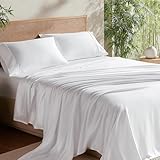
Side by Side
| Factor | Linen (flax) | Bamboo rayon / viscose |
|---|---|---|
| Comfort on hot nights | Airy and dry; slightly textured hand, softens with washing | Silky, cool on contact; can feel clammy once saturated |
| Moisture handling | Absorbs and releases quickly; dries in half the time of cotton | Absorbs well but holds moisture longer; slower to dry |
| Durability | Typically 10-20 years with care; fibers strengthen when wet | Typically 2-4 years; fibers weaken when wet, prone to pilling |
| Price range (queen set) | $120-$300 for 100% flax; $60-$120 for cotton-linen blends | $35-$90 for most sets; $100+ for premium sateen weaves |
| Maintenance | Cold or warm wash, low tumble or line dry; wrinkles are part of the look | Cold wash, gentle cycle, low heat only; wrinkles less, shrinks if overheated |
| Weight (queen flat sheet) | Roughly 165-185 gsm; a queen set weighs 5-6 lb | Roughly 120-150 gsm; a queen set weighs 3-4 lb |
| Space needed | Bulkier; a folded set takes about a 12 x 14 x 5 inch shelf spot | Compact; folds to roughly 10 x 12 x 3 inches |
| Look | Relaxed, slubbed, lived-in; reads as a design choice | Smooth, matte-to-slight sheen, hotel-crisp when ironed |
| Resale / hand-down value | High; quality linen sells secondhand and gets passed down | Negligible; typically replaced rather than resold |
| Best for | Heavy sweaters, long-term homes, people who like texture | Warm sleepers, renters, sensitive skin, tight budgets |
Where Linen Wins
Linen’s advantage is structural. Flax fibers are hollow and long, so a linen sheet is built from a coarser, more open weave than any rayon fabric. Air moves through it even when you are lying directly on it, which means sweat evaporates instead of pooling. The same property that makes a cotton-linen shirt like the COOFANDY short-sleeve work shirt at $29.99 wearable in July humidity applies to a flat sheet at 2 a.m.: moisture is pulled away from skin and released into the room.
Durability is the second win. Flax gets stronger when wet, which is exactly the condition night sweats create. A well-made linen set survives 300 or more wash cycles; most bamboo rayon sets show thinning or pilling well before 150. Linen also does not need fabric softener, does not attract static, and resists mildew, so a sheet that gets damp several nights a week is far less likely to develop an odor.
Finally, linen ages gracefully. It softens with every wash while keeping its shape, so the set you buy in 2026 will feel better in year five than it did on day one. Bamboo rayon does the opposite: it feels best new and slowly loses its smoothness.
Where Bamboo Bed Sheets for Summer Night Sweats Wins
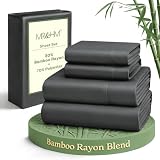
Bamboo rayon wins on immediate comfort and price. The fiber is regenerated cellulose extruded into a very fine, smooth filament, which is why a set like the MR&HM 4-piece queen set at $38.99 or the Bedsure PureWoven 100% rayon-from-bamboo queen set at $55.99 feels cool and slippery the moment you slide in. Many hot sleepers describe that first-contact chill as the whole point, and linen simply cannot match it.
It also wins on skin friction. Linen’s slubbed texture can irritate people with eczema or very sensitive skin, especially when it is new and stiff. Bamboo rayon glides, which matters if you toss and turn or sleep on your side with a bare shoulder against the sheet.
Weight is another factor. A bamboo queen set at 3-4 lb feels noticeably lighter draped over you than a 5-6 lb linen set, and it dries faster on the line than its absorbency numbers suggest simply because there is less fabric mass. Bamboo also wrinkles far less, so it looks made-up without ironing. And at roughly a third of the cost, you can own two bamboo sets and rotate them nightly, which is often the best real-world fix for sweaty sleepers regardless of fiber.
Cost Over 5 Years
Sticker price tells only part of the story once you factor in replacement cycles. Assume a queen set, washed weekly, and one sweaty sleeper.
| Cost item | Linen | Bamboo rayon |
|---|---|---|
| Initial set | $150-$250 | $40-$60 |
| Replacements in 5 years | 0 (typically lasts 10+ years) | 1-2 sets ($40-$120) |
| Extra pillowcases | $30-$50 per pair | $15-$25 per pair |
| Energy (cold wash, low or line dry) | Slightly lower; dries faster | Slightly higher if machine dried on low |
| Approximate 5-year total | $180-$300 | $95-$205 |
Bamboo remains cheaper over five years, but the gap narrows from roughly 4x to about 1.5x once replacements are counted. Stretch the horizon to ten years and linen usually costs less in total, because you are still on the original set while the bamboo buyer is on set number three or four. Blended options split the difference: a cotton-linen sheet typically runs $60-$120 and lasts 5-8 years, though it breathes a bit less than pure flax.
Which One for Your Home
Small Apartment
Choose bamboo. Storage is the constraint here, and a bamboo set folds to about half the volume of linen, which matters when your linen closet is one shelf. Bamboo also dries faster on an indoor rack, so you can wash and remake the same bed in an afternoon without a second set. If your apartment lacks air conditioning, buy two sets and alternate.
Family With Kids or Pets
Linen, provided you can accept a higher upfront cost. Pet claws snag fine rayon filaments and create pulls that spread; linen’s coarser yarn resists snagging and hides small imperfections in its texture. Kids’ spills and repeated hot washes also shorten bamboo’s life dramatically, while linen tolerates warm water and frequent laundering. If budget forces bamboo, choose a heavier weave (over 140 gsm) and wash in a mesh bag.
Rental
Bamboo. In a rental you may move in 12-24 months, and $40-$60 sheets are easy to leave behind, donate, or replace when you change bed size. You also have less control over water hardness and laundry equipment, which punishes linen if you are stuck with hot-only shared machines. A lightweight bamboo set travels easily and matches most rental bedroom colors.
Long-Term Home
Linen. When you know the bed size will not change for a decade, the math flips in linen’s favor and the sheets become part of the room’s character. Buy a full set plus one extra fitted sheet, since the fitted sheet wears fastest. Pair it with a lightweight linen duvet cover and you have a summer system that manages sweat better than any single cooling gadget, and a loose pair of cotton-linen pajama pants like the PIDOGYM pants at $16.99 extends the same breathability to what you wear.
FAQ
Is bamboo actually cooler than linen?
Bamboo rayon feels cooler on first contact because its smooth surface conducts heat away from skin quickly. Over a full night, linen keeps you drier because it releases moisture faster and allows more airflow. If you feel hot but stay dry, bamboo will satisfy you. If you wake up damp, linen wins.
What thread count or weight should I look for?
Ignore thread count for both fibers; it is meaningful for cotton, not for linen or rayon. For linen, look for 160-190 gsm and 100% flax. For bamboo rayon, 120-150 gsm is standard; heavier fabric lasts longer and feels less clingy when damp. A twill or sateen weave in bamboo drapes better than a plain weave.
How do I keep either fabric from smelling after sweaty nights?
Wash weekly in cool water with a half dose of detergent and no softener. Add half a cup of white vinegar to the rinse once a month to strip residue. Dry completely before folding; linen can line dry in a couple of hours, while bamboo should tumble on low or hang in a well-ventilated space until fully dry.
Does bamboo rayon shrink?
Yes, typically 3-5% on the first wash if exposed to heat. Wash cold and dry on low or air dry, and buy a fitted sheet with a pocket at least 2 inches deeper than your mattress to leave room for shrinkage. Linen shrinks about the same amount but usually only once, and most quality linen is pre-washed at the factory.