Key takeaways
- If your back hurts in the morning and a new mattress is not in the budget, a topper is the obvious move, and the choice quickly narrows to two materials. Memory foam is soft, slow to respond, and molds precisely…
What's inside
If your back hurts in the morning and a new mattress is not in the budget, a topper is the obvious move, and the choice quickly narrows to two materials. Memory foam is soft, slow to respond, and molds precisely to the curve of your lower back; it costs $40 to $150 for a queen and is everywhere. Latex is springy, quick to respond, and holds your spine up rather than letting it settle; it costs $180 to $350 for a queen and is harder to find in stores. The real decision is not which one is “better for back pain” in the abstract, because both can help and both can make things worse. It is whether your back needs cushioning or support. A back that aches because the mattress is too hard and your hips and shoulders cannot sink wants memory foam. A back that aches because the mattress is too soft and your hips sink too far wants latex. Get that diagnosis right and either material will feel like a relief; get it wrong and you will have spent money to sleep worse.
Quick Verdict
Choose latex if your mattress is soft or slightly saggy, if you weigh over about 200 pounds, if you sleep hot, or if you change positions often at night. Choose memory foam if your mattress is firm, if you are a side sleeper under about 200 pounds with sore hips or shoulders, if you want the deepest pressure relief for the lowest price, or if you are unsure and want an inexpensive way to test whether a softer surface helps. Over a five-year window, latex costs about the same or less because it does not need replacing, so the price gap is smaller than it looks.
As an Amazon Associate we earn from qualifying purchases at no extra cost to you. Product prices and availability are accurate as of the date shown and are subject to change.

Side by Side
| Factor | Latex Topper | Memory Foam Topper |
|---|---|---|
| Feel | Buoyant, responsive; you sleep on it | Slow-sinking, contouring; you sleep in it |
| Support for back pain | Lifts the hips and keeps the spine level; best for soft or sagging mattresses | Cushions pressure points; best for firm mattresses that leave hips and shoulders sore |
| Durability | 8 to 15 years for natural latex | 2 to 4 years before noticeable softening |
| Price range (queen) | $180 to $350; 2 to 3 inches | $40 to $150; 2 to 5 inches, with 3-inch models often $60 to $120 |
| Temperature | Cool; open cells and ventilation holes | Warm; gel or copper infusions help only for the first hour or two |
| Weight (queen, 3 inch) | 38 to 45 pounds | 20 to 30 pounds |
| Maintenance | Needs a cover to block UV; spot clean only; rotate twice a year | Cover washable; foam spot clean only; rotate every 3 months to slow body impressions |
| Space and height | Adds 2 to 3 inches; deep-pocket sheets usually needed | Adds 2 to 5 inches; a 4- to 5-inch topper may push a 12-inch mattress past most sheet depths |
| Look | Ships bare or with a cotton cover; cream color | Usually a fitted or zippered cover included; white or gray |
| Resale | Some; durable enough to sell or hand down | Essentially none |
| Best for | Back and stomach sleepers, heavier sleepers, hot sleepers, soft mattresses | Side sleepers, lighter sleepers, firm mattresses, tight budgets |
Where Latex Wins
Latex wins whenever the problem is a lack of support. Natural latex has a high resilience, meaning it pushes back in proportion to how hard you press, so a heavier hip area gets more lift than the lighter shoulder area and the spine ends up closer to level. That is exactly what a back sleeper on a soft mattress needs. It also responds instantly, so rolling from side to back does not leave you climbing out of a body-shaped crater, which matters for combination sleepers who wake stiff from being locked in one position. Latex sleeps cooler than any memory foam, which is not directly a back pain issue but affects how deeply you sleep. And it lasts: a 2-inch firm natural latex topper will still be doing its job a decade from now, while a memory foam topper of the same age is a soft, dented pad. For anyone over about 200 pounds, latex’s resistance to body impressions is the deciding factor, since memory foam compresses permanently under heavier loads within a year or two.
Where Memory Foam Mattress Topper for Back Pain Wins
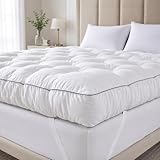
Memory foam wins when the problem is pressure. On a mattress that is too firm, the hips and shoulders of a side sleeper cannot sink, so the spine bows and the lower back and shoulder blades take the strain. Two to four inches of memory foam let those points sink while the waist stays supported, and the slow, molding response spreads weight over a larger area than latex does. The material is also unbeatable on price: a plush queen option like the Niagara Sleep Solution Ultra Soft Mattress Topper sells for around $39.99, and a thick model such as the SHOUREN 5 Inch Memory Foam Mattress Topper Queen, marketed for back pain relief, runs about $69.99, both a fraction of any latex topper. That low cost makes memory foam the right way to test whether softening the bed helps at all before committing more. Memory foam also isolates motion better, so a restless partner disturbs you less, and it is lighter to install and rotate. If you are a lighter sleeper, under about 150 pounds, memory foam’s give is often exactly enough, and latex can feel like lying on a firm trampoline.
Cost Over 5 Years
Take a queen as the example. A natural latex topper costs $180 to $350 once, plus $40 to $90 for a cover if one is not included, and needs no replacement within five years. Total: roughly $220 to $440. A memory foam topper costs $40 to $150 and typically needs replacing after 2 to 4 years as it softens and develops impressions, so plan on two purchases in five years. Total: roughly $80 to $300, with the higher end for 4- and 5-inch models or gel-infused versions. Add deep-pocket sheets to either if you do not already own them, $30 to $80. The memory foam path is still cheaper over five years at the budget end, but the gap narrows to under $100 when you compare a mid-range memory foam topper bought twice against a single mid-range latex topper. Stretch the horizon to ten years and latex is clearly the less expensive option in 2026 pricing, since the memory foam buyer is on their third or fourth topper.
Which One for Your Home
Small apartment
Memory foam. It ships compressed in a small box, weighs 20 to 30 pounds, and is easy to unroll, rotate, or stash in a closet if you switch beds. A 3-inch topper is the sweet spot for pressure relief without pushing mattress height past standard sheet depths. Latex is a two-person lift and awkward in a tight bedroom. The exception is a very hot apartment without air conditioning, where latex’s cooling can outweigh the hassle.
Family with kids or pets
Latex, if the budget allows. It resists dents from kids jumping on the bed, does not off-gas, and its natural resistance to dust mites and mold is a plus for allergy-prone households. Put it in a washable cotton cover so pet hair and spills stay off the foam. If cost is the constraint, a memory foam topper with a waterproof, machine-washable cover is the practical fallback, with the understanding that it will need replacing sooner.
Rental
Memory foam. Rentals often come with a firm, unfamiliar mattress, and a $40 to $100 topper turns it into something tolerable without a long-term commitment. It moves easily to the next apartment or can be left behind without regret. Choose a 2- to 3-inch topper so it works on whatever mattress you inherit next.
Long-term home
Latex, matched carefully to your mattress. On a soft bed, buy a 2-inch firm; on a medium bed with mild pressure complaints, a 2-inch medium; on a firm bed, a 3-inch soft. Add an organic cotton cover and expect it to outlast the mattress underneath. If you love the hug of memory foam and have a firm mattress, a high-density 3-inch memory foam topper is still a reasonable long-term choice, just plan on replacing it every few years and rotating it quarterly to even out wear.
FAQ
Which topper is better for lower back pain specifically?
Lower back pain from a mattress usually comes from the hips sinking too far, which arches the spine, or from a surface so firm that the lumbar curve is unsupported. Latex fixes the first problem by lifting the hips; a medium or firm 2-inch topper is the usual choice. Memory foam fixes the second by letting the hips settle so the lumbar area is filled in; a 2- to 3-inch topper is typical. Decide which one describes your bed before you buy.
How thick should a topper be for back pain?
Two inches is enough to change support or add modest cushioning without altering the mattress’s character. Three inches is the most common choice for real pressure relief on a firm mattress. Four to five inches of memory foam is for very firm or worn mattresses and heavier sleepers, and it will noticeably change how the bed feels and how sheets fit.
Can a topper fix a sagging mattress?
Only a shallow sag. A firm 2-inch latex topper can bridge a dip of half an inch to an inch and restore reasonable support. Anything deeper will transmit through either material, and memory foam in particular will simply conform to the dip. Past an inch of sag, the mattress needs replacing.
Does latex or memory foam sleep hotter?
Memory foam, by a clear margin. Its closed cell structure traps heat, and gel or copper infusions only delay the warming for an hour or two. Latex’s open structure and ventilation holes move air all night. If overheating is part of why you sleep badly, that alone can tip the decision toward latex.