Key takeaways
- Consistent head elevation. A 10- to 30-degree incline keeps the airway more open than lying flat and stays put all night, unlike stacked pillows or a wedge you slide off.
- Anti-snore preset on many models. One button raises the head 7 to 12 degrees, and on some bases a partner can trigger it from their side of the remote.
- Helps with reflux and congestion too. The same elevation that eases snoring also reduces nighttime heartburn and post-nasal drip.
- Zero gravity position for back pain. Raising head and knees together takes pressure off the lower back, a bonus many buyers value more than the snoring relief.
- Replaces the box spring. You are buying a foundation you need anyway, so the incremental cost over a good platform base is $200 to $400.
- Split options for couples. A split king lets one partner elevate for snoring while the other sleeps flat.
- Extras at no additional cost. USB ports, under-bed lights, and massage are standard even at entry-level prices.
What's inside
The Short Answer
Yes, if your snoring is the positional kind, meaning it is worse when you lie flat on your back and eases when you prop yourself up or roll to your side. An adjustable bed frame lets you raise your head 10 to 30 degrees and hold that angle all night without a mountain of pillows that slide out from under you, and many users find that reduces snoring noticeably. It is not worth it if your snoring is caused by nasal obstruction, allergies, or untreated sleep apnea, none of which a change in bed angle can fix. Get evaluated for apnea first if you snore loudly every night, wake gasping, or feel exhausted despite eight hours in bed. For simple back-sleeping snoring, a $350 to $800 adjustable base is a reasonable, mattress-friendly investment that also happens to be great for reading and reflux.
What You Actually Get
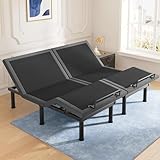
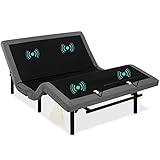
An adjustable bed frame is an electric base that replaces your box spring or platform. A steel frame carries a hinged deck, usually in three or four sections, and one or two quiet DC motors raise the head section up to 60 or 70 degrees and the foot section up to 40 or 45 degrees. A wireless remote, often with a phone app, controls the positions, and most models offer one to four programmable presets plus a “zero gravity” position that lifts both head and legs. Entry-level queen bases in 2026 run $350 to $500 and typically include USB charging ports, under-bed lighting, and a vibration massage feature; the Marsail Queen Adjustable Bed Frame with head and foot incline, quiet motor, USB ports, LED light, and height-adjustable legs sells for around $379.63, and the Best Choice Products Ergonomic Queen Adjustable Bed Frame with wireless remote, nightlight, massager, and 2 USB ports is about $379.49. Mid-range bases at $700 to $1,500 add wall-hugging mechanisms that keep your nightstand within reach as the head rises, stronger motors with 750- to 850-pound weight capacities, and anti-snore presets. Bases weigh 120 to 200 pounds in queen, sit on 6- to 12-inch adjustable legs, and require a flexible mattress: memory foam, latex, or a hybrid with pocketed coils, generally 8 to 14 inches thick. A traditional innerspring with a rigid border wire will not bend.
As an Amazon Associate we earn from qualifying purchases at no extra cost to you. Product prices and availability are accurate as of the date shown and are subject to change.

Pros
- Consistent head elevation. A 10- to 30-degree incline keeps the airway more open than lying flat and stays put all night, unlike stacked pillows or a wedge you slide off.
- Anti-snore preset on many models. One button raises the head 7 to 12 degrees, and on some bases a partner can trigger it from their side of the remote.
- Helps with reflux and congestion too. The same elevation that eases snoring also reduces nighttime heartburn and post-nasal drip.
- Zero gravity position for back pain. Raising head and knees together takes pressure off the lower back, a bonus many buyers value more than the snoring relief.
- Replaces the box spring. You are buying a foundation you need anyway, so the incremental cost over a good platform base is $200 to $400.
- Split options for couples. A split king lets one partner elevate for snoring while the other sleeps flat.
- Extras at no additional cost. USB ports, under-bed lights, and massage are standard even at entry-level prices.
Cons
- Does nothing for non-positional snoring. Nasal blockage, enlarged tonsils, alcohol-related snoring, and sleep apnea are not corrected by elevation.
- Mattress compatibility limits. Traditional innersprings, very thick mattresses over 14 inches, and some firm hybrids do not flex properly.
- Heavy and hard to move. A 150-pound queen base is a two-person job, and moving requires disconnecting motors and cables.
- Headboard and frame fit. Many bases need brackets sold separately ($30 to $80) to attach a headboard, and some do not fit inside existing bed frames.
- Motor noise and failure. Motors are quiet but not silent, and out-of-warranty replacement runs $150 to $300.
- Side sleeping gets awkward. Elevating the head while lying on your side bends the neck; the angle that helps snoring is designed for back sleepers.
- Sheets and mattress pads shift. Fitted sheets pull loose at the corners as the deck bends; you may need sheet straps or a mattress retainer bar.
Who Should Buy It
Back sleepers whose partners report that the snoring stops when they roll over or prop up. Anyone who already sleeps on a wedge pillow or stacked pillows and is tired of them shifting. People who also have acid reflux, chronic congestion, or lower back pain that improves with elevation, since the base addresses all of them at once. Couples who want a split king so one side can elevate independently. Shoppers replacing a box spring anyway who can stretch the budget by a few hundred dollars. Owners of memory foam, latex, or flexible hybrid mattresses that will bend without damage.
Who Should Skip It
Anyone with loud, nightly snoring plus daytime fatigue, gasping, or morning headaches, who should see a doctor about sleep apnea before spending money on furniture. Dedicated side and stomach sleepers, for whom head elevation offers little and may cause neck strain. Owners of a traditional innerspring or a mattress thicker than 14 inches, unless they are also budgeting for a new mattress. People in small bedrooms where a base that pulls the head section forward 8 to 12 inches would block a nightstand. Renters who move frequently. Anyone whose snoring is clearly tied to alcohol, allergies, or a deviated septum, where treating the cause will do more than any bed angle.
Cheaper Alternatives
| Option | Cost | Trade-off |
|---|---|---|
| Foam bed wedge pillow, 7 to 12 inches high | $30 to $80 | Same elevation principle; slides on the mattress, feels firm, and bends you at the waist rather than lifting the whole upper body |
| Under-mattress wedge or inflatable incline insert | $80 to $200 | Raises the whole head of the mattress 5 to 8 inches for any mattress type; not adjustable night to night without effort |
| Bed risers under the headboard legs only | $15 to $40 | Tilts the entire bed 3 to 6 inches at the head; you may slide down and the frame must be stable |
| Positional therapy device or anti-snore pillow that discourages back sleeping | $25 to $150 | Trains you to sleep on your side instead of elevating; takes weeks to adjust and does not help if you already side-sleep |
| Nasal strips, saline rinse, or allergy management | $10 to $40 a month | Addresses congestion-based snoring that a bed cannot fix; useless for positional snoring |
| Split-king adjustable base bought as a single twin XL | $300 to $450 | Only the snorer’s side elevates and cost is lower; requires two twin XL mattresses and a king frame or two separate beds |
FAQ
How much should I raise the head of the bed to reduce snoring?
Most people find relief between 10 and 30 degrees, which on a typical base is the first quarter of the head section’s travel. Start around 10 to 15 degrees, sleep on it for a few nights, and raise it gradually. Beyond 30 degrees, many sleepers start sliding down or feel their lower back arch.
Will an adjustable bed cure sleep apnea?
No. Elevation may reduce the number of snoring events for some people with mild positional apnea, but it is not a treatment. Anyone who suspects apnea should get a sleep study; the standard treatments are CPAP, oral appliances, or in some cases surgery, and a doctor can advise whether elevation is a helpful addition.
Can I use my current mattress on an adjustable base?
If it is memory foam, latex, or a hybrid with individually pocketed coils and no rigid border wire, and it is 14 inches thick or less, almost certainly yes. Traditional innersprings with a continuous coil unit or a steel edge wire will not flex and can be damaged. Check the mattress warranty, since some require an approved base.
Do adjustable bases work with a regular bed frame and headboard?
Many bases are designed to sit inside an existing frame with the frame’s slats removed, as long as the interior dimensions match and the frame is tall enough. Headboards attach through optional brackets, typically $30 to $80, that bolt to the base’s head end. Wall-hugging models keep the mattress close to the headboard as it rises; standard models pull away by 8 to 12 inches at full elevation.