Key takeaways
- The Short Answer Zero to 1 inch of mattress overhang per side is normal on a platform or metal bed frame. Up to 2 inches per side is acceptable on a frame with a rigid deck or a continuous slat…
What's inside
The Short Answer
Zero to 1 inch of mattress overhang per side is normal on a platform or metal bed frame. Up to 2 inches per side is acceptable on a frame with a rigid deck or a continuous slat surface, though it looks untidy. Anything past 2 inches means the mattress is the wrong size for the frame, or the frame’s interior is narrower than the nominal size, and the unsupported edge will soften within a year. On upholstered or wood frames with side rails that rise above the mattress base, the ideal is a 0.5 to 1 inch gap on each side rather than overhang, so sheets can tuck and the mattress does not rub the rails.
A little overhang is fine because mattress edges are built to be self-supporting for about an inch. Beyond that, the coils or foam sag over the frame edge, and you feel it when you sit on the side of the bed to put on shoes.
As an Amazon Associate we earn from qualifying purchases at no extra cost to you. Product prices and availability are accurate as of the date shown and are subject to change.


Standard Sizes
| Mattress size | Mattress (inches) | Mattress (cm) | Typical frame interior (inches) | Normal overhang per side |
|---|---|---|---|---|
| Twin | 38 x 75 | 96 x 191 | 38 to 39 x 75 to 76 | 0 to 0.5 in |
| Twin XL | 38 x 80 | 96 x 203 | 38 to 39 x 80 to 81 | 0 to 0.5 in |
| Full | 54 x 75 | 137 x 191 | 54 to 55 x 75 to 76 | 0 to 1 in |
| Queen | 60 x 80 | 152 x 203 | 60 to 61 x 80 to 81 | 0 to 1 in |
| King | 76 x 80 | 193 x 203 | 76 to 77 x 80 to 81 | 0 to 1 in |
| California King | 72 x 84 | 183 x 213 | 72 to 73 x 84 to 85 | 0 to 1 in |
| Full mattress on Queen frame | 54 x 75 | 137 x 191 | 60 x 80 | 3 in gap per side; not overhang, but wrong |
| Queen mattress on Full frame | 60 x 80 | 152 x 203 | 54 x 75 | 3 in overhang per side; too much |
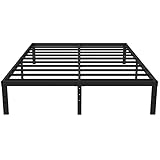
Metal platform frames are usually built a fraction wider than the mattress so it drops inside a small lip or sits flush on top. The Upcanso 16 Inch Queen Bed Frame at $54.99, the Easllre 14 Inch Metal Bed Frame at $87.99, and the Amazon Basics 14-inch Queen frame at $104.99 are all designed to carry a 60 x 80 inch mattress with essentially no overhang. An adjustable base like the Amada Queen Adjustable Bed Frame at $379.98 relies on a retainer bar at the foot and a slightly undersized deck, so up to 1 inch of overhang per side is by design and lets the mattress flex.
How to Measure Your Space
- Measure the mattress, not the label. A Queen is nominally 60 x 80 inches, but mattresses are allowed a tolerance of about 1 inch either way, and foam models often measure 59 x 79 after settling. Measure width and length at the middle of each side.
- Measure the frame’s support surface. On a platform, measure the deck or the slats from outer edge to outer edge. On a frame with side rails, measure the inside distance between rails. This is the number that matters, not the outside footprint of the bed.
- Subtract and divide by two. Mattress width minus support width, divided by two, is the overhang per side. A 60-inch mattress on a 58-inch deck is 1 inch per side, which is fine. On a 55-inch deck it is 2.5 inches and too much.
- Check the length the same way. Overhang at the foot is more common than at the sides because many frames have a footboard lip or retainer that eats an inch.
- Repeat after two weeks. New foam mattresses expand for several days, and slatted frames settle. Measure again once everything has stabilized.
By Room or Use Case
Metal Platform Frame
These frames are sized precisely and any overhang beyond 1 inch means the frame is a size down from the mattress or has a bent side rail. Storage-height frames at 14 to 16 inches are especially unforgiving because the overhang is at sitting height where you notice it every morning.
Upholstered or Wood Frame With Rails
Here you want a gap, not overhang. Aim for 0.5 to 1 inch between the mattress and the inside of each rail. A tight fit makes changing sheets a fight; more than 1.5 inches lets the mattress slide and bang against the rails.
Adjustable Base
A little overhang is normal and intentional. The deck is often 1 to 2 inches narrower than the mattress in total, so the mattress edges float about 0.5 to 1 inch per side and can bend without catching on the base as the head and foot rise.
Bunk Bed or Daybed
Overhang is a safety issue as well as a comfort one. A Twin mattress should sit fully inside the guard rails with no overhang, and the mattress top should be at least 5 inches below the top of the upper bunk rail.
Common Sizing Mistakes
Assuming every Queen frame is 60 inches inside. Some imported frames are built to slightly different standards and measure 59 or 61 inches. Half an inch of difference each side is invisible; 1.5 inches is not.
Confusing a Full and a Queen. They differ by 6 inches in width and 5 in length. A Queen mattress on a Full frame gives 3 inches of overhang on every side and is the most common cause of a mattress that feels like it is falling off.
Ignoring the headboard offset. If the frame is pushed 2 inches away from the headboard, the mattress tends to migrate toward the head and overhang at the top rail. Push the frame flush or add a filler behind the mattress.
Buying a frame before measuring the mattress. Nominal sizes are close but not exact, and with the variety of frame designs on the market in 2026, interior width is not something to assume.
Using a bunkie board that is smaller than the mattress. A 58 x 78 inch board under a 60 x 80 inch mattress creates 1 inch of overhang on all sides on top of whatever the frame already has.
FAQ
Is 2 inches of mattress overhang too much?
Two inches per side is the upper limit and only acceptable on a rigid deck. Most people will notice the edge softening within 6 to 12 months. One inch or less is the target.
Why does my mattress hang over the foot of the bed?
Either the frame is a few inches shorter than the mattress, or the mattress has slid toward the foot because there is a gap at the headboard. Push it back and check for a 1-inch or larger gap at the head.
Can a mattress be smaller than the frame?
Yes, and a gap of up to 1 inch per side is preferable to overhang on a frame with rails. Gaps larger than 2 inches let the mattress slide; fill them with foam strips or a bed gap filler.
Does overhang void a mattress warranty?
Many manufacturers require the mattress to be fully supported edge to edge, and some specify the maximum slat gap. An unsupported edge that sags is a common reason a warranty claim gets denied, so keep the overhang inside 1 inch and photograph the setup when the mattress is new.